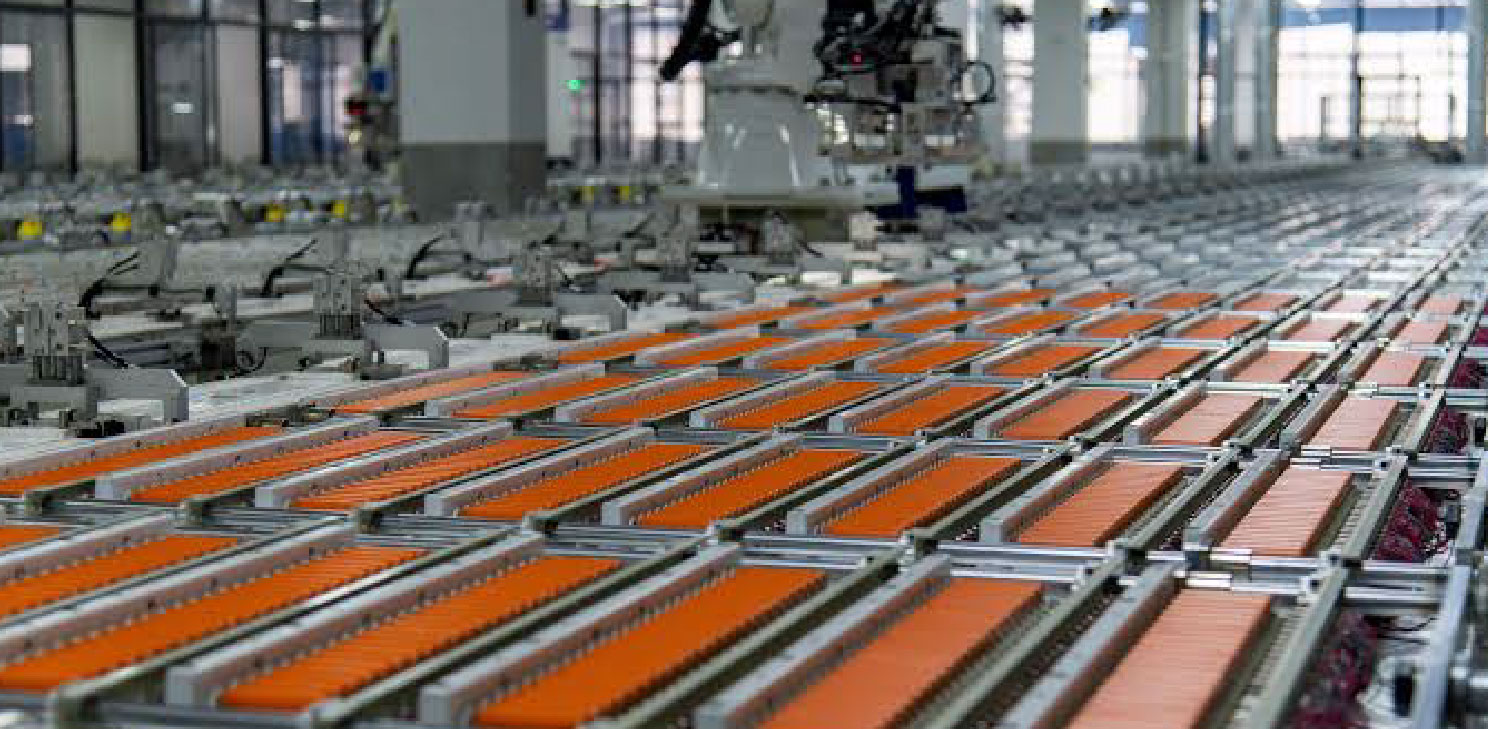
The US has tightened restrictions on advanced semiconductor exports to China, a move reshaping manufacturing plans, product design decisions and equipment flows across the global electronics industry.
Washington’s export rules target advanced chips and the equipment needed to manufacture them. The policy aims to restrict Chinese access to high-performance computing and artificial intelligence hardware while forcing vendors to redesign products to remain compliant. Export controls now sit at the front-line of every chip roadmap, affecting architecture choices, interconnect bandwidth and performance thresholds in new silicon.
Chip designers increasingly produce reduced-performance variants to meet regulatory thresholds. Earlier rules limited GPU interconnect bandwidth and compute density, pushing manufacturers to engineer export-approved models with slower interconnect speeds and fewer active processing units.
Licensing changes are also affecting production planning. The United States has shifted major semiconductor firms from blanket export waivers to annual licence approvals for shipments of chipmaking tools to Chinese fabrication plants. Facilities run by Samsung Electronics, SK Hynix and Taiwan Semiconductor Manufacturing Company now rely on year-by-year authorisations to import U.S. manufacturing equipment for their Chinese fabs, according to Reuters.
The licences allow continued operations but create uncertainty around equipment procurement cycles. The Nanjing facility operated by TSMC produces 16-nanometre and other mature-node chips and accounted for about 2.4% of company revenue in 2024, Reuters reported.
Washington’s policy has also expanded restrictions on advanced semiconductor manufacturing tools. U.S. lawmakers recently urged the government to introduce broader controls covering equipment maintenance and servicing for Chinese fabs. “Such support is crucial to keeping these systems operational,” lawmakers said in the letter cited by Reuters.
The equipment restrictions matter because Western suppliers dominate advanced lithography and semiconductor manufacturing technology. Even as China attempts to develop domestic alternatives, it still struggles to replicate high-precision optical systems used in advanced chip production, Reuters reported.
Beijing has responded with a rapid push to expand domestic semiconductor manufacturing capacity. A Chinese government action plan emphasises building “resilient, self-sufficient supply chains” and increasing use of locally produced components and equipment, according to SL Guardian.
That policy push includes expanding domestic chip output as part of a broader strategy to counter foreign technology restrictions. The plan states that China will “resolutely promote the use of domestic products” and strengthen weak links in its electronics supply chain, according to the report.
Despite heavy investment, Chinese production remains behind global leaders in advanced nodes. U.S. officials estimate Huawei will produce no more than 200,000 advanced AI chips in 2025, far below domestic demand, according to Reuters.
The result is a fragmented semiconductor market. Export rules shape chip design parameters, influence fab investment decisions and drive stockpiling of compliant components. Vendors now balance performance targets with regulatory thresholds to avoid shipment delays or licence denials.
Manufacturing roadmaps are increasingly built around these regulatory constraints. For chip designers and equipment suppliers, compliance has become a core design parameter alongside power consumption, die size and yield.
The next phase will depend on how aggressively Washington expands equipment restrictions and whether Beijing can scale domestic lithography and fabrication capacity quickly enough to offset limited access to Western technology.
To find out more about the latest industry updates and innovations in mega facility construction, meet with solution providers and hear talks from expert speakers, attend the 3rd Constructing Semiconductor FAB Summit USA: Advances in Planning, Design and Engineering, taking place June 24-25, 2026, in Austin, Texas, USA.
For more information, click here or email us at info@innovatrix.eu for the event agenda. Visit our LinkedIn to stay up to date on our latest speaker announcements and event news.
Source: