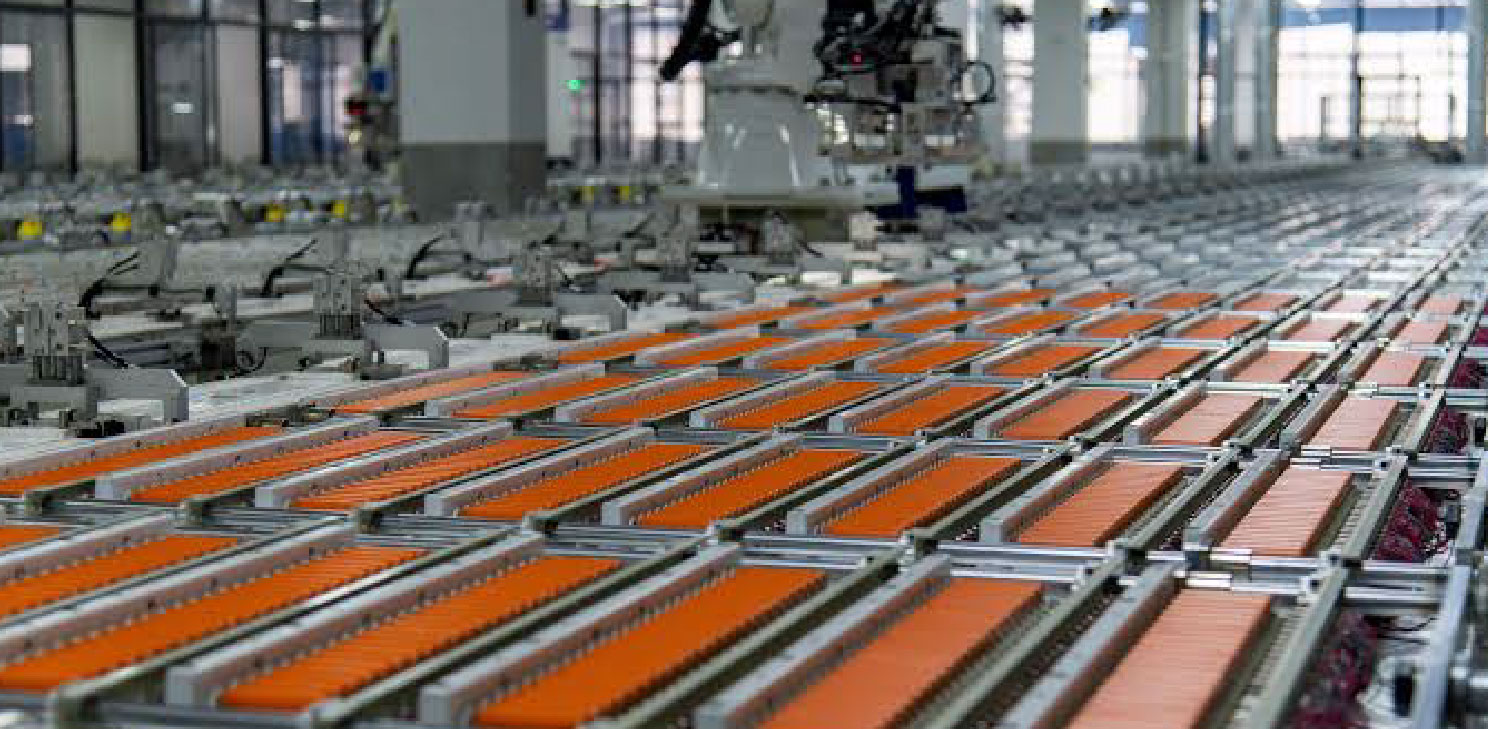
The global battery market is projected to grow by over 30% annually until 2030, reaching a value of more than $400 billion. Driving this expansion are three core sectors: battery energy storage solutions, electric vehicles, and consumer electronics. With more and more gigafactory projects being announced, the pressure to build at pace is immense. Yet speed alone is not enough. Sustainable gigafactory design is emerging as a defining priority for manufacturers who want to future-proof their operations without compromising environmental integrity.
Why Sustainability Must Be Built In from the Start
Battery manufacturing is inherently energy-intensive. Electrode preparation alone accounts for nearly half the total energy required to produce a battery cell, while pack assembly and electrochemical activation represent the costliest phase, consuming over 35% of a facility’s energy and more than half its operating expenditure. With peak demand charges potentially accounting for over 30% of a facility’s total electricity bill, the case for designing energy efficiency into a gigafactory from day one is compelling.
Sustainable manufacturing encompasses more than just energy reduction — it means minimising machine footprint, reducing environmental impact across the production lifecycle, and embracing circular economy principles. Crucially, energy and operational costs account for 70% of the total cost of ownership for battery manufacturing systems, making operational efficiency a commercial imperative as much as an ecological one.
Designing for Energy Efficiency
Effective sustainable gigafactory design begins with managing electrical loads intelligently. Strategies such as distributed load management, peak shaving, and meticulously planned electrical infrastructure can significantly reduce both carbon emissions and operating costs. On-site renewable power generation, energy-efficient ventilation and lighting, and passive measures such as insulation and shading are all established tools in reducing a facility’s whole-life carbon footprint.
Digital design tools play a central role here. Building Information Modelling (BIM), for instance, allows all components to be designed and tested in a virtual environment before construction begins, enhancing upfront planning, reducing risk, and improving project timelines. This is particularly valuable given that around 66% of a gigafactory’s capital expenditure typically comes from retrofitting building services and utilities — not from modifying the building structure itself.
Temperature control is equally critical across electrode preparation, cell assembly, and electrochemical activation stages. Intelligent control systems, softstarters, variable frequency drives, and motor controllers all help manage energy intensity across a facility teeming with automated processes. Continuous monitoring throughout a facility’s operational life can further identify opportunities to optimise performance as new technologies emerge and market demand evolves.
Reducing Footprint Through Modular Configurations
Compact, modular manufacturing configurations are central to sustainable gigafactory design. Smaller production layouts require fewer materials and less energy during construction, reduce overhead maintenance costs, and are inherently more energy-efficient to operate. They also offer the operational agility required to respond to fluctuating market demands without significant reconfiguration.
This scalability is essential. Battery design is evolving rapidly — sodium-ion flow batteries and other lithium-free technologies are advancing, and gigafactories must be designed with adaptability built in from the outset. Modular production lines enable manufacturers to adjust volumes, integrate new material streams, and respond to shifting supply chain conditions with minimal disruption.
Circular Economy and Material Sustainability
Keeping circular economy principles at the heart of gigafactory design means designing out waste and pollution before construction begins, and building in the capacity to reclaim and reuse resources. This includes recovering waste heat from manufacturing processes, integrating on-site battery recycling facilities, and supporting closed-loop material recovery for critical inputs such as lithium, cobalt, copper, and nickel.
Integrating recycled materials into battery production also reduces reliance on finite raw material extraction, aligning with broader ESG commitments and regulatory expectations. Advanced manufacturing techniques can ensure that recycled materials meet stringent safety and performance standards, preserving product quality while minimising material wastage.
Building for the Long Term
Sustainable gigafactory design is not a one-off decision — it is an ongoing commitment. Compliance with environmental regulation, responsiveness to geopolitical supply chain pressures, and the need to attract increasingly sustainability-conscious customers all reinforce the case for embedding ecological efficiency into every stage of facility planning, construction, and operation.
Manufacturers who treat sustainability as a guiding design principle — rather than a retrofit — will be best positioned to scale reliably, reduce total cost of ownership, and contribute meaningfully to a net zero energy future.
For the opportunity to have in-depth discussions about this and other challenges facing gigafactories, meet with leading solution providers and network with industry experts, attend the 7th BATTERY GIGAFACTORY Summit USA: Advances in Planning, Engineering and Operations, taking place on November 18-19, 2026, in Nashville, Tennessee, USA.
For more information, visit our website or email us at info@innovatrix.eu for the event agenda. Visit our LinkedIn to stay up to date on our latest speaker announcements and event news.