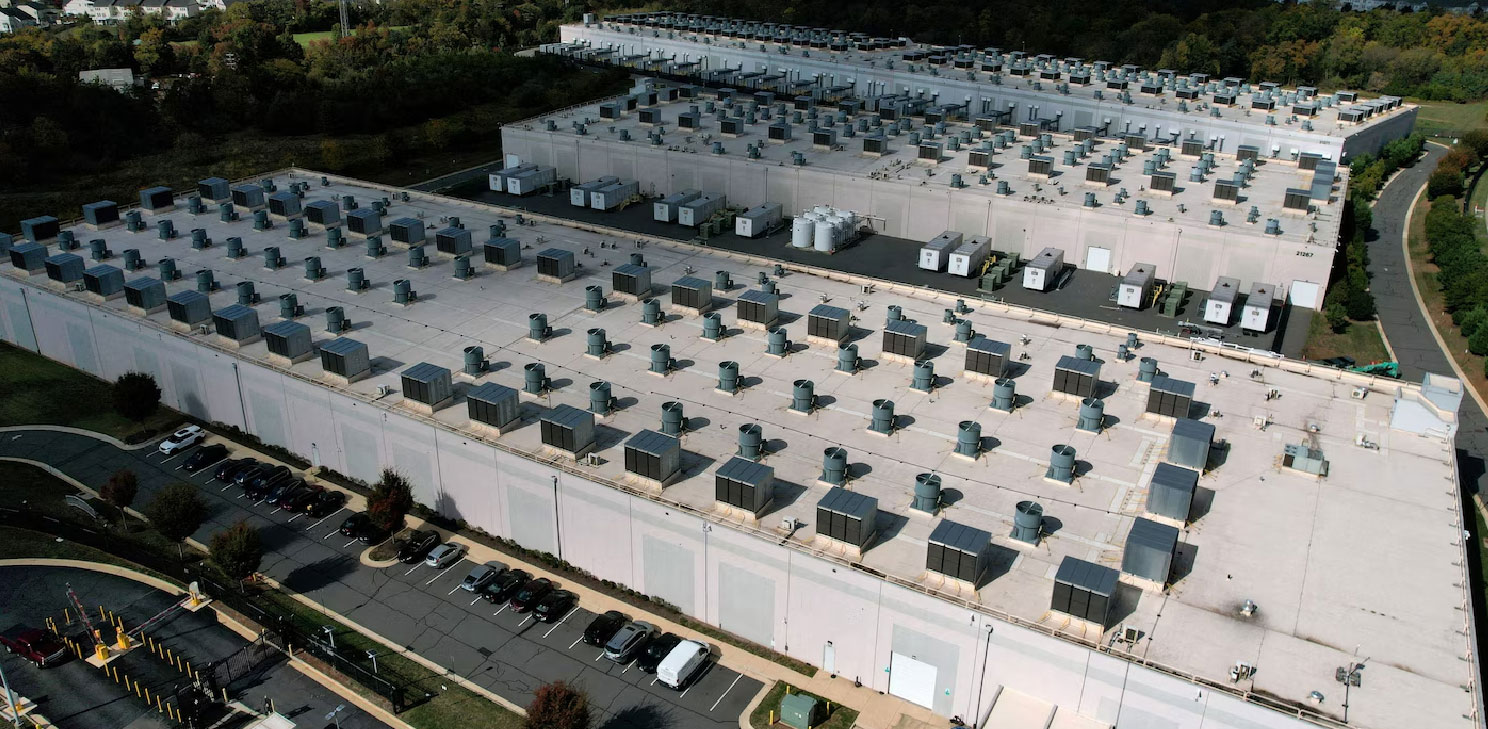
Data centre demand is surging, driven largely by the rise of artificial intelligence, cloud computing and ever-growing storage needs. Over one trillion dollars is projected to be spent on data centre upgrades for AI by Amazon, Microsoft, Google and Meta. Yet this boom brings real construction pressures, from power constraints to labour shortages. Increasingly, AI tools for data center construction are being used to tackle these challenges at every stage of a project, from site selection through to operational handover.
Smarter site selection and design
Choosing the right location is one of the earliest, and most consequential, decisions in any build. AI-driven tools can process huge datasets, from satellite imagery to utility grid maps, in hours instead of weeks, pinpointing sites that meet technical and business criteria, resulting in lower risk, faster time to market and higher return on investment. Machine learning models can simultaneously assess power grid capacity, network latency, land use and zoning rules, and natural disaster risk, allowing developers to rule out unsuitable sites quickly.
Once a site is confirmed, generative design tools speed up the facility layout itself. AI can take high-level requirements, such as IT load capacity and redundancy needs, and generate numerous design alternatives, running simulations and trade-off analyses in minutes rather than weeks. This lets architects test far more options before committing to a final design.
Tackling the two biggest cost drivers: energy and delays
Cooling and power dominate long-term running costs, so energy efficiency is a natural target for AI. AI-driven simulations can optimise cooling system design, electrical distribution and facility layout to push Power Usage Effectiveness closer to 1.0, well below the industry average of around 1.58. Beyond design, AI continues to earn its keep once the facility is operational, analysing temperature trends, equipment workloads and environmental conditions to adjust cooling methods automatically, while redistributing workloads away from underused servers to cut energy waste.
On the delivery side, delay is the enemy. A data centre build is really two projects running together, the base build and the tool installation, and even a small sequencing or communication error can cascade into cost overruns and rework. AI-powered progress tracking addresses this directly: cameras regularly capture on-site footage, which is compared against the BIM model and work schedule to flag when construction is falling behind schedule, so owners can work with contractors before it becomes a bigger problem. One industrial operator using this approach has avoided an average of four weeks of delay per facility since adopting the technology.
Cutting rework and reducing risk
Rework is expensive, particularly on tightly sequenced mechanical and electrical systems. AI-assisted verification tools compare completed work against the model to check every element was installed correctly, helping teams spot loose ends and incorrect installations before they turn into costly repairs later.
Regulatory and compliance risk is another area where AI is proving useful. Modern platforms can ingest building codes, zoning ordinances and historical permit data, then use natural language processing to cross-check a proposed design against relevant regulations automatically, giving architects instant feedback on potential conflicts long before submission.
Cost forecasting benefits too. AI can integrate with Building Information Modelling and cost databases to continuously update materials, labour and scheduling costs as a design evolves, effectively acting as a financial advisor that flags when a choice might blow the budget.
Supporting the wider project team
Away from design and monitoring, AI is also easing day-to-day project management pressures. It can analyse historical project data to predict delays, flag risks early, and recommend more efficient schedules, with machine-learning forecasting particularly useful for identifying repeat bottlenecks. Document-heavy tasks benefit too, as construction teams can use AI tools built on large language models to draft clearer requests for information and extract relevant context from project documents — a meaningful time-saver on a sector where, according to one study of over 320,000 projects, inefficient handoffs, staffing and scheduling issues, and material shortages are among the leading causes of delay.
Augmenting, not replacing, expertise
None of this removes the need for skilled people. Across every use case, AI works best as a support layer: it processes vast quantities of site and design data far faster than any team could manually, surfacing the patterns and risks that matter most, while architects, engineers and project managers retain the judgement calls. As data centre demand keeps climbing, the firms embedding AI into their construction and project management workflows now are the ones best placed to deliver faster, more predictably, and more cost-effectively than their competitors.
To find out more about the latest industry updates and innovations in data center construction, meet with solution providers and hear talks from expert speakers, attend the 4th Constructing Next-Gen Data Centers MENAT: Revolutionizing Planning, Design, and Engineering, taking place October 6-7, 2026, in Dubai, UAE.
For more information, click here or email us at info@innovatrix.eu for the event agenda. Visit our LinkedIn to stay up to date on our latest speaker announcements and event news.