2nd Smart Labs Summit: Transforming Life Sciences R&D with Data, Technology & Automation
Days
Hours
Minutes
Seconds

e
g
i
s
t
e
r
N
o
w
About the event
Transforming Life Sciences R&D with Smart Labs in Europe
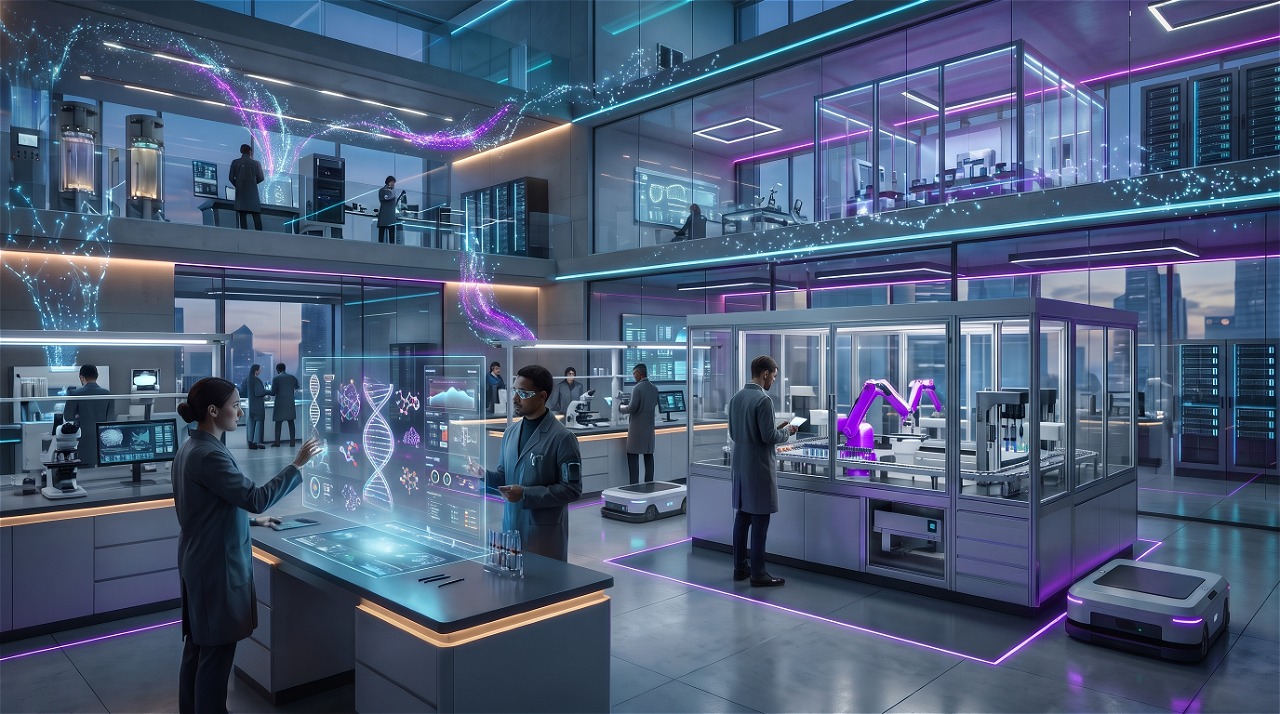
The life sciences industry is at the core of modern healthcare innovation, and smart laboratories are reshaping how drugs, diagnostics, and therapies are discovered and developed. With pressure to accelerate R&D skyrocketing, Europe is stepping up its game, pushing for stronger lab digitalization capabilities to boost productivity, data quality, and speed to market.
Advances in AI, data integration, and robotics, along with major pharma and biotech investments, are accelerating Smart Lab adoption, but scaling transformation brings key challenges — from fragmented data and legacy systems to ensuring connected, compliant, and efficient Lab Automation and Laboratory Digitalization.
As Europe continues investing heavily in R&D innovation, the summit will also address the growing demand for advanced Smart Lab strategies and scalable Lab Data Management methodologies. This Smart Labs event will explore how industry leaders are delivering faster, more reproducible science through automation, AI, IoT-enabled instruments, and next-generation lab informatics. Attendees of this Smart Labs Conference will gain insights into data-driven R&D, operational efficiency, and innovations shaping the future of life sciences laboratories in Europe.
Smart Lab Solutions at the Life Sciences R&D Summit
The 2nd Smart Labs Summit, a leading Smart Labs Conference and Life Sciences R&D event, will explore how modern technologies and innovations are transforming laboratory operations and scientific discovery.
As the industry faces increasing pressure to shorten development timelines while improving data integrity, topics such as lab automation, AI in R&D, and digital lab strategies will be at the forefront. This Smart Labs Conference will highlight best practices in building connected, data-driven laboratories while optimizing productivity, quality, and cost.
Lab Automation, Data and Digital Transformation Conference Innovations
Key topics at the smart labs event will include innovations in Lab Automation, laboratory robotics, LIMS and ELN integration, and advanced Lab Data Management.
A strong focus will also be placed on data integration and AI-driven analytics for Digital Lab Conference environments, where data quality, interoperability, and reproducibility are critical to ensuring scientific and regulatory confidence. By integrating cutting-edge technologies into laboratory workflows, the industry is enabling smarter, more resilient R&D.
A major focus of the event will be the advancement of lab digitalization and connected laboratory technologies. As a leading Smart Labs Conference and Life Sciences R&D Summit, the event will highlight innovative approaches to FAIR data, instrument connectivity, digital twins, AI and machine learning, and scalable Smart Lab design. Sessions will also examine how modern digital practices are improving productivity, collaboration, and long-term R&D performance.
Collaboration at the Smart Labs Event and Life Sciences R&D Conference
The 2nd Smart Labs Summit will bring together stakeholders from pharma, biotech, CROs, R&D, IT, informatics, and laboratory operations to discuss the future of smart laboratories, Lab Automation, and data-driven R&D. This Smart Labs event is a unique opportunity to collaborate, exchange insights, and explore solutions to the industry's most pressing challenges.
Don't Miss the 2nd Smart Labs Summit
As Europe accelerates its life sciences R&D ambitions, collaboration and innovation are more important than ever. Attend our Smart Labs and Lab Automation conference, a key life sciences R&D event, to stay ahead of industry trends, discover new technologies, and connect with experts shaping the future of laboratory innovation.
This Smart Labs Summit will empower you to play a key role in advancing lab digitalization and building the next generation of data-driven life sciences laboratories.
Be part of the conversation shaping the future of smart labs in Barcelona, Spain this October 2027.
Conference learning points
- Understand how to build a digital transformation roadmap for life sciences laboratories
- Learn the latest approaches to lab automation and laboratory robotics
- Explore best practices in data integration across LIMS, ELN, and instrument systems
- Discover how AI and machine learning are accelerating R&D and decision-making
- Gain insights into FAIR data principles and scalable lab data management
- Examine strategies for instrument connectivity and IoT-enabled laboratories
- Review how digital twins and simulation support experiment design and optimization
- Assess how to improve data integrity, reproducibility, and regulatory compliance
- Learn how to drive adoption, change management, and skills development for digital labs
- Connect with pharma, biotech, CRO, R&D, and informatics peers shaping smart laboratories
Previous attendees
Gallery


Registration packages
Hear from
our satisfied clients
Explore our client testimonials and find out why industry-leading organisations and changemakers choose Innovatrix.

Jason Knapp
Managing Director
Capitol Energy Advocacy, LLC
”I would say this conference is collaborative, makes networking easy and informative, having folks from very different components within the battery gigafactory supply chain all in one location.”

Eric White
Technology Manager
US Department of Energy
”I thought the panel discussions were a great opportunity for people to talk more casually about the work they’re doing and their perspectives and the sessions were moderated with expertise.”

Anders Hedqvist
Head of Strategic Projects
Epiroc
”Good composition of speakers with good content and fantastic interaction.”

Christopher Nason
Global Head of Business Intelligence
Deutsche Bank
”I found that the speakers covered a wide range of issues cogently and very well. I'm sure I will be attending next year.”

Diana-Alina Pasca
Manager of Card Operations Projects
Banca Transilvania
”I think the Innovatrix team is great, very responsible and organised, they have done a great job with this event.”

Jeroen Soepnel
Head of Marketing CSB
Webasto
”It was great to see so many different presentations from all areas of off-highway electrification. We will be here next year!”

Brent Hinson
CFO
PowerCo Canada
”Networking is probably one of the best parts, especially here. We’re in the process of building a big gigafactory, so getting to meet vendors and people who have already been through it before has been a great experience.”

Cody Allen
Assistant Professor
University of Illinois Urbana-Champaign
”I thought it was a really well-run conference, the organisation made sense, and there was a good set up of speakers. The demos at the booths were pretty high quality, and I really enjoyed that whole aspect.”

Cody Parvin
Director of Customer Solutions
Independent Rough Terrain Centre
”I thought this organisation was very professional, the staff have been amazing, the setting is awesome, and there are a lot of good industry leaders here who have a lot of good intel.”

Dr. Katharina Gerber
Engagement Lead for Battery Industry
Siemens
”It’s different from other conferences that I have attended, as there’s less focus on marketing and more talking about the real-life problems that the industry is trying to solve.”

Chris Kolbe
VP of Sales & Marketing
HYDAC Technology Corporation
”I really enjoyed the presentations today, the topics were concise enough that you got an idea of what was going on and the quality and variety of speakers, which included technology experts, OEMs and components suppliers, gave you the full value chain for autonomy and opportunity for a good discussion.”
Stephen M. Speakes
President and CEO
Independent Rough Terrain Centre
”I had lunch today with two people I never would have met in the course of my normal life, so I thought the networking opportunities here were really extraordinary. I definitely recommend this opportunity to anybody who’s interested in new technology for heavy equipment.”

John Westman
Engineering Manager
Pettibone/Traverse Lift, LLC
”The organisation has been great, better than most conferences I've been to, very honestly. The people who are here are extremely knowledgeable and very dedicated to this system which is impressive.”

Nick Tindall
Senior Director, Regulatory Affairs and Ag Policy
Association of Equipment Manufacturers (AEM)
”A lot of our very large OEM members are here that have tens of thousands of employees, and this event gives me the opportunity to engage with many of them, which is something I normally wouldn’t have the chance to do.”

Dr. Ray Gallant
Vice President of Sustainability and Productivity Services
Volvo CE
”I certainly would consider joining again in future sessions and future conferences of this type. I think the content is very relevant, very interesting and timely because we are heading into an age of expansion in these topics.”

Matthew Mendoza
Sr. Program Manager
Lyten
”The conference has been amazing so far, it has been a great experience. I got to learn about a lot of different atmospheres and aspects of gigafactory building, everything from fire protection to processing.”

Human K Alwan
Technical Program Manager Software X Quality Management
Stellantis
”What I really like about this conference is the diversity of different suppliers and manufacturers that are here, I’m learning so much from a wide variety of people by being able to see their perspectives and their challenges.”

Suresh Sankaran
Head of Model Risk & Governance
Metro Bank PLC UK
“The networking is very effective, courteous, professional and has a can-do attitude. It would be a pleasure and a privilege to participate in next year's conference.”

Christine Wunderli
Executive Director – Product Owner Digital Onboarding
Bank Vontobel AG
"The presentations were really interesting, delivered by very engaging presenters, and I really enjoyed it, I learned a lot."
Kseniia Kutyreva
Head of Risk and Compliance
Finom
“I really liked the variety of speakers and it is nice to see so many providers present who are interested. The atmosphere is really nice and friendly, and everyone is interested in getting to know your company.”
Media partners


Frequently Asked Questions
A Smart Lab is a laboratory that uses connected instruments, automation, data platforms, and AI to run experiments more efficiently and reproducibly. It reduces manual work and data silos while improving data quality. Smart Labs help life sciences teams accelerate R&D and make faster, better-informed decisions.
Effective lab data management makes data findable, accessible, interoperable, and reusable (FAIR). Standardized formats and metadata reduce silos and support collaboration across teams. Strong data foundations are essential for analytics, AI, and regulatory confidence in R&D.
AI and machine learning help analyze complex datasets, predict outcomes, and guide experiment design. Applied well, they can shorten discovery timelines and improve decision-making. Reliable results depend on high-quality data, transparent models, and close collaboration between scientists and data teams.
Digital twins and simulation models allow teams to test and optimize experiments, processes, and equipment virtually. They can reduce costly trial and error and speed up development. Their value grows when linked to real-time lab data and validated models.
Technology alone does not create a Smart Lab; people and processes matter just as much. Clear communication, training, and stakeholder engagement drive adoption. Building digital skills among scientists and lab teams helps organizations realize the full value of their investments.
Laboratory automation uses robotics and automated workflows to handle repetitive tasks such as sample preparation, screening, and analysis. It increases throughput, consistency, and reproducibility while freeing scientists for higher-value work. Successful adoption depends on integration with existing systems and well-defined processes.
Laboratory information management systems (LIMS) and electronic lab notebooks (ELN) are central to digital labs. Integrating them with instruments and data platforms creates seamless, traceable workflows. Good integration reduces manual transcription, errors, and duplicated effort.
Connecting instruments and equipment through IoT and standardized interfaces enables automatic data capture and real-time monitoring. This reduces errors and supports remote operation and predictive maintenance. Connectivity is a key building block of the connected, data-driven lab.
Digital laboratories must protect data integrity and meet regulatory requirements while securing connected systems. This includes audit trails, access controls, and validated software. A strong compliance and security approach builds trust in digital data and supports regulatory readiness.
The summit, taking place on October 20-21, 2027, in Barcelona, Spain, brings together pharma, biotech, CRO, R&D, and informatics professionals. Attendees gain practical insights into lab automation, data, and AI, and can network with peers and solution providers shaping the future of smart laboratories.