Digital Twins in Design and Delivery of Data Centers
The rapid evolution of data center infrastructure—driven by artificial intelligence, high-performance computing, and increasing energy demands—has introduced new levels of complexity in design and delivery. In this landscape, the data center digital twin has emerged as a transformative tool, enabling operators to simulate, optimize, and manage facilities with unprecedented precision.
What is a Data Center Digital Twin?
A data center digital twin is a physics-based virtual replica of a physical data center that models its structure, systems, and operational behavior. Continuously updated with real-world data, it creates a bidirectional link between the physical facility and its digital counterpart. This allows teams to simulate performance, predict outcomes, and make informed decisions across the entire lifecycle—from design to operations.
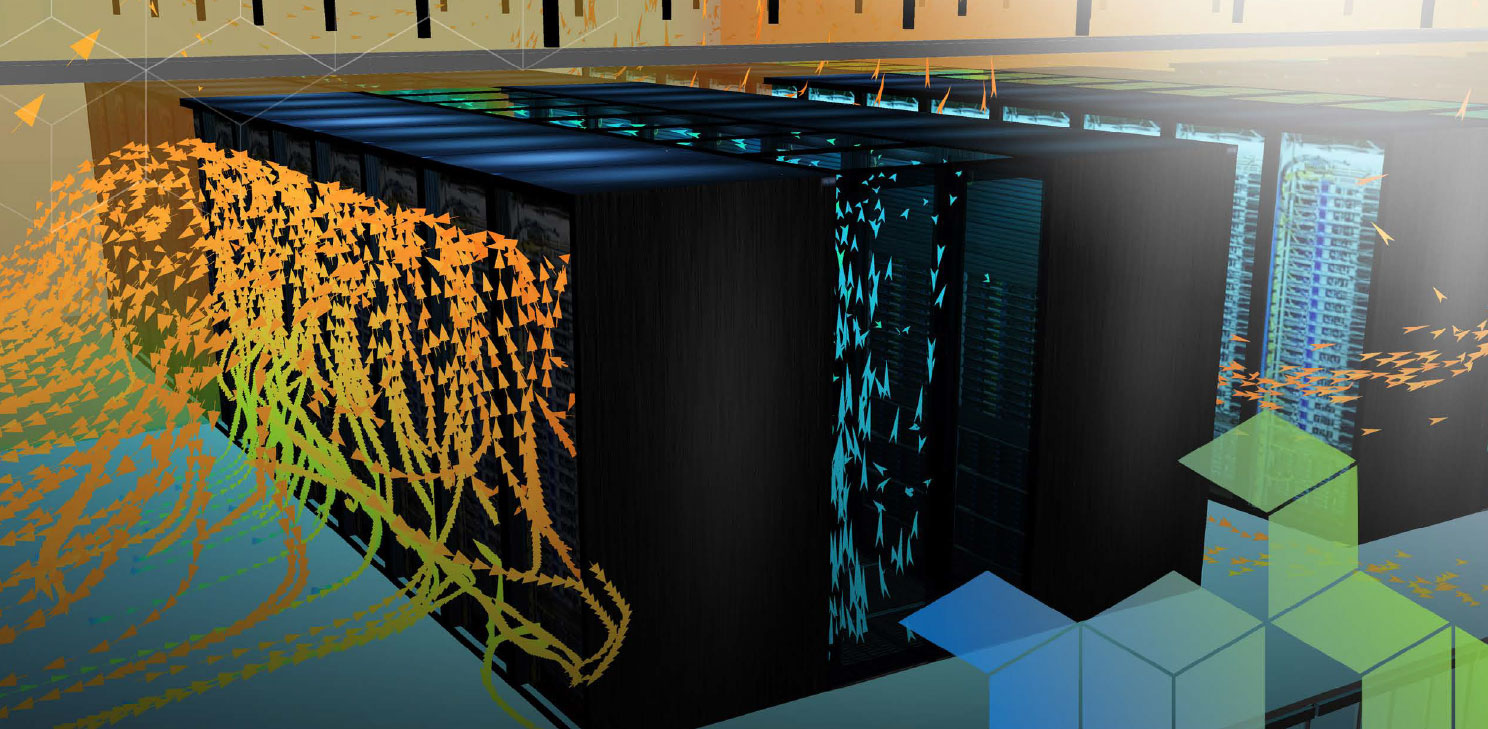
Powered by technologies such as computational fluid dynamics (CFD), artificial intelligence, and 3D visualization tools, a data center digital twin enables detailed analysis of airflow, thermal dynamics, power usage, and IT workloads. Unlike static models, it evolves in real time, offering predictive insights that extend far beyond traditional planning tools.
Enhancing Data Center Design
In the design phase, a data center digital twin enables virtual prototyping and scenario testing before any physical construction begins. Teams can visualize layouts in 3D, mapping power distribution, airflow, and IT equipment placement to refine configurations.
Performance-aware design becomes achievable through simulation of multiple configurations, optimizing for energy efficiency, cooling strategies, and capacity. Engineers can also test failure scenarios—such as cooling system breakdowns or power disruptions—to ensure resilience and reliability. Additionally, sustainability decision-making is strengthened through carbon usage analytics and energy modeling, helping balance performance with environmental impact.
Digital Twin vs DCIM
While both digital twins and data center infrastructure management (DCIM) systems play critical roles, they serve distinct purposes. A data center digital twin focuses on simulation, prediction, and optimization, enabling what-if analysis and capacity planning. In contrast, DCIM platforms monitor and manage real-time operational data such as temperature, power consumption, and asset tracking.
Rather than competing, the two are complementary. Integrating DCIM data into a digital twin enhances real-time insights while expanding analytical capabilities.
Driving Efficiency in Delivery and Operations
During construction and delivery, a data center digital twin accelerates project timelines by enabling parallel workflows. Virtual models allow teams to preconfigure network layouts, simulate cooling systems, and validate infrastructure before deployment. This reduces rework, minimizes waste, and shortens time-to-value.
In operations, digital twins unlock several high-impact benefits:
- Capacity Planning: Predict infrastructure needs and avoid stranded capacity
- Improved Uptime: Simulate failure scenarios to enhance reliability
- Predictive Maintenance: Identify potential issues before they cause downtime
- Energy Optimization: Test power-saving strategies to reduce costs and emissions
- Real-Time Insights: Integrate live data for continuous performance monitoring
By operating at a time granularity of minutes to hours, digital twins provide actionable insights while maintaining consistency with physical systems.
Supporting AI-Driven Data Centers
AI-focused data centers and AI factories present unique challenges, including high-density GPU deployments and fluctuating energy demands. A data center digital twin addresses these by simulating hybrid cooling systems—such as direct liquid cooling and air cooling—and optimizing coolant distribution.
It also enables evaluation of retrofitting strategies, helping operators integrate advanced cooling into legacy environments without disruption. Predictive simulations support energy management and scalability, ensuring alignment with sustainability goals.
Enabling Collaboration and Decision-Making
One of the most powerful aspects of a data center digital twin is its ability to unify teams. By integrating data from environmental monitors, DCIM tools, building management systems, and ticketing platforms, it creates a centralized, collaborative environment.
IT, operations, and facilities teams can access shared dashboards, visualize changes, and make faster, data-driven decisions. Automated reporting and scenario analysis further streamline workflows and improve accountability.
Applications Across Industries and Data Center Types
From enterprise and colocation facilities to hyperscale environments, the data center digital twin delivers value across all data center types. It is widely used in industries such as finance, cloud computing, healthcare, automotive, aerospace, and AI infrastructure, where reliability, scalability, and performance are critical.
Lifecycle Integration
A key strength of the data center digital twin is its applicability across the entire lifecycle:
- Planning and Design: Virtual prototyping and predictive modeling
- Construction: Reduced costs, minimized waste, and improved serviceability
- Operations: Enhanced reliability, energy efficiency, and asset lifespan
By maintaining a continuously updated model, it enables long-term optimization and informed decision-making.
Conclusion
As data centers grow in scale and complexity, the data center digital twin is becoming an essential component of modern design and delivery strategies. By bridging the gap between physical infrastructure and digital intelligence, it empowers organizations to optimize performance, reduce costs, and achieve sustainability goals.
In an era defined by data and computational demand, adopting a data center digital twin is no longer optional—it is a strategic imperative for building resilient, efficient, and future-ready infrastructure.
To attend talks from industry leaders, connect with solution providers and network with peers, attend the 5th Constructing Next-Gen Data Centers Europe: Revolutionizing Planning, Design, and Engineering, taking place June 9-10, 2026, in Berlin, Germany.
For more information, click here or email us at info@innovatrix.eu for the event agenda. Visit our LinkedIn to stay up to date on our latest speaker announcements and event news.