Researchers at Fraunhofer IPA show how different dispersion processes optimize the production of environmentally friendly lithium iron phosphate cathodes. Wet jet milling saves process energy by up to 42 percent – with almost the same battery performance.
Lithium-ion batteries are the backbone of electromobility and modern energy storage systems. However, their production is harmful to the environment: standard binders such as polyvinylidene fluoride (PVDF) – a plastic that holds electrodes together – require the toxic solvent N-methyl-2-pyrrolidone (NMP). Scientists at the Fraunhofer Institute for Manufacturing Engineering and Automation IPA have further developed the production of water-based lithium iron phosphate cathodes by systematically investigating the influence of different dispersion processes. The bio-based binder carboxymethylcellulose (CMC) is used in the process. CMC is water-soluble, comes from cellulose and enables completely water-based process control without organic solvents.
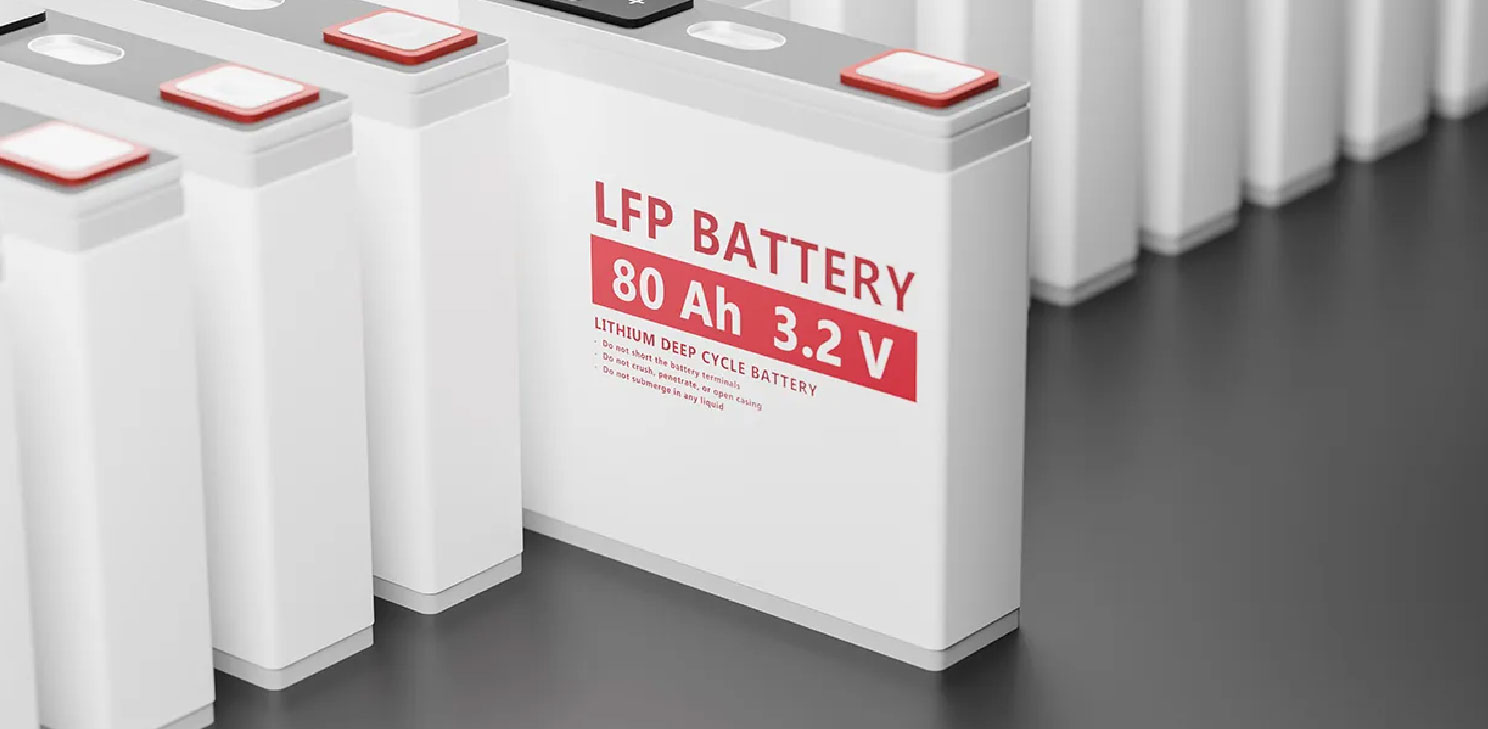
Lithium iron phosphate (LFP) is considered a safer and more cost-effective alternative for the cathodes, the positive electrodes, than those often made from nickel manganese cobalt oxides (NMC). This is because LFP does not require critical metals such as cobalt and nickel, is thermally stable and achieves long cycle lifetimes. In industrial practice, however, the comparatively low conductivity of LFP slows down performance at high charge and discharge rates.
Two dispersion processes for LFP slurries in direct comparison
The team systematically investigated two industrially relevant processes that mix a paste from active material, conductive carbon black, binder and water: a classic dissolver and the high-pressure wet jet milling process. In dissolver mixing, a toothed disk rotates at high speed in the paste, also known as slurry, creating shear forces that break up the particle agglomerates. Wet jet milling is a high-pressure process in which the paste is pressed through micro-nozzles at up to 2200 bar. It generates intense particle collisions and particularly efficient comminution.
The researchers characterized the resulting pastes in terms of particle size distribution, viscosity (flow behaviour) and sedimentation behaviour. The coated and calendered electrodes – i.e. compacted electrode layers – were analyzed using thickness measurements and scanning electron microscopy. The electrochemical performance was determined using C-rate tests. In these tests, battery cells are tested at different charge and discharge rates: 0.1 C = very slow charge/discharge, approx. 10 h for full charge/discharge; 1 C = “nominal”, 1 h; 3 C = very fast, 20 min.
Significant differences in processing properties
The results show significant differences in the slurry properties: Wet jet milling reduced the average particle size by 39 percent (from 7.91 to 4.78 micrometers) and drastically lowered the viscosity – by 96 percent at low shear rates, 80 percent at medium shear rates and 64 percent at high shear rates. The finer particles and lower viscosity of wet jet milling allowed a higher solids content to be processed compared to dissolver paste, which can reduce the energy required for drying.
Scanning electron micrographs showed that the electrodes produced by wet jet milling were more homogeneous and densely packed. The interface to the aluminum current collector was smoother and more closed, suggesting better current flow and mechanical stability.
Electrochemical performance remains largely stable
Despite the significant differences in processing properties, the electrochemical performance of the electrodes differed only slightly. At most of the C rates tested, the discharge capacities – i.e. the amount of electrical energy that the battery can release – were within the measurement tolerance. Only at 1.0 C did the wet-jet milling variant show a 12.8 percent higher capacity (83.8 vs. 73.1 milliampere-hours per gram). The researchers attribute this to the larger active surface area of the smaller particles, which enables faster electrochemical reactions.
Energy savings and industrial relevance
An overall energy balance for mixing and drying shows the decisive advantage: the combination of wet jet milling and dissolver mixing for the complete formulation required 0.98 kilowatt hours per kilogram of paste (kWh/kg) – compared to 1.70 kWh/kg for the pure dissolver process. Together with the drying energy, this corresponds to an energy saving of 42 percent. The higher solids content of the wet jet milling paste therefore reduces drying times and increases production efficiency.
“Our results show that the optimization of production processes is just as important as the choice of materials,” explains study author Leah Jalowy and her fellow author Dominik Nemec adds: “Water-based processing with CMC binder eliminates toxic solvents from the production chain, while optimized dispersion processes save energy and improve product quality – without significantly affecting battery performance.”
The study was published in the open access journal AppliedChem on November 5, 2025 and provides important insights for battery manufacturers looking to establish sustainable production processes. While the research was conducted on a laboratory scale, the results suggest that the benefits are even more pronounced when scaled up to an industrial scale.
The work for the study was carried out within the technology platform of the Dispersion Center at Fraunhofer IPA in close cooperation with the Japanese machine manufacturer Sugino. Together with member companies such as Sugino, the Dispersion Center works on and addresses current topics in dispersion research in a cross-industry and target-oriented manner.
To find out more about the latest gigafactory updates and innovations, meet with solution providers and hear talks from industry leaders, attend the 6th BATTERY GIGAFACTORY Summit Europe: Advances in Planning, Engineering and Operations, taking place on May 27-28, 2026, in Berlin, Germany.
For more information, visit our website or email us at info@innovatrix.eu for the event agenda. Visit our LinkedIn to stay up to date on our latest speaker announcements and event news.
Source: