As the semiconductor industry pushes beyond 3 nm scaling, a new era of semiconductor fab innovation is emerging, reshaping how chips are designed, manufactured, and integrated. The convergence of advanced fabrication techniques, novel architectures, and intelligent manufacturing systems is setting the direction for the next decade of technological progress.
Shrinking transistor dimensions has long been the driving force behind semiconductor advancement. However, as physical limits become more pronounced, traditional scaling approaches face increasing challenges. At the same time, rising demand from artificial intelligence, high-performance computing, and low-power edge devices requires greater efficiency, performance, and adaptability. This is where semiconductor fab innovation becomes critical, enabling the industry to overcome thermal constraints, variability issues, and yield limitations.
One of the most significant developments is the evolution of extreme ultraviolet (EUV) lithography. Already central to 5 nm and 3 nm nodes, EUV is advancing further with High-NA (numerical aperture) EUV systems. These next-generation tools allow for finer resolution, achieving feature sizes of approximately 8 nm in a single exposure while improving pattern fidelity. Such precision is essential for pushing fabrication below the 2 nm threshold, although it comes with increased cost and reduced throughput.
Alongside lithography, transistor architecture is undergoing a transformation. Traditional FinFET designs are gradually being replaced by Gate-All-Around (GAA) and RibbonFET structures. These designs provide better control over current leakage and channel behaviour at nanoscale dimensions, making them more suitable for sub-3 nm technologies. By improving electrostatic control, these architectures enable continued scaling without compromising performance or efficiency.
Another key pillar of semiconductor fab innovation is the shift towards backside power delivery and 3D integration. Conventional front-side power routing becomes inefficient at extreme scales due to congestion and resistance issues. Backside power delivery addresses this by routing power through the wafer’s reverse side, freeing up space for signal interconnects. When combined with 3D stacking, chiplets, and heterogeneous integration, this approach allows manufacturers to assemble highly complex systems in compact footprints, integrating logic, memory, and specialised components seamlessly.
Manufacturing processes themselves are also evolving. Single-wafer processing is gaining traction as an alternative to traditional batch methods, offering greater precision in defect control and process uniformity. At the same time, innovations in mask technology, including multi-electron beam lithography, are enabling more accurate patterning for advanced nodes. These developments are essential for maintaining yield and consistency as feature sizes continue to shrink.
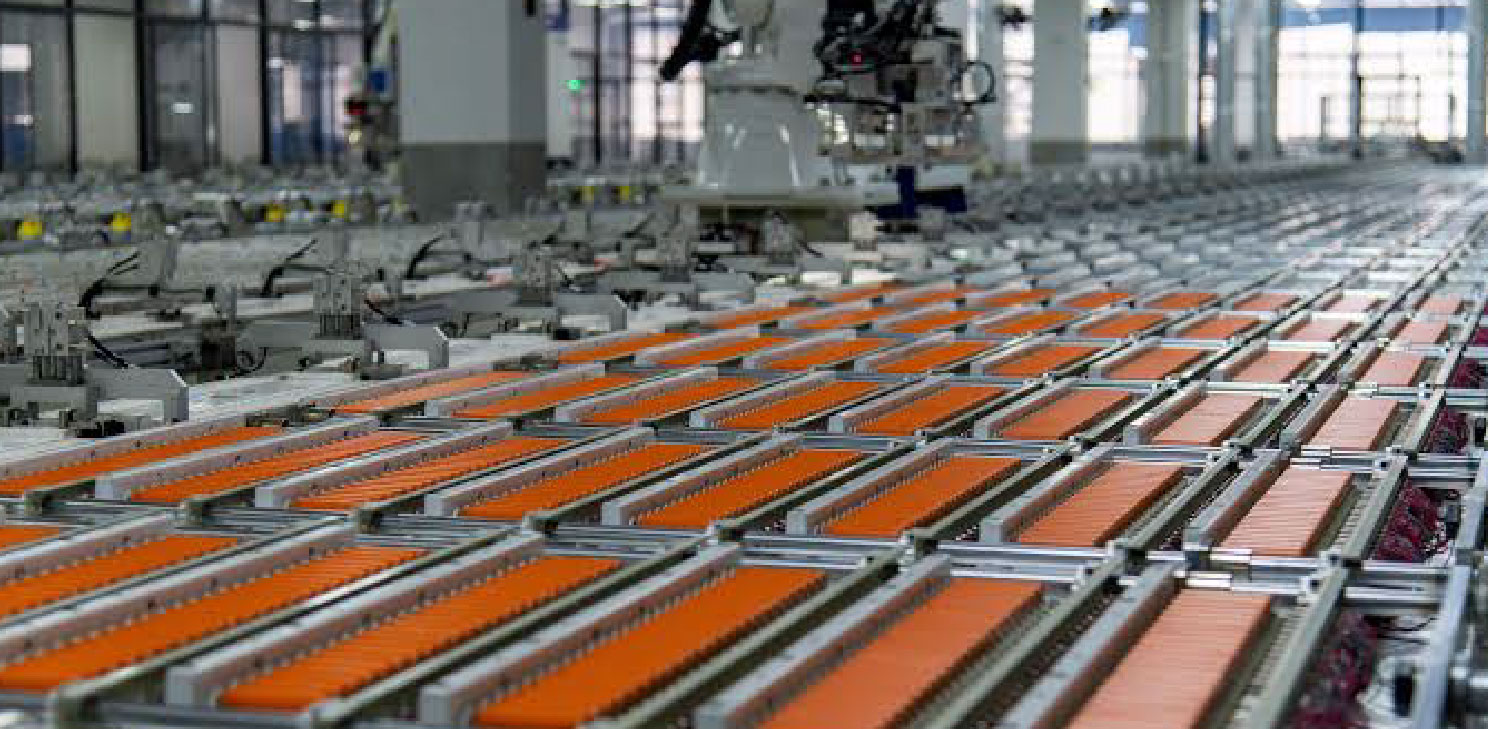
Automation is playing an increasingly vital role in modern fabs. Machine learning and AI-driven systems are now used to monitor production, optimise throughput, and detect defects in real time. This level of automation ensures consistent high-volume manufacturing while enabling rapid adjustments to changing conditions. It also supports predictive maintenance and advanced analytics, reducing downtime and improving overall efficiency.
Advanced packaging techniques further extend the capabilities of semiconductor fab innovation. Technologies such as 3D stacking, system-in-package (SiP), multi-chip modules (MCM), and high-density interconnects (HDI) enable higher integration within smaller form factors. These approaches are particularly important for applications requiring high performance and energy efficiency, such as AI workloads and data centres.
Despite these advancements, significant challenges remain. High-NA EUV systems are extremely expensive, raising the cost per wafer and requiring careful economic planning. At very small scales, stochastic effects and material limitations can impact yield and reliability. Additionally, the coexistence of multiple transistor architectures introduces strategic uncertainty, as companies must decide which technologies to adopt without full visibility of long-term outcomes.
Supply chain resilience is another pressing concern. Global disruptions, material shortages, and geopolitical tensions have highlighted the need for diversification. Companies are increasingly investing in geographically distributed manufacturing and leveraging AI-driven forecasting tools to manage risks and maintain production continuity.
Ultimately, semiconductor fab innovation is no longer just about making transistors smaller. It represents a holistic transformation encompassing lithography, architecture, integration, materials, and manufacturing intelligence. Those who successfully align with these emerging trends will not only overcome current limitations but also gain a decisive competitive advantage in the rapidly evolving semiconductor landscape.
To discuss semiconductor manufacturing, fab construction and key issues facing the industry, connect with solution providers and network with delegates, attend the 3rd Constructing Semiconductor FAB Summit USA: Advances in Planning, Design and Engineering, taking place June 24-25, 2026, in Austin, Texas, USA.
For more information, click here or email us at info@innovatrix.eu for the event agenda. Visit our LinkedIn to stay up to date on our latest speaker announcements and event news.