The 6th BATTERY GIGAFACTORY Summit Europe: Advances in Planning, Engineering and Operations took place from May 27-28, 2026, at the MOA Berlin in Berlin, Germany. The summit focused on the critical aspects of battery manufacturing event strategies, including gigafactory construction, facility scalability, and operational efficiency.
Attendees explored how strategic facility design and construction decisions influence productivity, resilience, and long-term sustainability across the battery value chain.
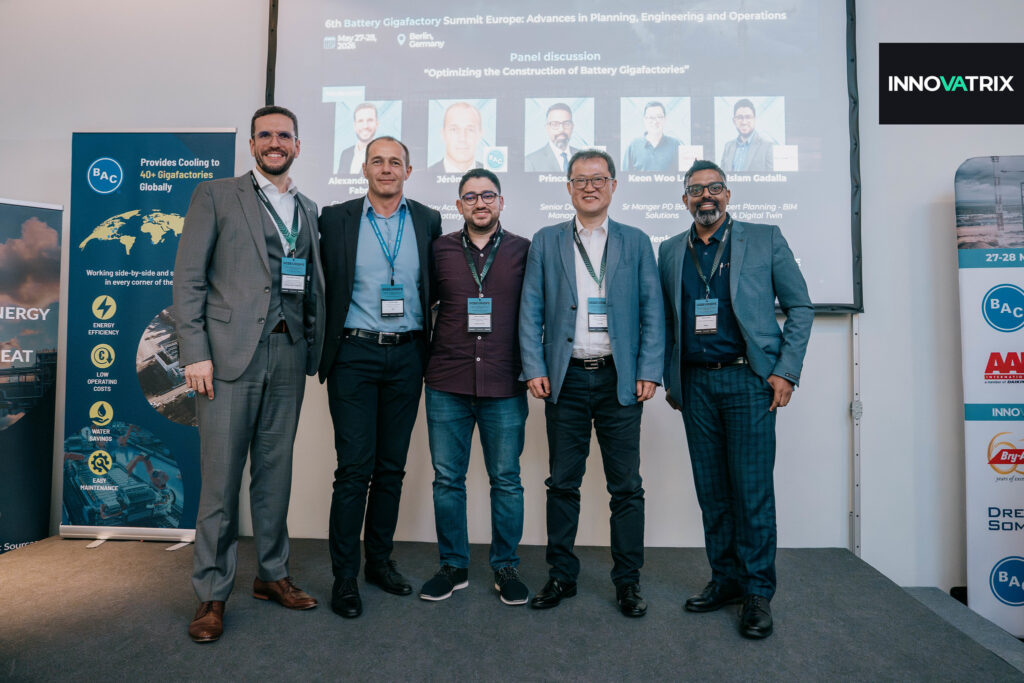
This article will provide a session recap for those who didn’t get the chance to attend and serve as a reminder for those who attended.
Building a European Battery value chain
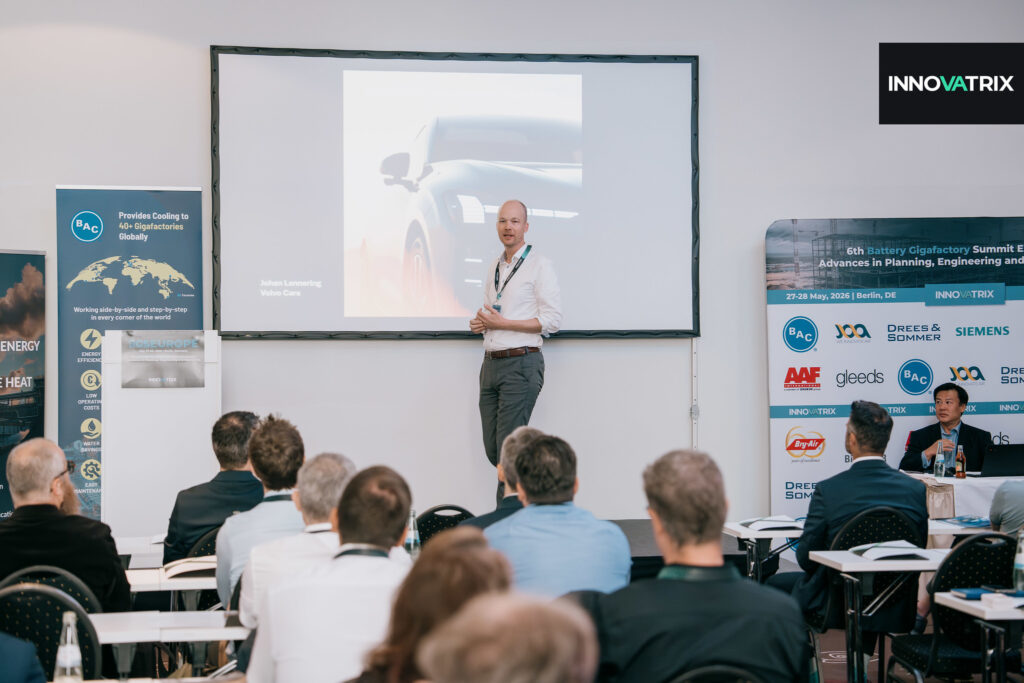
Johan Lannering, Senior Director, Strategic Deals, Gothenburg Giga Factory and Smartcell Power Electronics at Volvo Cars

Johan examined the challenges and opportunities involved in establishing a competitive European battery value chain, spanning mining and refining through precursor materials, cathode and anode production, cell manufacturing, vehicle production and the finished car. He highlighted that building this complete ecosystem requires significant time and investment, with the total investment estimated at approximately $1–2 billion, while China continues to dominate several critical stages of the chain.
He emphasised that European OEMs are fundamental to driving demand and supporting the development of a regional value chain. Johan questioned whether new regulatory frameworks will be sufficient, arguing that achieving the necessary scale and speed will require less administration, greater standardisation and increased consolidation.
He also explored the concept of creating a European equivalent of Airbus, bringing organisations together to build scale, share capabilities and strengthen competitiveness. Johan outlined eight building blocks for success: trust, speed, scale, system integration, competence, financing, energy and partnerships. He stressed the importance of acting quickly, removing barriers to execution, securing affordable energy, developing expertise and ensuring the entire value chain is addressed. He concluded with an optimistic message that Europe can build a competitive battery ecosystem through collaboration and decisive action.
Managing Risk and Complexity in Battery Factory Installations: Practical Insights from International Projects
Tomasz Majcherski, Group Sales & Commercial Director at EURELO Industrial Group (EIG)

Battery projects often fail late because critical risks are addressed too late in the project lifecycle. The real complexity extends beyond machinery to the interfaces between building readiness, OEMs, logistics, HSE and commissioning.
The keynote highlighted six key risk areas: ensuring access, floor loading, cleanroom timing and lifting routes are ready; sequencing equipment flow to avoid double-handling; involving installers early in FAT and documentation; integrating HSE and compliance across different contractor cultures; managing multi-OEM responsibilities; and coordinating international teams across languages, regulations and working practices.
The proposed approach is to involve the installation partner early and create one integrated execution flow spanning FAT support, export packing, customs and transport, warehousing, unloading, mechanical and electrical installation, testing and start-up. This enables earlier validation of building readiness, controlled equipment sequencing, better documentation continuity and safer execution.
A centralized installation control structure can further coordinate schedules, interfaces, site progress, risks and handover. The result is clearer ownership, fewer stoppages and handover gaps, reduced double-handling, faster issue escalation and greater confidence in achieving production ramp-up dates.
Practical digitalization in battery production
Hugues-Yanis Amanieu, Team Leader Data Science & Engineering at Leclanché SA

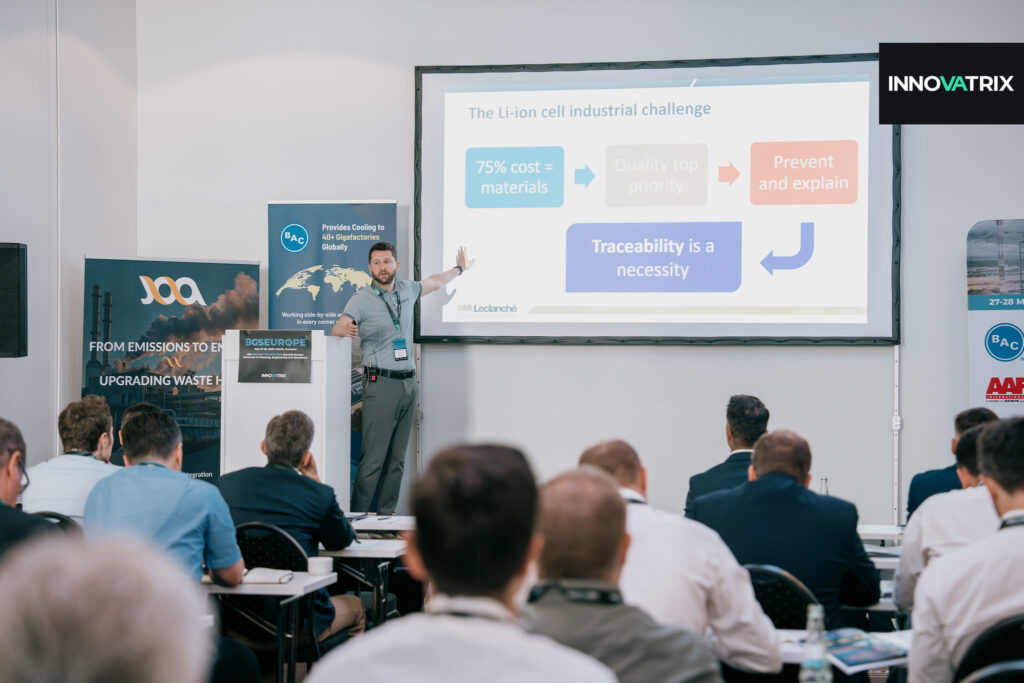
Hugues-Yanis examined how practical digitalization can address the complexity of lithium-ion cell manufacturing, where materials account for around 75% of costs, quality is critical, and hundreds of parameters and measurements create significant information overload. He argued that effective digitalization starts with acquiring data that is as comprehensive, relevant and well organised as possible, then transforming it into accessible insights that support informed and automated decisions.
The approach presented focused on flexible, modular systems built from existing open-source technologies. By combining time-series databases, ontology-driven models, KPI data marts, monitoring and low-code tools, manufacturers can progressively improve traceability, root-cause analysis and operational visibility without relying on siloed reporting.
A key principle is to leverage internal expertise. Clear conventions, consistent definitions of entities and processes, and small, rapid implementation cycles can deliver immediate value while empowering non-software specialists. Better traceability can also produce substantial savings: with individual quality tests costing around €20,000, informed root-cause analysis can avoid unnecessary testing.
Hugues-Yanis concluded that manufacturers should focus on their specific pain points, build through successive small successes, empower employees and maximise order through clear conventions.
Fire Safety in Battery Gigafactories: Future-Proof Fire Protection Across the Entire Battery Value Chain
Carsten Meißner, Senior Consultant Fire Safety Solutions at Siemens AG

Carsten explored how fire protection in battery gigafactories must address risks across the entire lithium-ion battery value chain, from raw materials and production to logistics and recycling. He explained that thermal runaway develops through several stages, beginning with battery abuse and off-gassing before potentially escalating into thermal runaway, gas explosions and open fire.
The keynote emphasized the importance of early detection and rapid intervention. Detecting off-gassing or other warning signs at an early stage can provide valuable time to isolate the affected area, release nitrogen to reduce oxygen levels, disconnect battery power and contain the incident until emergency services arrive.
Carsten also highlighted the value of a risk-based approach that considers flammable, explosive and toxic materials, ignition likelihood and the potential for incidents to spread. Fire protection must therefore be tailored to individual production processes, including electrode manufacturing, electrolyte filling, formation and aging.
A comprehensive strategy combines building, process, machinery and operational safety. The presentation also examined the role of video-based fire detection and temperature monitoring in research, warehousing, logistics and recycling, helping identify smoke, flames and temperature anomalies closer to their point of origin and before incidents escalate.
How BIM and Digital Twins are used from early design through ramp-up
Islam Gadalla, Expert Planning – BIM & Digital Twin at PowerCo SE

Islam explained how BIM and Digital Twins can provide continuous digital support from early design through construction, commissioning and production ramp-up. BIM was presented as more than a 3D model: it combines geometry with information such as materials, equipment specifications, costs, installation sequences and maintenance data, creating a shared source of truth for multidisciplinary teams.
For gigafactories, where multiple buildings, dense utilities, complex production systems and aggressive timelines must be coordinated, BIM enables teams to identify clashes and validate layouts before construction begins. Production equipment, material flows, safety zones, maintenance access and utilities can be coordinated within a single model, while scheduling, cost estimation, sustainability and facility management can also be integrated.
Islam highlighted the significant cost advantage of addressing issues early. Changes made during design are substantially cheaper than modifications during construction or after handover.
The BIM model can then become the foundation for a Digital Twin, which incorporates live sensor and operational data. During ramp-up, this supports progress tracking, commissioning, sequence simulation, delay detection and operational readiness. By maintaining data continuity from design through operations, BIM and Digital Twins help gigafactories manage complexity, reduce risk and achieve production readiness more reliably.
Battery Atlas 2026 – Capturing the European Li-ion Battery Industry
Heiner Hans Heimes, Chair of Production Engineering of E-Mobility Components at PEM RWTH Aachen University
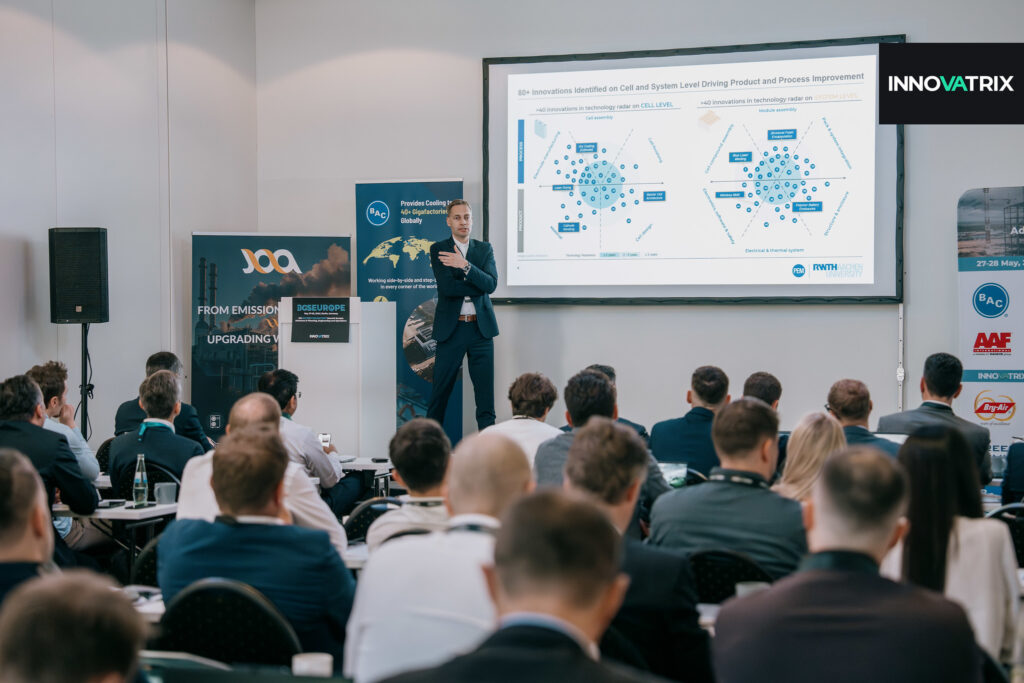
Heiner Hans examined the evolving European lithium-ion battery industry, highlighting more than 80 innovations across cell and system levels that are driving product and process improvements. He noted that announced European cell production capacity has fallen from more than 2,000 GWh in 2023 to around 1,190 GWh by early 2025, reflecting a shift away from speculative projects towards more viable business models. Asian manufacturers continue to dominate, creating opportunities for Europe to focus on next-generation technologies and stronger industrial integration.
Several process innovations were highlighted, including dry electrode coating, which eliminates solvents but still faces challenges around material sensitivity, production speed and quality control. In module and pack production, structural foam encapsulation can combine structural, thermal and safety functions while reducing component count.
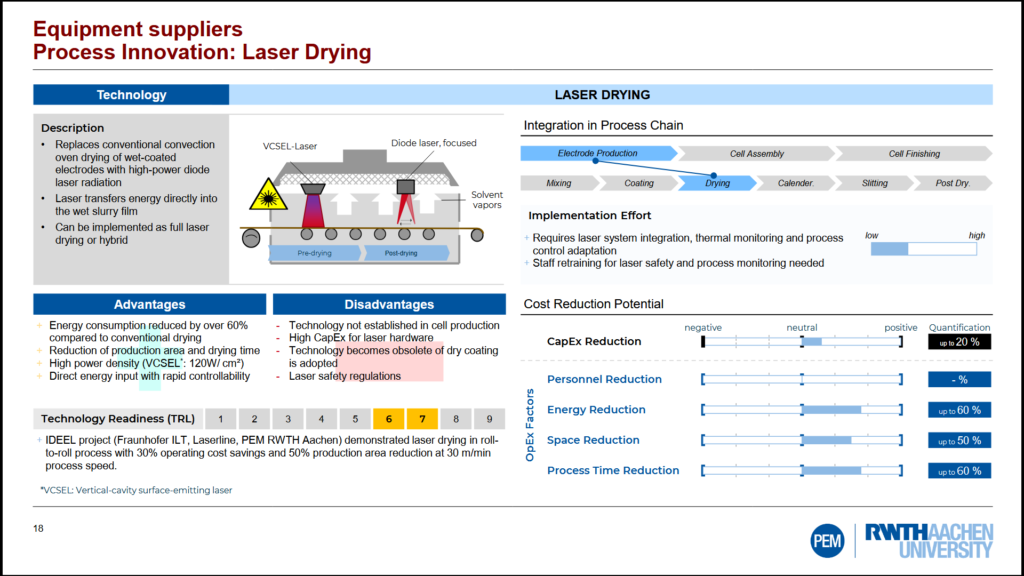
Heiner also discussed the shift from greenfield construction towards brownfield investment, with retrofits and upgrades expected to reach approximately €135 billion by 2035. Laser drying could reduce drying energy consumption by more than 60%.
Across recycling, testing and passive components, he emphasized the importance of regulation, specialization, digitalization and process integration in strengthening Europe’s battery ecosystem and supply-chain resilience.
Adaptive Engineering for Battery Plants
Peter Hodgkinson, Director Strategic Growth & Major Projects, Richard Anderson, Technical Director, and Francisco Fernandez Hernandez, Lead Clean Technologies, at WSP Global Inc.

Peter, Richard and Francisco explored why gigafactories require an adaptive engineering approach capable of managing interconnected technical, safety, regulatory, logistical and organisational challenges. They argued that traditional waterfall delivery models, based on fixed requirements and premature design freezes, struggle to keep pace with evolving battery chemistry, supplier changes, geopolitics, lead times and regulatory requirements.
The keynote proposed starting with decisions rather than drawings by establishing which decisions must be made, when they are needed, who has authority and how each decision affects future options. A key principle is distinguishing irreversible decisions, such as structural systems, foundation loads, electrical infrastructure and fire protection, from reversible decisions such as equipment suppliers, production layouts and automation technologies.
The recommended strategy is to build a robust infrastructure platform while keeping the process layer flexible. This creates a stable core around structural, electrical, HVAC, safety and material-flow systems, with flexible edges that can accommodate changing technologies, suppliers and layouts.
They also emphasised synchronized design and construction, progressive design freezes, modular design packages and clear decision-making. Maintaining only three to five critical priorities, communicating decisions quickly and measuring resilience to change can help teams achieve greater speed without sacrificing control.
Emission Control starts at the Source – Dust & Vapor Capture Strategies for Battery Manufacturing & Recycling
Bas van den Bogerd, Business Development Director at JOA Air Solutions

Bas highlighted the importance of controlling dust and vapor emissions at their source in battery manufacturing and recycling. Poorly engineered extraction can create quality and yield risks through contamination and dust migration, EHS and ATEX risks from combustible powders, unexpected emission peaks, and unnecessary operating costs caused by over-extraction.
He identified common emission sources including bulk material handling, powder and slurry mixing, coating and drying, cutting and polishing, electrolyte handling, formation and degassing. Three recurring system failures were highlighted: capture systems that do not match emission characteristics, unbalanced extraction networks, and unstable conveyance that causes dust settling, duct fouling and clogging.
The recommended approach is to “Measure, Model, Make.” Process measurements and data collection establish actual conditions, while air-technical modelling and CFD analysis enable systems to be designed and validated before implementation. Dust capture should prioritize containment, correct capture velocities, stable conveying conditions, maintainability and appropriate ATEX measures. Vapor systems should separate streams, capture emissions at their source and avoid unnecessary dilution.
Bas also emphasized heat recovery, particularly the potential of latent heat from dryers, alongside electrification and renewable energy strategies. Validated extraction performance can reduce ramp-up risk, downtime, maintenance, energy use and total cost of ownership while supporting compliance and stable production.
From Planning to Production: Solutions for Competitive Battery Cell Production in Europe
Paul Lingohr, Group Lead Battery Production Management at PEM RWTH Aachen University

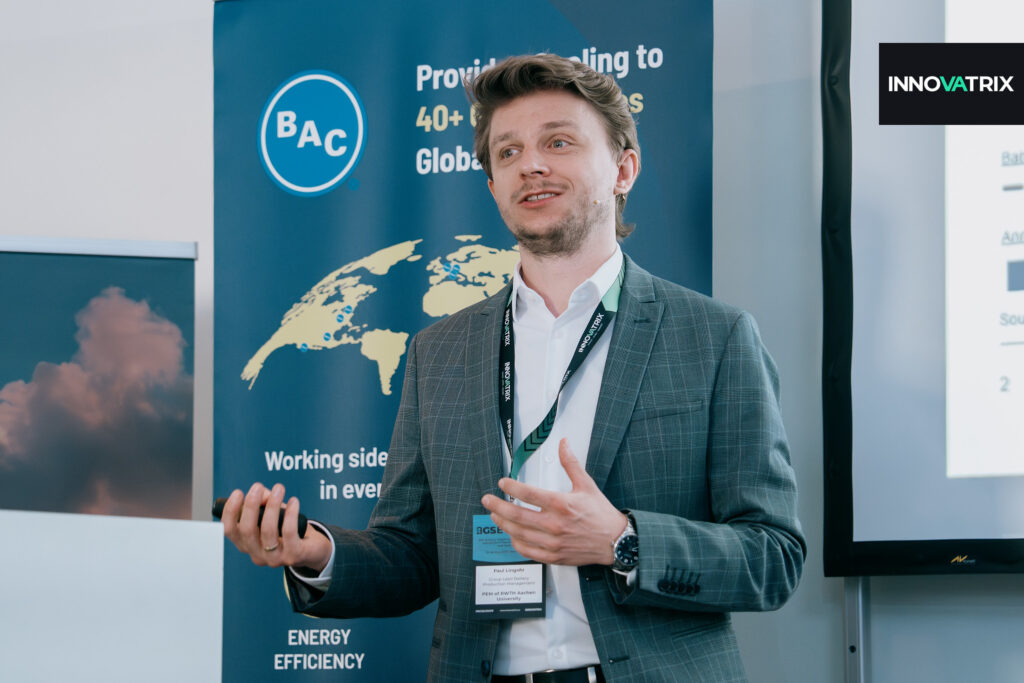
Paul examined the challenges of building a competitive European battery cell industry, emphasising that large volumes of announced production capacity remain at risk of delay or cancellation. With announced capacity falling from more than 2,000 GWh to roughly 1,190 GWh, the market is moving towards more realistic projects, while Asian manufacturers continue to lead European expansion.
He identified time-to-yield as a critical measure of competitiveness. Extended ramp-up periods increase unit costs, delay market entry and can create supply bottlenecks and customer losses. Scrap is another major economic factor, with each percentage point of scrap estimated to cost around €30,000 per day, while production delays can result in substantial daily profit losses.
The presentation outlined three priorities across the factory lifecycle: AI-based layout and technology planning during the planning phase, sheet-level traceability and cross-process control during ramp-up, and continuous data-driven optimisation during series production. AI-assisted planning can reduce layout iteration from months to minutes, while traceability enables more effective root-cause analysis and adaptive process control.
Paul also highlighted active learning, which reduced slurry viscosity prediction error by more than 50% using only 35 data points, demonstrating the potential for data-efficient AI. He concluded that collaboration across Europe’s research, equipment and manufacturing ecosystem is essential to achieving competitive battery production.
Controlling Complexity in Battery Gigafactory Construction
Prince John, Senior Design Manager at Exyte

Prince examined how battery gigafactory owners can control the extreme complexity created by scale, speed-to-market pressures, high contractor density, parallel engineering and construction, tight process tolerances, and evolving regulatory requirements. He emphasised that safety begins during design, with engineering decisions determining construction safety, operational safety and long-term asset integrity.
A central theme was that interfaces are the primary source of risk. Late design maturity, overlapping construction phases, incomplete scope definitions and frequent changes can cascade into schedule delays, cost escalation, quality defects and safety risks. Owners should therefore act as system integrators by establishing clear governance, managing interfaces and enforcing disciplined decision-making.
Recommended controls include early interface mapping, RACI matrices, interface registers, multidisciplinary resolution workshops and federated BIM models as a single source of truth. Structured construction zoning, controlled logistics, workface planning and readiness gates can reduce congestion and improve productivity.
Prince also highlighted integrated scheduling, early cost intervention and a formal change-management process covering cost, schedule, quality and safety. Quality, safety and sustainability should be embedded in planning rather than addressed retrospectively.
He concluded that successful delivery depends on empowered teams, clear governance, effective digital tools, collaboration and relentless interface management. Complexity cannot be eliminated, but it can be controlled through discipline, clarity and leadership.
Importance of reliable power supply in battery manufacturing
Johannes Glas, Senior Technical Consultant – Totally Integrated Power at Siemens AG

Johannes highlighted the critical importance of reliable power supply in battery manufacturing, where a single interruption can affect production output, material yield, equipment, quality and customer commitments. Depending on when an outage occurs, consequences can include machine fouling, material scrapping, dry room reconditioning, formation cycle restarts, re-inspection, delivery penalties and significant financial losses.
He examined critical production stages including mixing, coating, drying, assembly, electrolyte filling, formation and aging, where continuous power supports process momentum, humidity control, containment, motion systems and precise electrochemical conditions. A power loss during drying, for example, can rapidly raise humidity and scrap an entire batch, while uncontrolled formation cycles can compromise cell quality and potentially create severe safety consequences.
Johannes stressed that power resilience must be considered early because retrofitting it later can be three to five times more expensive. Planning should address capacity, peak demand, load balancing, network stability, redundancy and backup systems such as generators, UPS systems, renewable sources and battery energy storage.
He also covered modular E-Houses, arc-flash prevention and protection, and condition monitoring. Digital asset transparency and predictive maintenance can improve reliability, identify failures early and reduce unplanned shutdowns.
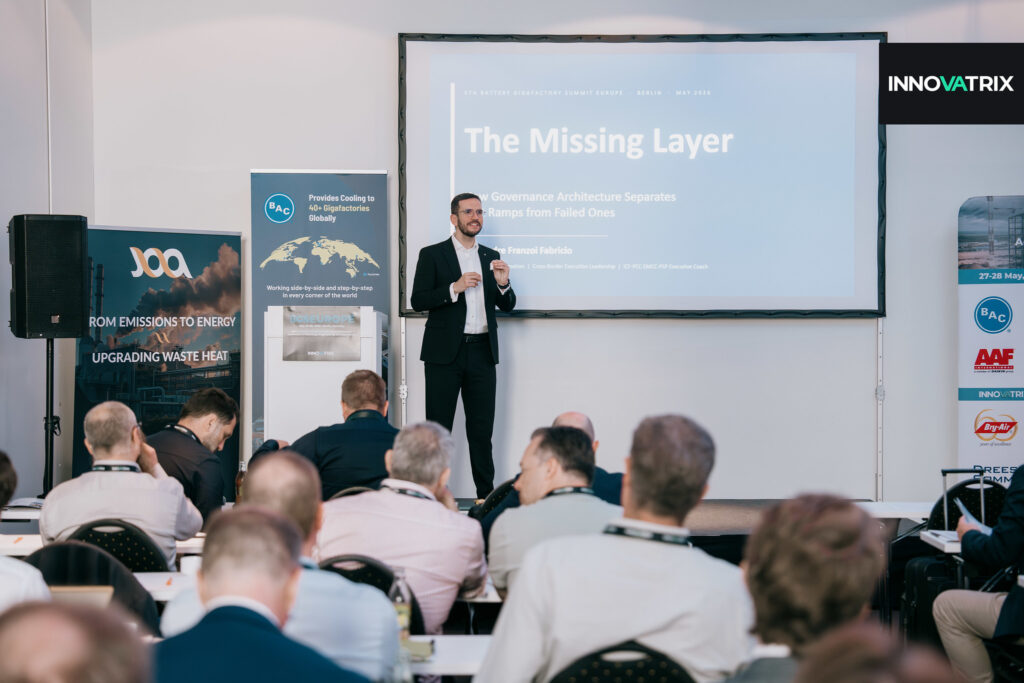
The Missing Layer: How Governance Architecture Separates Fast Ramps from Failed Ones
Alexandre Franzoi Fabricio, Global Organisation Development, Customer & Investor Relations at AESC, Independent Speaker
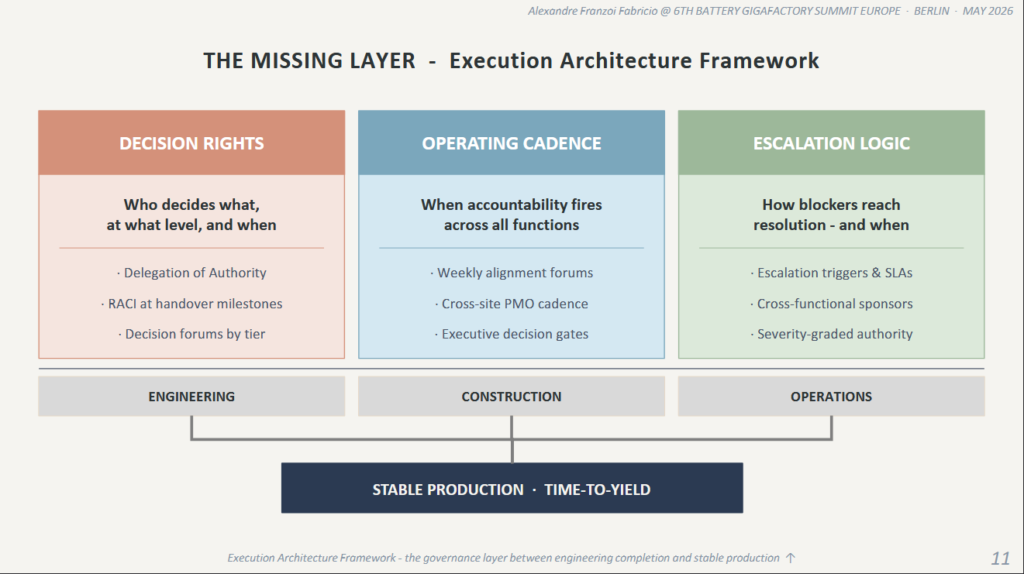
Alexandre examined the governance layer that determines whether battery gigafactory engineering plans translate into stable production. He highlighted that 91.5% of megaprojects experience cost overruns or schedule delays, with an average delay of more than 17 months, while only 0.5% are delivered on time, on budget and with their promised benefits. He argued that technology maturity and supply chain challenges alone do not explain these outcomes.
Using battery gigafactories as an example, Alexandre identified recurring post-mortem issues including unclear decision rights, slow escalation, missing cross-functional operating cadence and accountability gaps at programme handovers. These coordination failures amplify visible problems such as equipment delays, regulatory complexity and contractor performance.
He presented an execution architecture built around three layers: decision rights, establishing who can make decisions and at what level; operating cadence, creating consistent accountability across engineering, construction and operations; and escalation logic, defining how quickly cross-functional blockers reach the appropriate authority.
These challenges become more pronounced in cross-border programmes, where cultural differences, time zones and organisational structures can multiply friction. Alexandre concluded that structure does not slow execution; poor coordination does. Clear authority, consistent communication and rapid escalation reduce coordination latency and help keep ramp-ups moving at the speed of the problem.
Design. Simulate. Commission: The Value of Integrated Digital Planning for Battery Factories
Florian Langlotz, Partner & Global Head of Automotive at Drees & Sommer SE
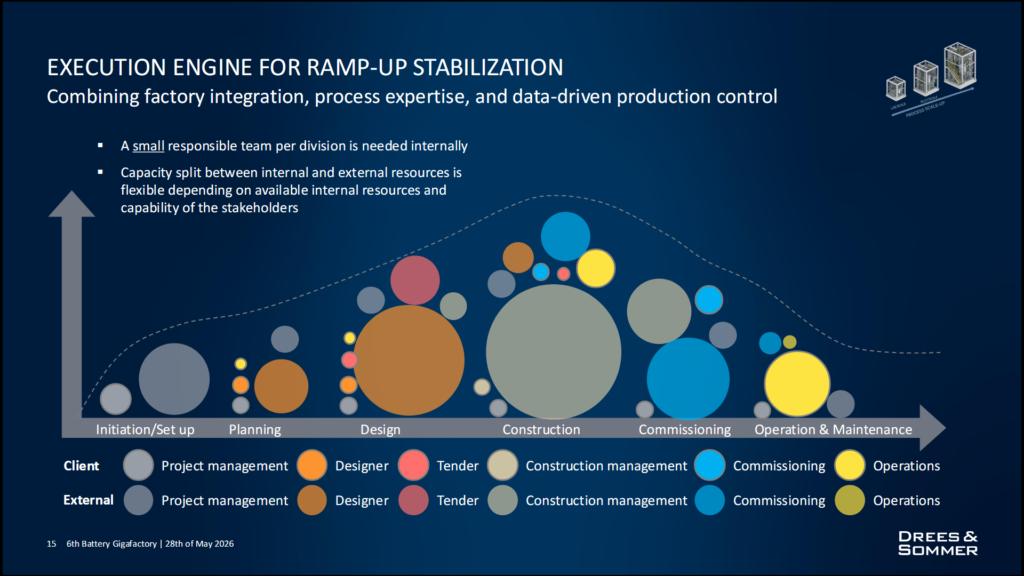
Florian explored how integrated digital planning can improve the design, commissioning and operation of battery factories. He highlighted flexible manufacturing and production process simulation as important tools for optimising factory concepts before construction, while virtual commissioning enables systems and processes to be tested and validated digitally before they are implemented physically.
He explained how an integrated planning approach connects 3D models with project and delivery data, creating a shared information model across disciplines. This supports clearer decisions, earlier identification of issues and fewer errors throughout the project lifecycle. The approach also creates a structured digital handover that can provide the foundation for an operational digital twin.
Florian showed how sensorised environments can combine real-time factory data with simulation to create live digital twins. This enables continuous monitoring, virtual validation, predictive intelligence and data-driven optimisation. Virtual commissioning can reduce costs by up to 30% for components, equipment and infrastructure, while reducing change costs caused by planning errors by 50%.
He concluded that better physical-world data can improve AI accuracy, support stable ramp-up and operation, and contribute to a potential 20% reduction in operating expenditure.
Achieving European cost-competitiveness in battery manufacturing
Max Reid, Head of Battery Technology and Costs at CRU International Ltd

Max examined the challenge of achieving cost competitiveness in European battery manufacturing, identifying three primary cost drivers: raw material prices, manufacturing excellence and cell design. He highlighted China’s continued cost advantage, supported by lower-cost component supply chains and integrated material production, while Europe faces a higher overall cost basis.
Raw material prices remain particularly important, with lithium prices having risen sharply in 2026 and Chinese cell costs increasing as a result. Max argued that Europe cannot easily compete on materials costs alone and must instead combine manufacturing excellence with high-energy-density cell designs and next-generation materials. New nickel-based cathode technologies could help reduce costs while maintaining energy density, although Chinese technologies continue to advance rapidly.
Manufacturing yield was presented as another critical lever, with significant improvements possible between start of production, ramp-up and mature operations. Max also highlighted how cell design varies according to application, with different formats and cathode thicknesses used for power cells, EVs and energy storage systems.
He concluded that achieving cost parity with China is extremely challenging, but high energy density, next-generation materials, manufacturing excellence and appropriate policy support can narrow the gap. Continuous technological progress in China means European manufacturers must keep innovating.
Henkel solutions for the future giga-scale battery production
Keon Woo Lee, Sr Manger PD Battery Solutions at Henkel

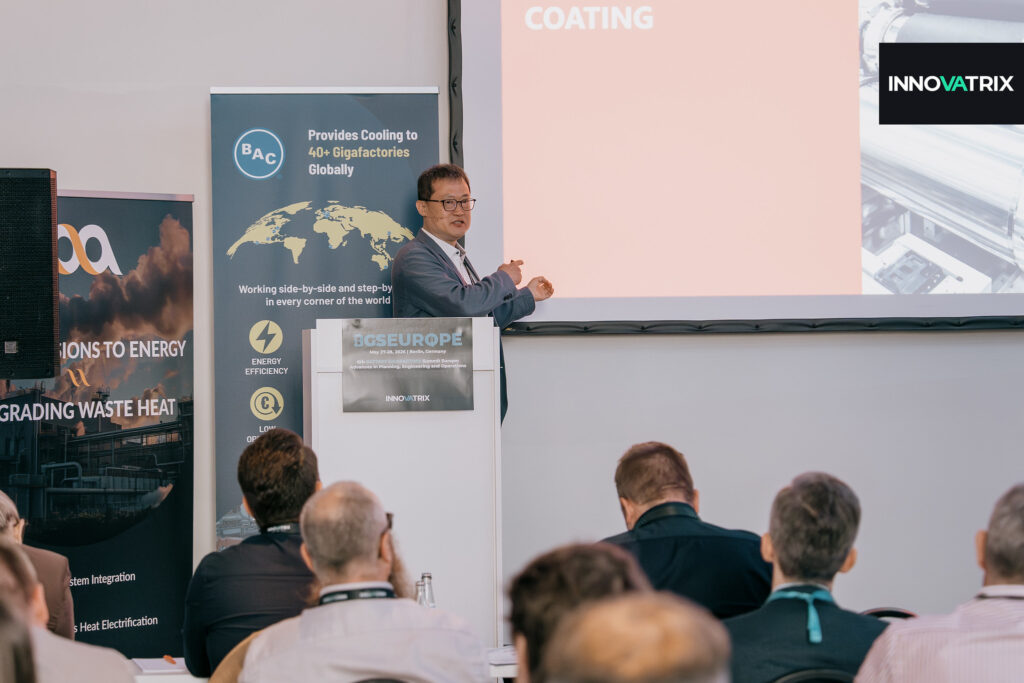
Keon Woo examined technologies and strategies for improving the efficiency and sustainability of future gigascale battery production. He highlighted the challenges associated with conventional wet electrode manufacturing, particularly the use of NMP, and presented dry electrode processing as one potential solution. By eliminating slurry coating and electrode drying, dry processing can simplify the production sequence and reduce process requirements.
The presentation focused on conductive coatings as an enabler for dry electrode production, addressing challenges including adhesion, conductivity, corrosion protection and maintaining low internal resistance. The approach can support fast coating and water-based processing while being applicable to multiple battery chemistries, including high-nickel, lithium-sulfur, LFP and all-solid-state batteries.
Keon Woo also addressed battery sustainability across the lifecycle. With substantial numbers of electric vehicles expected to reach the market and hundreds of gigawatt-hours of batteries approaching end of life, effective reuse and recycling strategies will become increasingly important. Batteries can potentially serve a first life from approximately 100% to 80% capacity, a second life from 80% to 30%, and then move into recycling.
He highlighted “debonding on demand” as an enabler for repair, repurposing and recycling, using thermal or electrically triggered mechanisms tailored to different battery configurations, cooling systems and cell formats.
Managing stakeholder engagement and public communication in large-scale projects
Juraj Récky, Corporate Affairs Manager at GIB EnergyX Slovakia s.r.o.

Juraj examined stakeholder engagement as a critical form of risk management for large-scale projects, emphasizing that these developments are not only technical challenges but also human ones. Effective engagement can influence environmental impact assessments, hiring, political support and overall project stability.
He mapped the stakeholder ecosystem around municipalities, local communities and civic initiatives, and the media. Municipalities can have significant influence through zoning decisions and political legitimacy, while residents may raise concerns about environmental impacts, water, pollution and health. Juraj highlighted the importance of “seeing is believing” when engaging with local government and communities, allowing stakeholders to better understand the project and its implications.
The media plays a particularly influential role because it does more than report information; it can interpret complex issues, simplify information and seek conflict. Proactive public relations, media breakfasts, interviews and events were identified as effective engagement approaches.
Juraj also highlighted the shift from traditional communication to a more modern model based on dialogue rather than one-way messaging, combining emotions with facts, acting proactively rather than reactively, and communicating as people rather than solely as a corporate entity. This approach can build trust, strengthen legitimacy and help maintain project stability.
6th Battery Gigafactory Summit Europe Sponsors
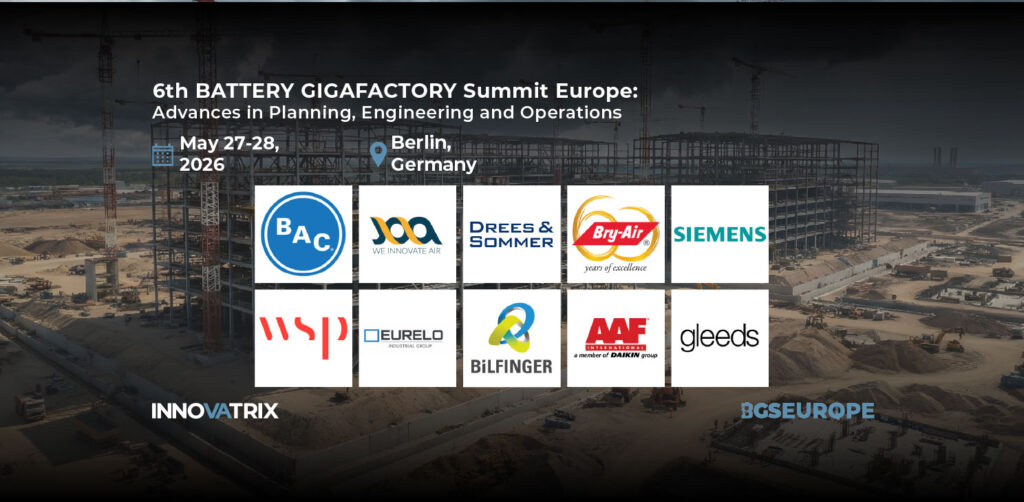
The 6th BATTERY GIGAFACTORY Summit Europe: Advances in Planning, Engineering and Operations was supported by a wide range of sponsors who brought their teams to our exhibition hall, and Innovatrix would like to thank them again for their support.
BAC, JOA Air Solutions, Drees & Sommer, Bry-Air, Siemens, WSP Global, Eurelo, Bilfinger, AAF Lufttechnik and Gleeds.
If you would like to network with fellow experts and innovators from across the battery manufacturing industry and be informed on the latest innovations in gigafactory construction, join us at an Innovatrix conference today! Our next edition of the Battery Gigafactory Summit will be taking place later this year on November 18-19, 2026, in Nashville, Tennessee, USA.
For more information, visit our website or email us at info@innovatrix.eu for the event agenda. Visit our LinkedIn to stay up to date on our latest speaker announcements and event news.