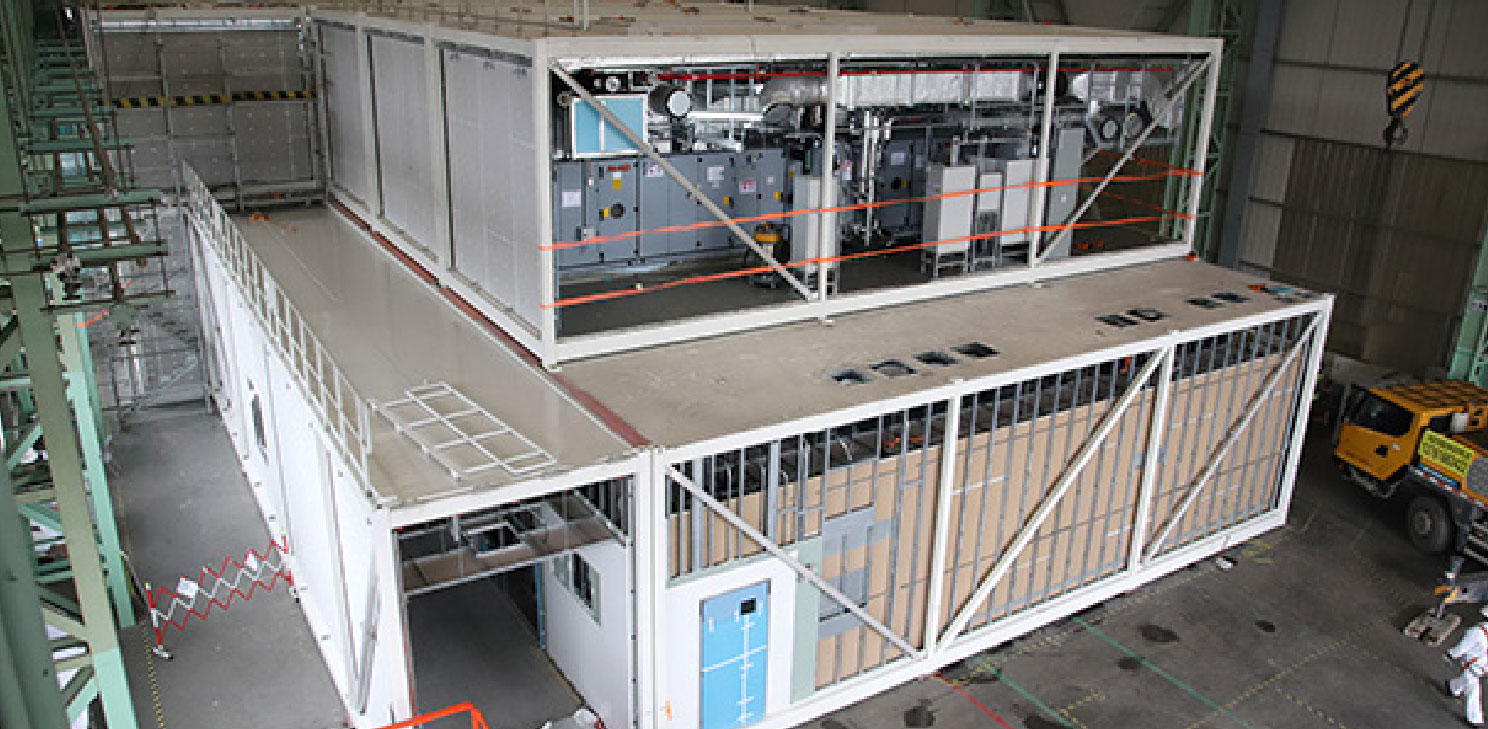
Drug makers are under constant pressure to reach the market faster, yet many still build critical infrastructure the traditional way. Modular construction for pharmaceutical facility projects offers a faster alternative: fabricate building systems in a factory while the site is prepared, then assemble them on location. Here is how the approach shortens schedules and what it takes to get it right.
Why Modular Construction for Pharmaceutical Facility Projects Saves Time
The core advantage is parallel working. Prefabricated modules are built in controlled factory environments while site work progresses at the same time, rather than one phase waiting on the next. Sources put the resulting timeline reduction at 30 to 40 percent, and ISPE reports savings of up to 50 percent when off-site building manufacture overlaps with site preparation. One reference cites modular bioprocess facilities becoming operational in 18 to 24 months, roughly half the time of a comparable conventional build.
Healthcare offers a precedent. The UK’s National Health Service regularly uses modular methods to deliver complex environments in half the time of traditional construction.
Quality and Compliance in Modular Construction for Pharmaceutical Facility Delivery
A common myth is that modular means lower quality. In reality, modern modular facilities use the same structural materials as conventional buildings, such as steel, concrete, and high-performance finishes. The difference is the environment. Factory-controlled production brings tighter quality assurance, greater consistency, and fewer site-related defects.
Compliance benefits too. Documentation of materials, welds, and finishes can be completed before modules reach the site, supporting installation qualification. Factory acceptance testing resolves issues before shipping, and site acceptance testing can then focus on integration and interfaces. Factory evidence does not replace on-site qualification, but it reduces discovery work and compresses validation timelines.
Applying Modular Construction for Pharmaceutical Facility Expansion
Modular construction for pharmaceutical facility upgrades is especially effective in operating plants. Cleanroom pods, utility modules, and process skids can be prefabricated and pre-tested off-site, then installed during a compressed on-site window to minimize disruption to production.
The approach also supports phased growth. Manufacturers can start with a core footprint and add modules as demand is confirmed, aligning capital spend with pipeline milestones. Modular thinking can move quickly under pressure, too. For a large generics manufacturer in Asia planning a facility with a capacity of 14 billion tablets, a modular train concept was developed with planning running alongside construction to meet the required speed of implementation.
Planning Steps That Make Modular Work
Speed gains depend on decisions made early, because late changes erode the benefits. Project teams should:
- Engage modular partners early, ideally from the feasibility stage.
- Define standardized interfaces between modules during design.
- Size modules around transport limits and plan site logistics, including crane access and laydown areas.
- Involve qualification planning at the design stage so documentation requirements are built in.
- Coordinate architecture, process engineering, MEP, controls, and quality teams from the start.
Challenges to Weigh Before You Build
Modular is not a shortcut. Expect higher upfront engineering costs, supply chain risks such as transport damage or fabrication delays, integration challenges with legacy infrastructure, and limited design flexibility once modules are manufactured. The real value lies in reduced program time rather than a lower price, and early coordination is the best way to manage these risks.
Building Faster, Without Compromising Quality
Modular construction for pharmaceutical facility delivery brings speed, quality, flexibility, and sustainability together in a way traditional construction often struggles to match. Upcoming multiproduct facilities in North Africa and the Middle East reflect the same shift toward agile, scalable infrastructure. Treat modular as a design philosophy rather than just a procurement choice, plan early, and it can turn a long build into a far more predictable one.
To explore how technologies such as AI, automation, BIM, prefabrication, and data-driven facility management are improving efficiency, accelerating project timelines, and enhancing operational performance across life sciences environments, meet with solution providers and hear talks from industry leaders, attend the Life Sciences Facility Design & Construction Summit USA, taking place November 4-5, 2026, in Raleigh, North Carolina, USA.
For more information, visit our website or email us at info@innovatrix.eu for the event agenda. Visit our LinkedIn to stay up to date on our latest speaker announcements and event news.