The 8th Design & Development of Zero-Emission Off-Highway Machinery Europe took place from May 27-28, 2026, bringing together attendees from across the zero-emission off-highway machinery industry at the MOA Berlin, Berlin, Germany. The two-day conference united senior leaders from R&D, engineering, powertrain development, sustainability, and innovation to explore next-generation propulsion technologies, digital engineering solutions, sustainable fuels, and EU regulatory developments shaping the future of off-highway machinery.
Participants gained deep technical insights into electrified powertrains, energy management systems, power electronics, Off-Highway Thermal Management, and digital development tools and experience cutting-edge solutions across Off-Highway Battery systems, hydrogen and fuel cell technologies, software platforms, and system integration approaches that support the transition to zero-emission off-highway application.
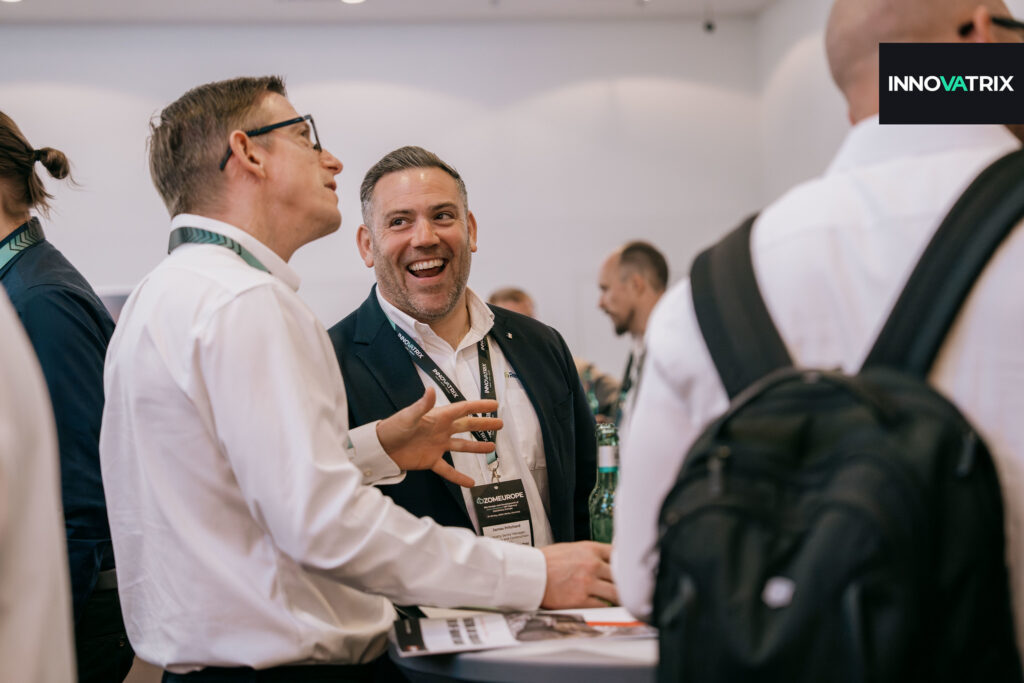
This article will provide a session recap for those who didn’t get the chance to attend and serve as a reminder for those who attended.
Electrification and Regulation: Mapping the Zero-Emission Transition in Off-Highway Machinery
Eamonn Mulholland, Senior Researcher at ICCT

Eamonn examined the scale of emissions from off-road vehicles in Europe and the potential for electrification across different types of machinery. He explained that non-road mobile engines account for 66 million tonnes of CO₂ emissions, while off-road vehicles represent 9% of EU transport CO₂ emissions. Electrification potential varies significantly depending on battery capabilities, charging access, and infrastructure, with smaller machines generally offering greater potential than high-power equipment. While advances in technology are expected to improve electrification potential through 2050, challenges remain for the largest machines.
He outlined policy measures that could accelerate the transition, including tighter emissions standards, zero-emission credits, and tiered zero-emission mandates based on individual machine electrification potential. On the demand side, public procurement, emissions trading, and national initiatives can create stronger market incentives. Examples from California, the Netherlands, Oslo, and London demonstrated how progressively stricter standards, funding, procurement requirements, and zero-emission targets are already driving change. Eamonn emphasized that a combination of supply- and demand-side policies will be needed to achieve widespread zero-emission adoption across the diverse off-road sector.
Rethinking Thermal Management in Off-Highway: Integrated Thermal Management for Off-Highway Applications
Ram Gokal, Engineering Director at Grayson Thermal Systems

Ram explored why thermal management has become a critical design constraint for electrified off-highway platforms, directly affecting efficiency, uptime, performance, and capability. He contrasted electrified systems with traditional ICE platforms, where abundant waste heat supported cabin heating and thermal systems could remain relatively fragmented. In electric machinery, thermal management becomes an energy-management challenge because heating and cooling draw directly from stored power, while weight, onboard power availability, and the absence of free heat create additional constraints.
He emphasized the value of moving from component-level solutions toward integrated, system-level thermal architectures that coordinate the battery, power electronics, motors, and cabin through shared components and intelligent controls. This approach can reduce component count and weight, improve energy efficiency through heat recovery, protect battery health, and optimize performance across demanding off-highway duty cycles with periods of idling and high-load operation.
Ram highlighted that successful adoption requires OEMs to consider total cost of ownership, integrate software and hardware, and encourage early collaboration across mechanical, electrical, software, and service teams. Ultimately, complete thermal management can improve reliability, simplify maintenance, reduce operating costs, and contribute to more sustainable electrified machinery.
Scaling-up of Battery applications in Construction Equipment, Off-Highway and Mining Industry
Bertrand Texier, Team Lead, Overseas Product Management at Farasis Energy Europe GmbH

Bertrand will walk through how Farasis approaches battery integration for construction equipment, off-highway machinery and mining applications, drawing on the company’s modular platform philosophy.
The talk opens with the modular battery pack design underpinning Farasis’s powertrain integration work — the Standard Pack S and L variants, built on a single cell footprint shared across applications, and the string-level BDU architecture that allows 3–4 packs to be combined for higher voltage supply with customisable connectors and layout.
Bertrand then compares fast charging against long cycle life using real customer scenarios, contrasting the Optimum Performance and Fast Charge NCM cell variants and the trade-offs between charge time and cycle life at pack level.
Next comes a look at the VDA590 module, positioned as a high-performance NCM “Swiss knife” solution offering strong energy density, an 800V-compatible platform and IP54 protection suited to demanding off-highway environments.
The session closes with Farasis’s battery energy storage system (BESS) offering, spanning containerised storage, commercial and industrial cabinets, and residential systems, highlighting the breadth of chemistries and formats available to support stationary storage alongside mobile applications.
First Swappable Battery Solution especially designed for the Construction Site
Maurice Van Giezen, Director at Cleantron Cleantech Batteries

Maurice sets out how Cleantron approaches battery design specifically for the construction site, where machines face mud, water and heavy daily use.
He opens with the robustness of the swappable pack itself — watertight and dust-proof housing, intuitive blind-mating connectors, and easy docking and locking designed for operators wearing gloves on site rather than in a workshop.
The talk then turns to battery swapping as a strategy for keeping machines running a full shift. Rather than tethering equipment to a grid connection, portable packs can be swapped out and recharged off-site via central charging cabinets, in-vehicle docking stations or mobile charging units, cutting grid demands on site and reducing downtime.
Maurice closes on the scalable BMS technology underpinning the range, built around the modular “Brick” platform of laser-welded 21700 cells. He explains how this single building block scales from small portable units for compaction equipment right up to packs sized for mini excavators, covering both energy and power variants while keeping production costs down through standardisation and a high degree of automation.
Case Study: The World’s First Fully Electric Deconstruction Site – Planning, Operation & Lessons Learned
Peter Bauer, Segment Leader Building & Demolition at Volvo Construction Equipment

Peter presented lessons from the development and operation of the world’s first fully electric deconstruction site, focusing on the project, equipment, energy supply, challenges, and results. The project involved dismantling and deconstructing three buildings, processing 10,200 tonnes of mineral material, and targeting a 96% recycling rate over a six-month period.
He highlighted four major challenges: ensuring sufficient energy, selecting and managing suitable electric equipment, maintaining safety, and keeping teams motivated throughout the transition. Despite these challenges, the project remained on schedule and achieved significant environmental benefits, saving approximately 70 tonnes of CO₂, equivalent to around 22,500 litres of fuel, while using 44,500 kWh of electricity.
Peter also considered the commercial implications of electric deconstruction. Although the project involved additional costs, the experience demonstrated potential for reducing those costs in future projects through better planning and operational learning. He emphasized that fully electric construction and deconstruction is possible, while the next challenge is determining how to make it affordable and useful at scale.
Introducing autonomous e-Native NRMM concept: What would a mobile machine in 2036 be like?
Petri Söderena, Vice President, Transport Technologies at VTT

Petri explored the e-Native machine concept and what mobile machinery could look like by 2036, focusing on software-defined architecture, electrification, autonomy, oil-free operation, and digital services. He explained how software-defined machines can reduce development cycles and R&D costs while increasing modularity and enabling continuous post-sale updates, new features, and connected services. Advances in perception, decision-making, and machine control are helping establish the foundations for fully autonomous operation.
He described an integrated electric powertrain as a core element of the e-Native concept, enabling simplified and modular machine architectures. These systems could support batteries, fuel cells, ICE, or hybrid energy sources while allowing new components and software-enabled functions to be incorporated as technology develops. Electric traction and hydraulic motors can further simplify the machine and potentially eliminate hydraulic piping.
Petri also highlighted electric actuators as a route to oil-free and more energy-efficient operation. Development is progressing on improved electromechanical actuators and novel non-contact linear actuators designed to reduce friction and wear while handling shock loads. Looking ahead, he emphasized collaboration with manufacturers and OEMs to test these technologies in real applications. Finally, he presented the machine as a digital platform, with a unique identity enabling new value-added services across the machinery ecosystem.
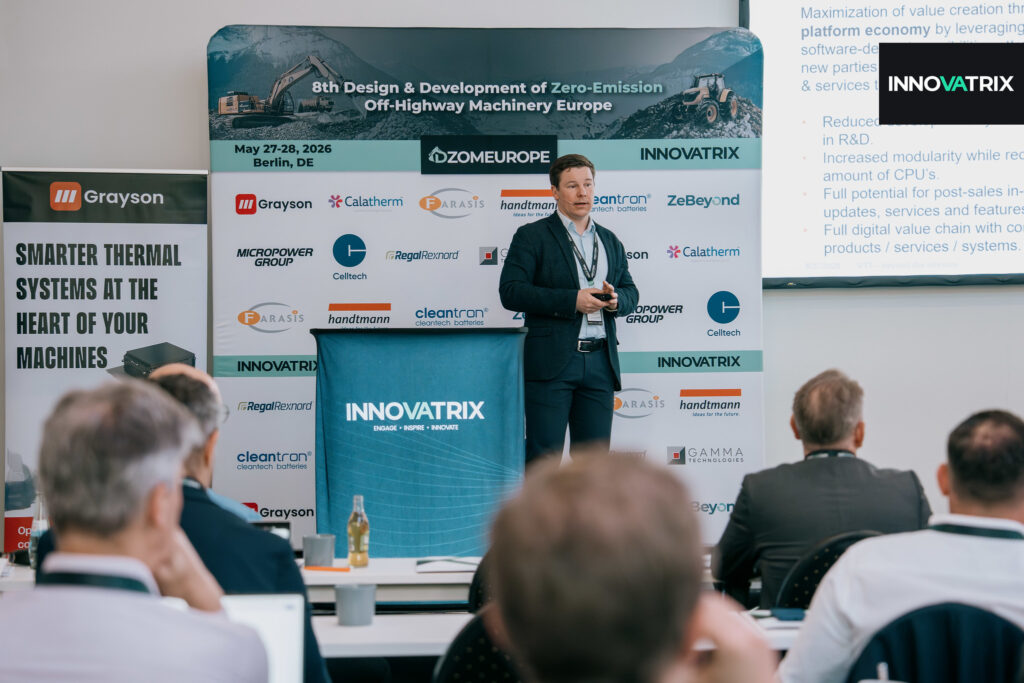
A Battery System That Scales with Your Machine Portfolio – Not Your Complexity
Tim Mayer, Key Account Manager – Battery Solutions at Handtmann Systemtechnik GmbH

Tim outlined the challenges manufacturers face as they electrify diverse off-highway machine portfolios, including varying voltage and energy requirements, demanding duty cycles, safety expectations, and the complexity of integrating batteries with drivetrains and power electronics. He emphasized the need for flexible, scalable battery architectures that can support multiple machine types while reducing engineering and integration effort.
He introduced a modular high-voltage battery platform designed to scale across different voltage levels, energy classes, and applications. Its configurable architecture, liquid cooling, separate safety components, and robust design are intended to support heavy-duty operation while simplifying portfolio-wide deployment. He also highlighted an ultra-fast-charging system capable of charging from 20% to 80% state of charge in 12 minutes, combining high-voltage charging with lower-voltage vehicle architectures and integrated thermal management.
Tim then presented multi-level inverter technology (MLIT), which enables software-controlled voltage generation directly from the battery and integrates functions such as motor control, AC/DC charging, DC/DC conversion, and power distribution. Supporting multiple voltage levels and battery chemistries, the technology aims to provide greater design freedom, extend battery life, and simplify vehicle architecture. Overall, he demonstrated how modular battery solutions can help manufacturers scale electrification without proportionally increasing complexity.
Transformation – Trapped by social constraints?
Dr.-Ing. Markus Münz, Deputy Managing Director VDMA Engines and Systems/Managing Director VDMA Large Engines, and Dr. Johannes Hipp, Technical Advisor, at VDMA

Markus and Johannes examined the challenges of transitioning non-road mobile machinery (NRMM) toward renewable drive energy, emphasizing that the sector is far more diverse and complex than on-road transport. Using agriculture as a key example, they highlighted the continued importance of Germany’s approximately 1.8 million agricultural and forestry tractors, whose existing fleet will have a significant impact on greenhouse gas emissions over the coming decades.
They explained that electrification is feasible for low- and medium-power machinery, depending on farm infrastructure and operating requirements. However, high-energy-density fuels remain necessary for medium- and high-power applications. Vegetable oil-based fuels, biodiesel, HVO, and Fischer-Tropsch fuels can provide alternatives to conventional diesel, while renewable methane may be suitable where biomethane infrastructure is available. From the current perspective, hydrogen is not yet considered a preferred solution.
They stressed the importance of technological openness, allowing electric, combustion, and hybrid powertrains to be selected according to specific applications. They also emphasized that successful transformation requires collaboration among policymakers, researchers, manufacturers, energy and fuel suppliers, and agricultural users. Ultimately, infrastructure and user choices will play a decisive role in reducing emissions while maintaining a resilient and competitive NRMM industry.
Optimized Off-Highway Batteries from Proven Practices
Mikko Kouvo, Product Manager at Celltech Solutions Oy

Mikko examined the ongoing electrification of off-highway machinery and the challenges created by the sector’s wide range of machine sizes, duty cycles, integration requirements, and operating environments. He emphasized that electrification is advancing where it provides clear operational value, but argued that a one-size-fits-all battery approach is unsuitable. Instead, batteries need to be flexible and adaptable, with customization and development cycles kept as short as possible.
He explored proven practices from automotive and stationary energy storage, highlighting automotive advances in battery safety, reliability, energy density, and packaging, alongside the growing use of large-format LFP cells in stationary storage. Rather than reinventing battery technology for off-highway applications, he advocated adapting these established solutions to the specific requirements of machinery.
Mikko highlighted modular battery platforms with shared BMS architectures, common modules, scalable mechanical structures, and flexible configurations as a way to accelerate development, reduce engineering effort, and reuse certification. He also discussed selecting cell chemistry, capacity, and system voltage based on the complete vehicle application, while considering cooling, longevity, charging power, weight, and future portfolio requirements. Looking ahead, he identified LFP momentum, larger cells, faster charging, and emerging chemistries as key developments, emphasizing that flexible platforms can help manufacturers accelerate electrification and remain competitive.
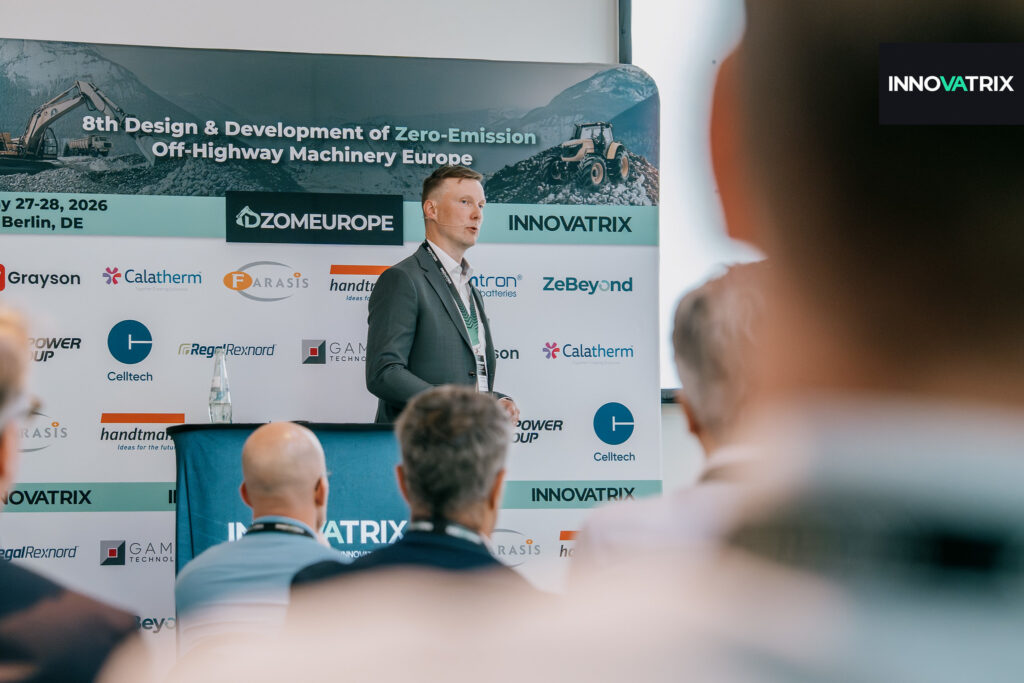
Alternative & Renewable Fuels in the Decarbonization Pathway
Ralf Diemer, CEO of eFuel Alliance

Ralf examined the potential role of eFuels in decarbonizing sectors where electrification remains challenging, particularly aviation, shipping, and off-road machinery. He highlighted the global potential for more than 500 future eFuel projects but noted that investment is being constrained by limited offtake agreements and regulatory uncertainty. He argued that a more pragmatic regulatory framework is needed to unlock production and provide greater energy resilience and independence.
Focusing on non-road mobile machinery, Ralf explained that agriculture and construction have substantial fuel demands and long-lived vehicle fleets, meaning liquid fuels will remain important for decades. While electrification is increasingly viable for smaller, lower-power machines and shorter operating cycles, eFuels and hybrid systems could provide practical solutions for larger machines with long operating hours. He highlighted their potential as drop-in fuels for existing combustion engines, reducing the need for extensive fleet replacement.
Ralf also discussed industrial bottlenecks affecting batteries, electricity, hydrogen infrastructure, and eFuel production, arguing that these constraints could delay the transition away from liquid fuels. He called for infrastructure investment, long-term support for eFuel production, recognition of agriculture as a hard-to-abate sector, and technology-neutral policies that allow manufacturers and users to select the most appropriate decarbonization pathway.
Tackling the charging challenge: Ports as energy hubs – impact on machinery and the surrounding ecosystem
Mikko Nurmela, Senior Development Manager at Kalmar Finland Oy

Mikko examined the growing challenge of charging off-highway machinery as ports transition toward electrification and increasingly function as energy hubs. He highlighted the strong pressures driving eco-efficiency, including legislation, customer expectations, investor requirements, and internal priorities. At the same time, operators remain concerned about equipment reliability, grid capacity, charging frequency, high upfront investments, battery costs, and achieving an acceptable total cost of ownership.
He demonstrated the scale of energy demand that electrified ports can create, with electric container-handling equipment, shore power for ships, and electric vessels potentially requiring substantial amounts of power. This raises important questions around what needs to be charged, which charging technologies are appropriate, whether sufficient energy is available, and how charging can be integrated without disrupting operations.
Mikko explored different approaches, including charging during breaks, opportunity charging during operations, stationary and mobile charging, inductive systems, and manual or automated interfaces. He also highlighted wider constraints involving grid ownership, electricity costs, operational resilience, and regulations or workforce requirements. He concluded that there is no one-size-fits-all solution: charging is a complex, multi-stakeholder system requiring software to optimize fleets, charging, and grid loads. At the same time, electrification can create opportunities for local energy generation and stationary energy storage.
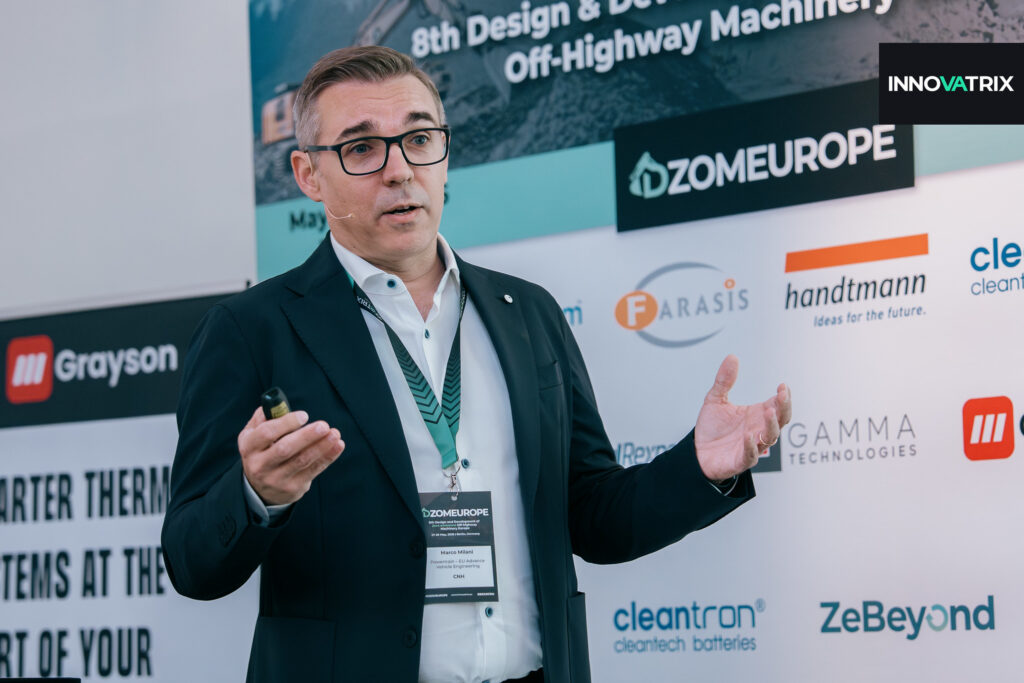
Design and Optimization of Electrified Powertrains for Agricultural Machinery
Marco Milani, Powertrain – EU Advance Vehicle Engineering at CNH

Marco explored how electrification can create value across agricultural machinery, from improved user experience and sustainability to greater productivity, lower total cost of ownership, and new applications. He emphasized that customers have different behaviors, needs, and purchasing priorities, meaning a single technical strategy cannot suit every user. Understanding real-world machine data and duty cycles is therefore essential when selecting an appropriate powertrain architecture.
He highlighted simulation as an important tool for evaluating different hybrid configurations, operating cycles, and customer scenarios while reducing development time, costs, and product complexity. Simulations can compare fuel consumption and productivity and help determine appropriate battery sizing. However, while some high-variability duty cycles may be technically feasible for battery-electric operation, cost can remain a significant barrier to commercial adoption.
Marco also examined electrification beyond the powertrain, including electric implements and functions that can improve efficiency, safety, and enable new use cases. Electrification can support automation through precise torque and speed control, sensor integration, reduced mechanical complexity, and connectivity with autonomous farming systems.
Finally, he highlighted cooling and thermal management as key engineering challenges, particularly in hybrid tractors with multiple thermal domains. He concluded that mission-profile data, energy-storage density, infrastructure, and application requirements must guide architecture selection, while electronics, controls, and software become increasingly important core skills in agricultural machinery development.
Future Tractor Powertrains: Electric, Hybrid and Multi-Energy Strategies
Tom Lindley, Deputy General Manager & Principal EV Integration Engineer at TAFE

Tom examined emerging electric, hybrid, and multi-energy powertrain strategies for future agricultural tractors, arguing that simply replacing an internal combustion engine with an electric motor within an existing architecture is not sufficient. Instead, manufacturers need to rethink propulsion systems from the ground up, taking into account machine size, application, duty cycle, packaging, cost, and market requirements.
He identified battery-electric powertrains as particularly well suited to smaller utility, municipal, specialty, and green-space applications where precise control, efficiency, and zero-emission operation are priorities. For larger and more demanding machines, hybrid architectures can provide torque support, performance boosts, limited zero-emission operation, or optimized continuous operation while enabling different combinations of energy sources.
Tom emphasized that there is no single energy solution for agriculture. Diesel, gasoline, hydrogen, electricity, and renewable fuels may coexist, with farms increasingly becoming energy hubs capable of generating and using their own energy. He also highlighted the growing importance of software-defined powertrains, predictive controls, and integration with farm management systems.
Finally, he outlined key engineering challenges including battery chemistry, representative drive cycles, thermal management, standardization, packaging, durability, and control systems. He concluded that commercially viable tractor electrification will require balancing performance, operating costs, sustainability, and the realities of each application.
Zero-Emission Construction in NL & Europe: Collaboration as a driver for Innovation
Peter van Schaik, Program Manager for Clean and Zero-Emission Construction at Rijkswaterstaat

Peter explored how collaboration between government, industry, and knowledge institutions can accelerate the transition to zero-emission construction in the Netherlands and across Europe. He highlighted the Dutch Agreement on Clean and Zero Emission Construction Equipment, which has grown to more than 160 partners since 2023 and aims to enable zero-emission construction sites by 2035.
He explained that the transition is being driven by three key priorities: improving health and safety by reducing particulate matter and NOx, protecting natural spaces by addressing nitrogen emissions, and meeting climate goals by replacing fossil fuels with renewable energy. The Dutch program combines emissions requirements through public procurement and permits with subsidies for machinery, charging infrastructure, commissioning bodies, and local governments, supported by more than €1 billion through 2030.
Peter emphasized public procurement as a particularly powerful tool for accelerating adoption, using contract requirements and award criteria to encourage contractors to invest in zero-emission solutions. Projects already include electric dredging, road construction, asphalt recycling, dike reinforcement, charging infrastructure, and energy-as-a-service models. He also highlighted international collaboration to develop knowledge, market standards, and interoperability, helping create a more coordinated European transition to clean construction machinery.
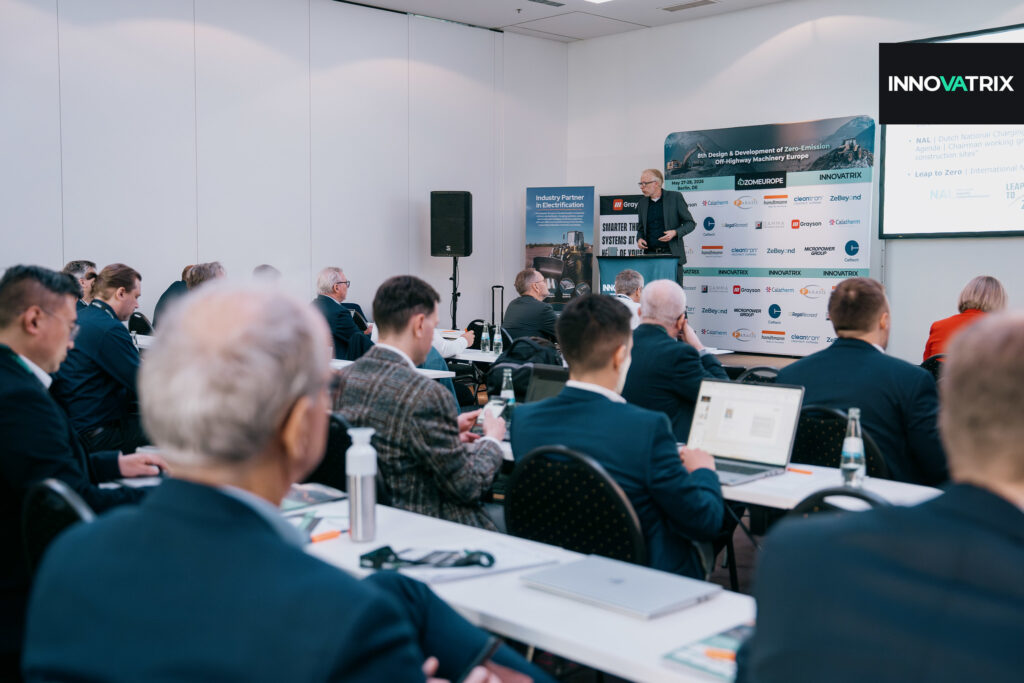
Sustainable Energy Supply for Agricultural Machinery
Prof. Dr. Pickel, Professor for Agricultural Robotics and Engineering at University of Bonn

Prof. Dr. Pickel examined the role of renewable energy in decarbonizing agricultural machinery, emphasizing that zero-emission agriculture cannot be achieved while relying on fossil fuels. He outlined a vision based on energy resilience, circular bioeconomy principles, waste-to-energy pathways, and regional value creation. Electrification was presented as an important enabling technology, offering high efficiency, precise controllability, and strong dynamic performance. However, he noted that current electrification is most practical for tractors up to approximately 100–130 hp.
For larger agricultural machinery, Pickel highlighted alternative fuels, particularly pure plant oil, biodiesel, and HVO, as important bridge technologies. He argued that locally produced biofuels can strengthen the resilience of food production while supporting a circular agricultural economy, with their adoption strongly influenced by political framework conditions.
He also examined the technical challenges of multifuel and monofuel systems, including automatic fuel detection, cold starts, engine performance, emissions aftertreatment, lubrication, and onboard fuel management. Using the Fendt 820 Greentec two-tank system as an example, he demonstrated both the potential and practical drawbacks of running agricultural machinery on plant oil and diesel. Overall, he presented a combination of electrification and renewable fuels as necessary for a practical transition across different agricultural applications.
Scaling Zero- and Low-Emission Off-Highway Machinery: Transition Pathways for the NRMM Sector
Nataliya Zinych, Government & Corporate Affairs Manager – Germany at John Deere GmbH & Co. KG

Nataliya explored the need for a distinct transition pathway for non-road mobile machinery, highlighting the sector’s long equipment lifetimes, diverse duty cycles, and energy-density constraints. She presented a multi-path approach combining electrification, renewable liquid fuels, biomethane, hydrogen, and e-fuels according to the requirements of different applications rather than relying on a single technology.
She identified battery-electric solutions as particularly suitable for smaller machines, while HVO and biodiesel can provide immediate emissions reductions for larger machines and the existing fleet. Biomethane could support regional applications where supply infrastructure exists, while hydrogen and e-fuels offer longer-term potential for harder-to-electrify missions as infrastructure and supply chains develop.
Nataliya emphasized that HVO and biodiesel can support energy independence and a circular economy, but their wider adoption requires safeguards around feedstock availability, sustainability, fuel quality, and standardization. She outlined a gradual pathway in which drop-in biofuels expand by 2030, advanced biofuels and hybrid powertrains gain traction by 2035, and battery-electric and hydrogen technologies continue expanding thereafter.
She concluded that scaling these pathways requires predictable, technology-neutral policies, affordable and available energy, harmonized regulations, reliable machinery and fuels, and close collaboration between policymakers, OEMs, suppliers, and customers.
Sponsors
The 8th Design & Development of Zero-Emission Off-Highway Machinery Europe Summit was supported by a wide range of sponsors who brought their teams to our exhibition hall, and Innovatrix would like to thank them again for their support.
Grayson Thermal Systems, Calatherm, Farasis, Handtmann, Cleantron, ZeBeyond, Micropower Group, Celltech Solutions, Regal Rexnord and Gamma Technologies.
If you want to attend our next zero-emissions off-highway summit and have the opportunity to hear presentations like these and many more, join us for our American edition next year, the 9th Design And Development Of Zero-Emissions Off-Highway Machinery Summit, taking place February 24-25, 2027, in Chicago, Illinois.
For more information, visit our website or email us at info@innovatrix.eu for the event agenda. Visit our LinkedIn to stay up to date on our latest speaker announcements and event news.