Batteries now power our phones, vehicles and electricity grids, and demand is accelerating. McKinsey projects that lithium-ion demand will climb from about 700 GWh in 2022 to roughly 4.7 TWh by 2030, with value chain revenues topping $400 billion. Growth on that scale raises a practical question: what does a credible sustainable battery industry roadmap look like?
Why a Sustainable Battery Industry Roadmap Matters
The Battery 2030+ roadmap describes a closed-loop innovation ecosystem that connects materials discovery, design, manufacturing and recycling. It replaces today’s linear research and production chains with one where data flows in both directions across the battery lifecycle. McKinsey reaches a similar conclusion, arguing that the industry must move from a linear to a circular value chain in which materials are repaired, reused or recycled.
The goal is a battery sector that is resilient, sustainable and circular. McKinsey envisions each region covering over 90 percent of its local cell demand.
Smarter Discovery, Smarter Batteries
Battery 2030+ aims for a 5–10x acceleration in discovering new battery materials. It would do so through AI-guided Materials Acceleration Platforms, which combine robotic synthesis, automated testing and modeling. Interface research aims to turn trial-and-error into design. Embedded sensors and self-healing materials could let batteries monitor and repair themselves, extending lifetimes.
Chemistry matters too. Sodium-ion is the most mature alternative to lithium, and the 2024 roadmap for sustainable batteries highlights its reliance on abundant elements. Chemistries beyond lithium-ion could ease pressure on critical raw materials.
Cleaner Manufacturing in a Sustainable Battery Industry Roadmap
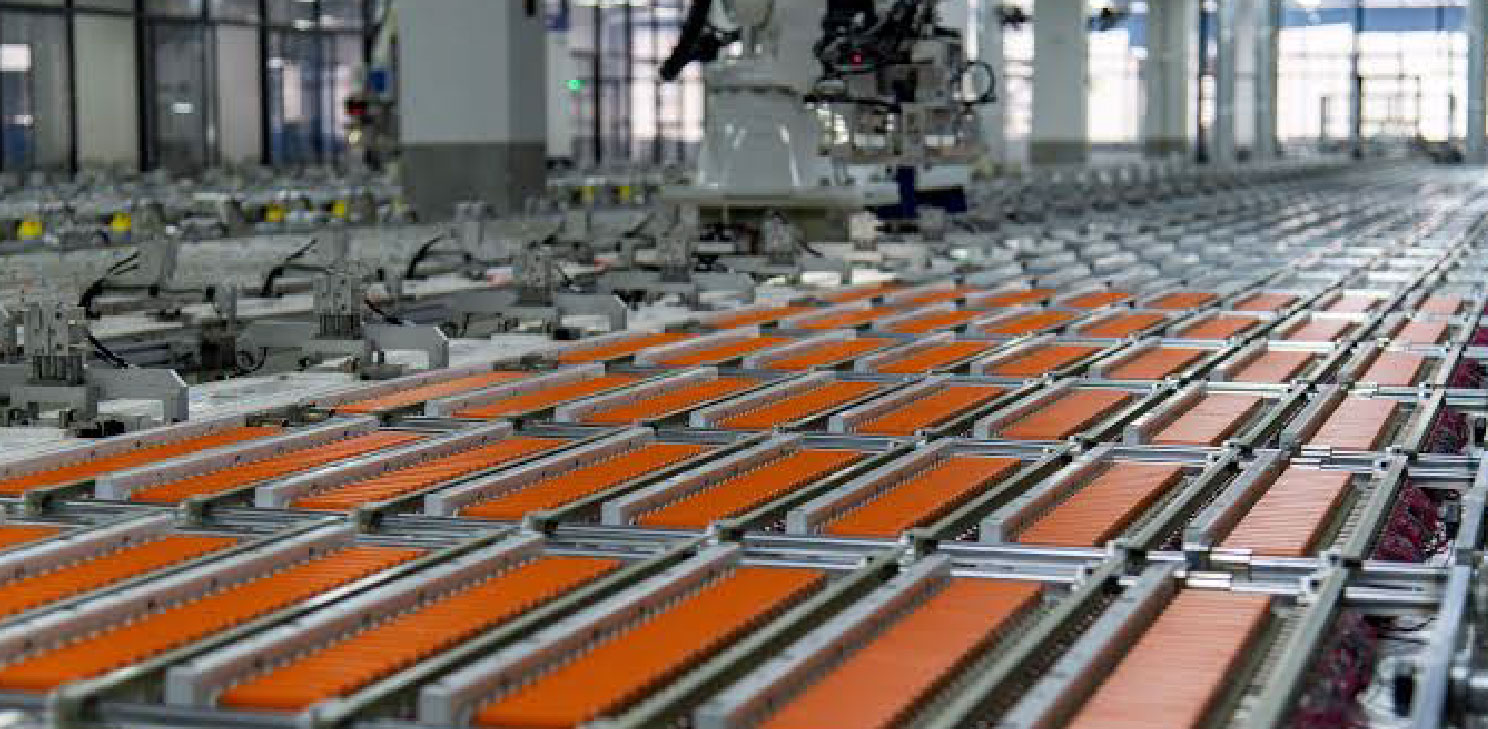
Production is a major sustainability lever. Conventional electrode making relies on the toxic solvent NMP and fluorinated binders, so researchers are pursuing water-based processing and dry coating. Digital twins, virtual models fed by real-time sensor data, can cut waste and speed up scale-up. McKinsey suggests ambitious players could cut the carbon footprint of battery manufacturing by up to 90 percent within five to seven years. Circular materials and low-carbon electricity are the most effective levers.
Recycling at the Core
Any sustainable battery industry roadmap must treat end-of-life batteries as a resource. Battery 2030+ expects production scrap from new gigafactories to make up about 60 percent of recyclable input in the EU by the end of this decade. It prioritizes direct recycling, which recovers active materials in whole rather than breaking them down to metals. Under the EU Batteries Regulation, recycled content minimums for 2030 are 6 percent for lithium, 6 percent for nickel and 16 percent for cobalt. These rise to 12, 15 and 26 percent by 2035.
Industry is moving as well. The Batteries Europe Raw Materials and Recycling Roadmap, which Cefic helped shape, identifies solutions for sustainable sourcing and traceability. In Finland, three chemical companies are forming a battery recycling cluster in which old battery components are used to make new ones. McKinsey estimates recycling revenue could exceed $40 billion by 2040, with a profit pool of $6 billion.
Data, Standards and Transparency
Progress is hard to measure without common yardsticks. The 2024 roadmap notes there is no universally agreed set of sustainability metrics. Life cycle assessments of lithium-ion production have reported 27–271 kg CO2-eq per kWh, depending on assumptions. Battery 2030+ responds with shared ontologies, FAIR data practices and alignment with the digital battery passport. McKinsey likewise calls harmonized international standards one of the most critical goals for the industry.
Turning the Roadmap Into Action
The Battery 2030+ conclusion is blunt: the highest hurdle is not discovery but scale. A workable sustainable battery industry roadmap needs science, engineering, standards and policy moving together. Companies that embrace sustainability early, McKinsey argues, can differentiate themselves and create value while protecting the environment.
The direction is clear: smarter discovery, cleaner factories, circular materials and transparent data. The next step is execution.
For the opportunity to have in-depth discussions about this and other challenges facing gigafactories, meet with leading solution providers and network with industry experts, attend the 7th BATTERY GIGAFACTORY Summit USA: Advances in Planning, Engineering and Operations, taking place on November 18-19, 2026, in Nashville, Tennessee, USA.
For more information, visit our website or email us at info@innovatrix.eu for the event agenda. Visit our LinkedIn to stay up to date on our latest speaker announcements and event news.