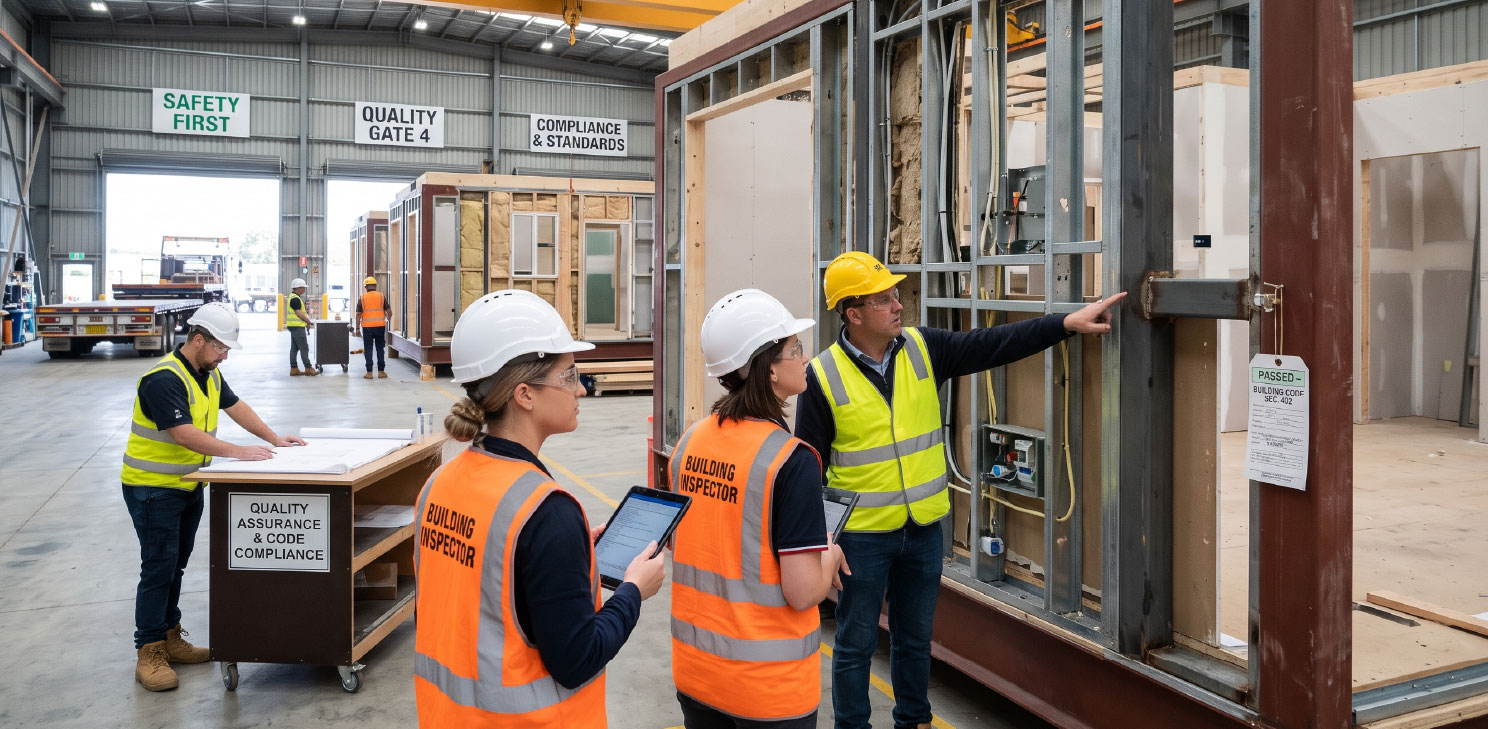
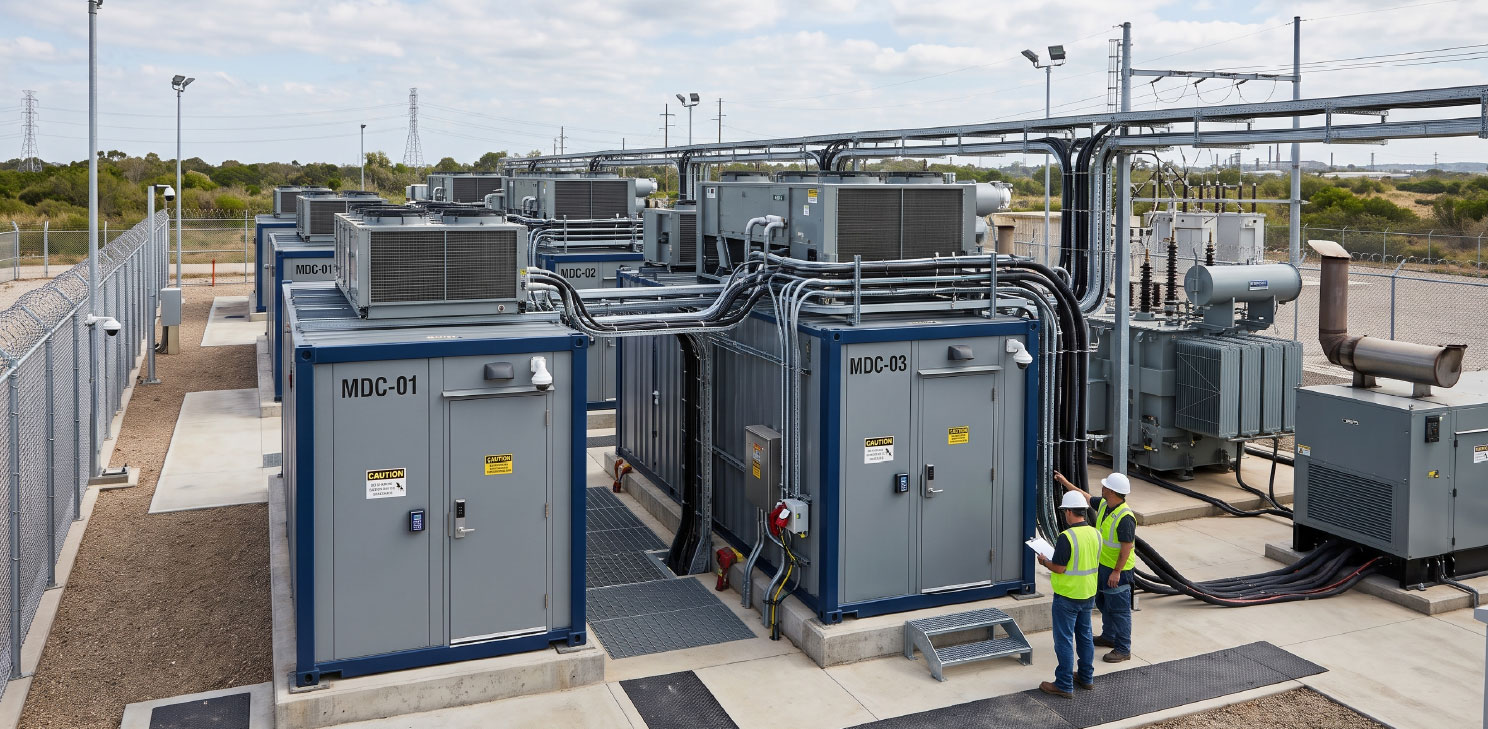
Building in a factory does not mean building outside the rules. Offsite construction regulation applies the same code requirements as traditional projects, but verifying compliance looks very different. Understanding that difference helps developers, manufacturers and contractors protect schedules and budgets.
Why Offsite Construction Regulation Is Different
Offsite projects must meet the same building code requirements as site-built ones, yet codes were not written for factory production. A modular project must comply with the codes where the building will be occupied, wherever the units are built.
That creates a verification gap. A local inspector cannot drop by a factory sometimes hundreds of miles away, and components arrive sealed. Compliance must be checked at the factory, during transport and again during assembly, so regulators are asking who verifies each stage and how factory and site inspections can be coordinated without duplication.
The Codes Behind Offsite Construction Regulation
The International Code Council (ICC) issues model codes, including the IBC, which states review, amend and adopt over several years. Counties or cities usually serve as the authority having jurisdiction. Requirements vary by region. In the U.S., HUD-code manufactured homes must meet federal standards while modular buildings follow local codes. Europe and the Middle East rely on ISO or national fire, seismic and insulation standards.
Offsite-specific standards help bridge the gap. ICC/MBI Standard 1200 covers planning through assembly, and Standard 1205 covers regulatory and inspection processes. The ICC’s 2027 I-Codes incorporate provisions from the 1200 series to streamline approval.
Inspection Pathways in Offsite Construction Regulation
In 35 states, inspection of offsite components is managed at the state level, while local authorities handle assembly, site work and utility hookups. Many programs accept accredited third-party agencies, such as ICC NTA, sparing officials trips to distant factories. Third-party inspection also adds credibility and assures buyers that units meet standards.
Without a statewide program, local officials review everything, and delegation is often handled case by case. Salt Lake City’s officials could not travel outside the city, so factories had to sit within its limits, until the city adopted ICC/MBI Standards 1200 and 1205.
For sealed components, local officials verify the state label, any third-party label and the data plate listing the code and design criteria, then monitor installation.
Permitting and Technical Compliance Under Offsite Construction Regulation
Prefabricated does not mean permit-exempt. Structures with electrical, plumbing or heating systems generally need local approval, and most projects require multiple permits, such as building, zoning, environmental, fire and occupancy. Common obstacles include lengthy approvals, varying jurisdictional requirements, fees and frequent regulatory changes. Building without approval risks fines, uninsurable structures and refused utility connections.
Technical reviews are rigorous. Frames, connections and load-bearing walls must be engineered for regional wind, seismic and snow loads, with calculations documented for both manufacturing and assembly inspections. Fire, electrical and plumbing systems must meet code before installation, because irregularities can mean occupancy refusal or forced retrofitting. Transport size, weight and tie-down rules apply too.
Practical Steps for Compliance
- Research local codes and engage authorities before applying.
- Require manufacturer documentation and certifications.
- Use licensed electricians and plumbers for connections.
- Track permitting timelines and consider third-party inspections.
Looking Ahead
Regulators are already creating pathways. Dubai Municipality approved the DuBox Modular Construction System in June 2026 after reviewing its factory process. Many regions are developing prefab-specific frameworks, while digital inspections, BIM-integrated compliance tracking and certifications such as LEED or BREEAM gain ground. The goal of offsite construction regulation is a clear line of sight from factory to final approval, without compromising safety.
To find out more about the latest industry updates and innovations in prefabrication for mega facility construction, meet with solution providers and hear talks from expert speakers, attend the Prefabrication for Mega Facilities Summit USA, taking place November 17-18, 2026, in Houston, Texas, USA.
For more information, click here or email us at info@innovatrix.eu for the event agenda. Visit our LinkedIn to stay up to date on our latest speaker announcements and event news.