Demand for lithium-ion batteries is surging as electric vehicles edge toward the mainstream, and manufacturers must scale up without compromising the precision that battery safety demands. Global gigafactory capacity is projected to exceed 3,000 GWh by 2030. Gigafactory automation, which combines robotics, sensors and data analytics, is what makes production at that scale achievable.
Why Gigafactory Automation Is Now Essential
Microscopic variations in electrode coating, cell assembly or formation cycles can compromise both performance and safety. Manual processes cannot deliver the repeatability that high volumes require. The business case is just as strong: more efficient production lowers battery costs, which in turn lowers vehicle prices. One Omdia analysis cited by KUKA found that without automation, production costs in India would run 17–22% higher than in China or Europe.
Robotics and Material Handling That Keep Lines Moving
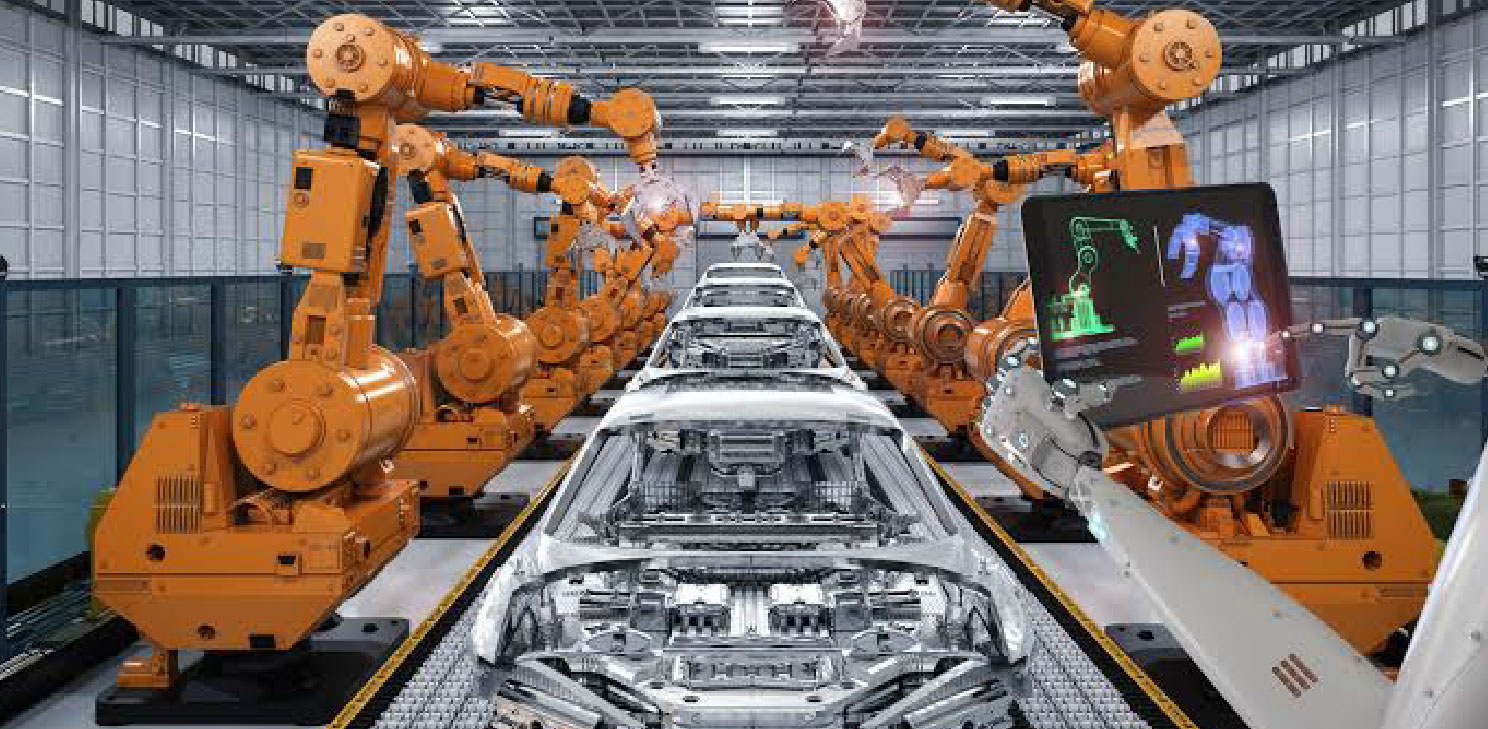
Robots handle materials with micrometer-level precision, performing wire bonding, plasma cleaning, laser welding and adhesive dispensing with perfect repeatability. Hardware deserves as much attention as software. Rockwell Automation notes that traditional conveyors, built on chains, belts and gearboxes, cap speed and flexibility. Independent cart technology uses programmable movers to enable modular production and shorter changeovers.
Transport systems that accelerate and decelerate precisely between stations save small amounts of time, and those savings compound across thousands of cycles. Flexibility matters too. KUKA Systems built a modular battery facility for MAN Truck & Bus in Nuremberg with no fixed line. Stations operate independently, and 35 autonomous mobile robots supply materials.
Quality Control Built Into Gigafactory Automation
Real-time statistical process control can detect deviations the moment they occur and adjust equipment recipes on the fly, raising yield and lowering scrap. Machine vision flags misalignment, contamination and damaged cells, while automated OCV, ACIR and end-of-line testing verify batteries before they ship.
AI adds another layer. In one case study, the LEADACE platform from LEAD Intelligent Equipment reduced non-conforming cells by 47 units per day per machine and improved yield by up to 2.5%. Digital quality systems can cut scrap by up to 10%, which matters because materials account for 70% of production costs.
Data, Digital Twins and AI Drive Smarter Operations
Manufacturing execution systems and industrial IoT platforms provide full visibility. An EV manufacturer with 10 plants can see which lines and machines outperform others and adjust accordingly. Digital twins let teams train staff and test process changes without disrupting production. According to KUKA, predictive maintenance reduces downtime by more than 7%.
AI can also forecast demand and, when a line stops for maintenance, redistribute work to another line to hold output steady.
The energy savings are significant too. A Fraunhofer FFB and Accenture study found that a 40 GWh cell factory can save up to $31 million per year through digitalization while cutting CO₂ emissions by 10%. Dry rooms account for 25–40% of gigafactory energy use, so mini-environments that locally control purity, temperature and humidity offer a promising alternative.
Overcoming Barriers to Gigafactory Automation
Integration is not simple. Advanced systems demand significant upfront investment and technical expertise, and automation raises demand for skilled workers who can operate and maintain sophisticated machinery. Rockwell Automation recommends unified connectivity from edge to cloud so machines from multiple vendors can work in tandem. A Volta Foundation article from LEAD Intelligent Equipment suggests a phased approach that builds internal expertise gradually.
The Competitive Edge of Gigafactory Automation
Automation is more than a production upgrade; it underpins lasting competitive advantage. Manufacturers that invest in robotics, intelligent inspection and data-driven operations today will be best placed to scale efficiently, compete on quality and capture a market set for rapid growth.
For the opportunity to have in-depth discussions about this and other challenges facing gigafactories, meet with leading solution providers and network with industry experts, attend the 7th BATTERY GIGAFACTORY Summit USA: Advances in Planning, Engineering and Operations, taking place on November 3-4, 2027, in Nashville, Tennessee, USA.
For more information, visit our website or email us at info@innovatrix.eu for the event agenda. Visit our LinkedIn to stay up to date on our latest speaker announcements and event news.