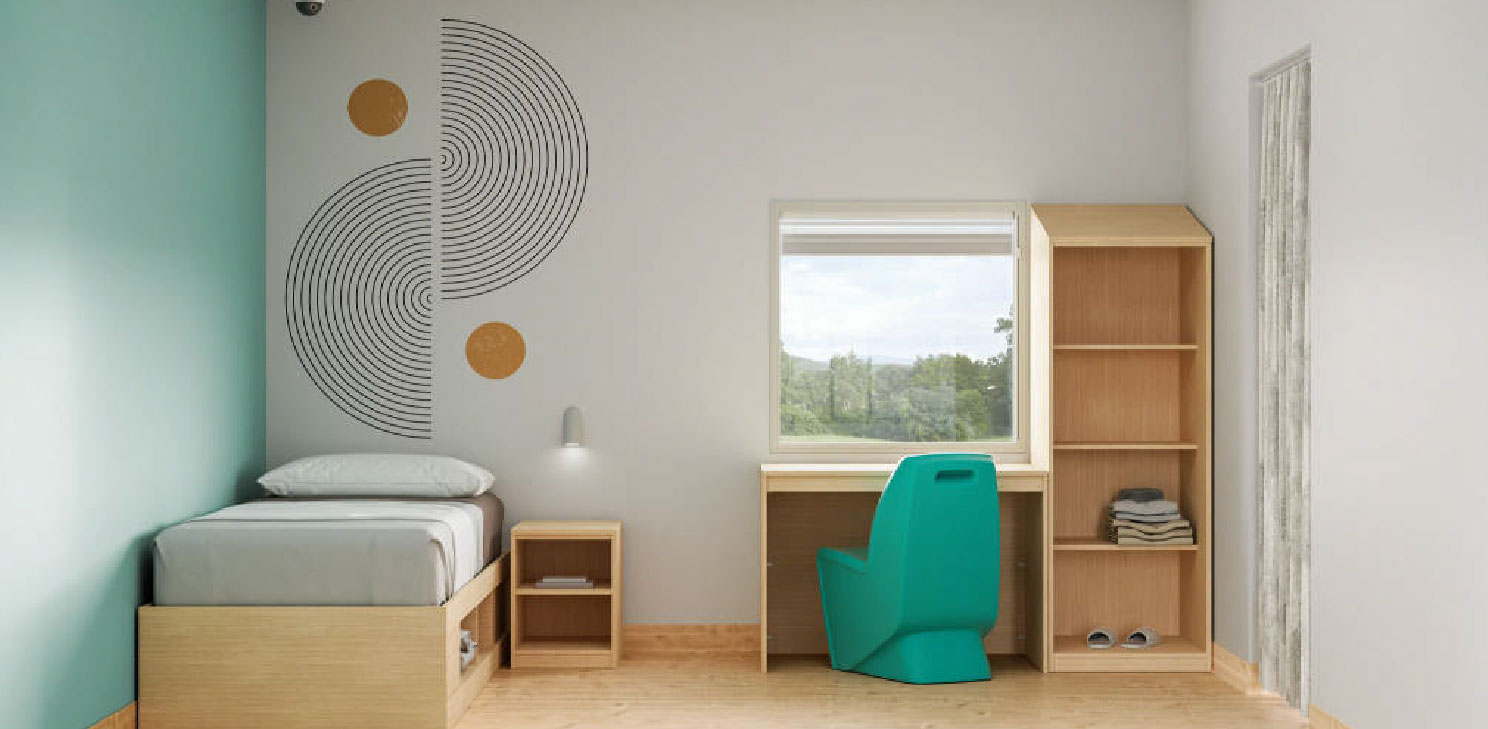
Designing for behavioral healthcare requires a careful balance between safety, functionality and a therapeutic atmosphere. From patient rooms to common areas and administrative spaces, every element of a facility must support recovery while minimizing risks. As care models evolve toward patient-centered and recovery-oriented approaches, modern behavioral health facilities are increasingly designed to promote comfort, dignity and healing.
Patient Rooms: The Foundation of Recovery
Patient rooms are where recovery begins. When designing for behavioral healthcare, these spaces must prioritize patient safety while also fostering comfort and security.
One of the most important considerations is the use of ligature-resistant behavioral health beds. These specially designed beds reduce the risk of self-harm without sacrificing comfort. Many facilities incorporate therapeutic features such as adjustable positioning and zipperless mattresses to ensure safety while maintaining a supportive environment.
Durable bedding is another essential component. Materials must be comfortable yet able to withstand rigorous use. Bedding designed for behavioral health facilities often includes tamper-resistant features, stain-resistant fabrics and smooth seams that reduce safety risks while remaining easy to clean.
Hygiene also plays a critical role in patient recovery. Maintaining clean and calming mental hospital rooms helps protect both physical and mental health. Equipping janitorial staff with high-quality cleaning supplies designed to reduce infection risks ensures patient rooms remain safe and therapeutic spaces.
Simple design elements can further enhance healing. Soft, natural lighting and neutral color palettes are commonly used to create trauma-informed environments that reduce stress and promote a sense of calm.
Common Areas: Encouraging Connection and Therapy
Common areas such as activity rooms and community spaces are central to social interaction, therapy and recreation. Designing for behavioral healthcare in these spaces means creating environments that feel welcoming while maintaining strict safety standards.
Ligature-resistant furniture is essential in these areas. Seating, tables and shelving designed with safety in mind minimize risks while still providing a comfortable and inviting atmosphere. Durable materials that resist wear and are easy to clean help ensure long-term functionality.
Flooring also requires careful consideration. Non-slip, easy-to-maintain flooring reduces the risk of accidents while contributing to a visually appealing environment. Safe and aesthetically pleasing flooring helps create spaces that feel supportive rather than institutional.
Trauma-informed design principles are increasingly shaping these environments. Privacy features such as soundproofing, strategic layouts and open spaces can reduce stress and build trust among residents. Incorporating natural light and open layouts further promotes a sense of freedom and connection, which supports the healing process.
Kitchens and Dining Areas: Supporting Nutrition and Well-Being
Nutrition is an important part of mental health recovery, making kitchens and dining areas vital components when designing for behavioral healthcare.
Durable cooking equipment designed specifically for behavioral health facilities can improve meal preparation efficiency while maintaining safety standards. Reliable appliances such as ovens, refrigerators and dishwashers ensure consistent operations in these high-use environments.
Because kitchens and dining areas experience heavy foot traffic, slip-resistant flooring is essential. These surfaces help reduce accidents while remaining easy to maintain and clean.
Maintaining hygienic conditions is equally important. Hospital-grade cleaning supplies and effective janitorial tools support infection control while ensuring these spaces remain welcoming for both patients and staff.
Adaptive reuse strategies can also be valuable in these areas. Updating older kitchen layouts into modern, efficient spaces can reduce costs while improving functionality.
Administrative Spaces: Supporting Staff and Operations
Administrative spaces play a crucial role in the overall effectiveness of behavioral health facilities. When designing for behavioral healthcare, these areas should support operational efficiency and staff well-being.
Adaptive reuse strategies can help maximize available space. For example, repurposing storage areas into offices or staff lounges can improve workflows while minimizing renovation costs.
Staff break rooms equipped with energy-efficient appliances can enhance comfort and productivity. Small improvements, such as modern refrigerators or coffee machines, can significantly improve staff satisfaction during long shifts.
Ergonomic furniture is another key consideration. Comfortable workstations reduce fatigue and physical strain, helping staff remain focused and effective in their caregiving roles.
The Future of Behavioral Healthcare Design
Modern behavioral health design increasingly reflects patient-centered care models and recovery-based treatment philosophies. These approaches emphasize safety, dignity and personal empowerment.
Facilities are also evolving to support a continuum of care, ranging from inpatient psychiatric hospitals to outpatient treatment centers and community-based residential settings. Flexible treatment environments, including multipurpose therapy rooms and activity spaces, allow clinicians to adapt care to individual patient needs.
Ultimately, designing for behavioral healthcare means creating environments that support both safety and recovery. By combining thoughtful architectural design with trauma-informed principles, facilities can empower patients, support caregivers and foster meaningful healing experiences.
To discuss healthcare facility construction and the key issues facing the industry, connect with solution providers and network with delegates, attend the 2nd Healthcare Facility Design and Build Summit, taking place on June 24-25, 2026, in Nashville, Tennessee, USA.
For more information, visit our website or email us at info@innovatrix.eu for the event agenda. Visit our LinkedIn to stay up to date on our latest speaker announcements and event news.