Huawei has launched a grid-interactive AIDC solution at HUAWEI CONNECT 2026 in Shanghai, driven by the concept that AI data centres should act as a working part of the power system rather than a fixed draw on it. The product was unveiled at the HUAWEI AIDC Facility Summit, staged alongside the main conference on 20 September.
Hou Jinlong, Director of the Board of Huawei and President of Huawei Digital Power, opened the summit by setting out four responses to the construction problems facing AI facilities: power acquisition, power quality, rack power supply and heat dissipation, and engineering delivery.
He pointed to power architecture innovation paired with liquid cooling, a multi-layer hybrid energy storage system that absorbs local power fluctuations, electricity-compute synergy that moves the facility away from rigid load behaviour, and modular prefabricated delivery intended to shorten lead times.
A power architecture for volatile loads
Bob He, Vice President of Huawei Digital Power, framed the shift through the make-up of the grid itself. As the share of renewable generation rises, he said, the grid takes on stronger power electronics characteristics, and the speed of AI workload swings means compute and energy infrastructure now have to be coordinated as one system.
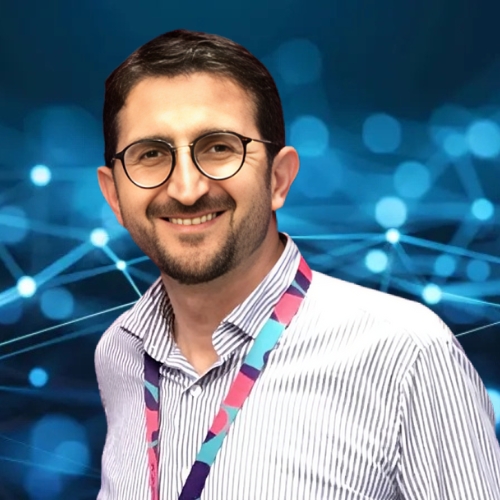
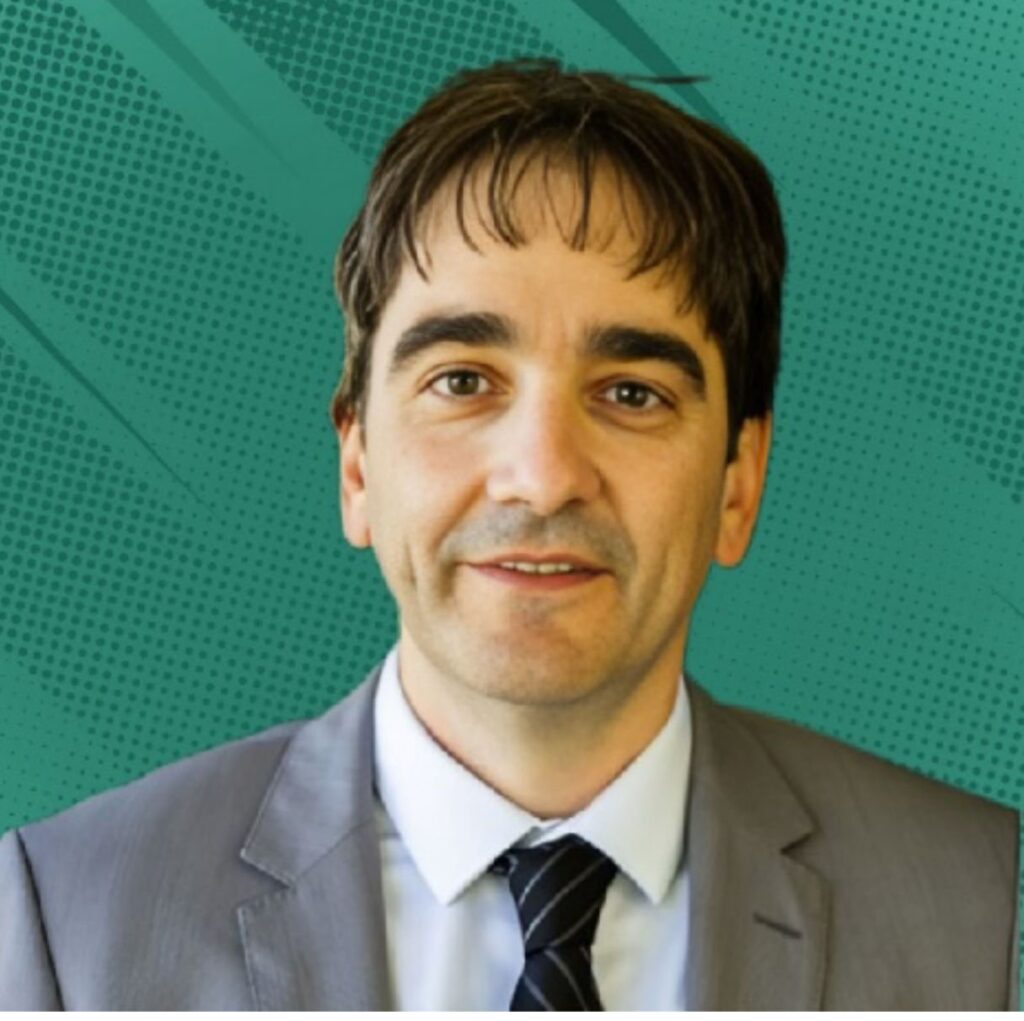
Bob He, Vice President of Huawei Digital Power (Credit: Huawei)
Huawei’s response is a set of “3+1” innovations. In the watt domain the company proposes a MIMO power supply architecture, and the grid-interactive AIDC 1.0 release combines grid-friendly UPS, intelligent lithium batteries and grid-forming energy storage so that a site can both draw on the grid and support it while smoothing workload fluctuations. On the thermal side, Huawei has launched an AI-powered liquid cooling system that predicts the condition of working fluids to support predictive maintenance. Bob attributes the approach to Huawei’s combination of end-to-end energy products and full-stack AI capability.
Rethinking the grid connection
That case was taken further by Josh Chen, Founder and Chairman of VNET Group, who said power sources, campuses and buildings can each be redefined to allow mutual support between sources, scheduling within campuses and DC power supply inside buildings. Josh describes the result as a power system centred on direct green power connection and active microgrids, aimed at GW-level AIDC supply.
Xia Qin, Chief Expert in Huawei Computing Strategy Planning, positioned energy as the base layer of an AIDC that is moving towards an integrated compute, network and storage architecture. Reliable, efficient and quickly deployed energy systems, Qin argues, are what allow hyperscale AI clusters to run large-scale training and inference workloads.
Inside the AIDC launch
- Grid-interactive AIDC 1.0 integrates grid-friendly UPS, intelligent lithium batteries and grid-forming energy storage systems
- Huawei proposes a MIMO power supply architecture in the watt domain
- Four construction challenges were named: power acquisition, power quality, rack power supply and heat dissipation, and engineering delivery
- SenseCore reports an 80% improvement in tokens per watt
- VNET sets out direct green power connection and active microgrids for GW-level AIDC
- Huawei also showcased a one-stop AI inference solution at the event
From PUE to tokens per watt
Lin Hai, General Manager of Intelligent Computing Center, SenseCore Business Group at SenseTime, set out how the metric is changing. SenseCore is shifting from PUE-based energy efficiency management to end-to-end management measured in tokens per watt, tying power consumption directly to token output across power plants, grids, rack services, computing cloud services and model services. Hai reports an 80% improvement in TPW through end-to-end optimisation.
Driven by partnerships and participation
- VNET Group – carrier-neutral data centre operator whose founder and chairman presented the microgrid case for GW-scale AI campuses at the summit
- SenseTime, SenseCore Business Group – AI company running intelligent computing centres, presenting the TPW results as an operator-side proof point for the approach
To find out more about the latest industry updates and innovations in data center construction, meet with solution providers and hear talks from expert speakers, attend the 8th Powering Next-Gen Data Centers USA: Accelerating Time-to-Power, Grid Capacity & Energy Infrastructure, taking place December 15-16, 2026, in Dallas, Texas, USA..
For more information, click here or email us at info@innovatrix.eu for the event agenda. Visit our LinkedIn to stay up to date on our latest speaker announcements and event news.
Source: