The semiconductor industry is undergoing a profound transformation. Fuelled by the artificial intelligence boom, demand for advanced chips has never been higher — and the pressure on fabs to build smarter, faster, and more efficiently has never been greater. At the heart of this evolution is Industry 4.0 semiconductor technology: a convergence of data analytics, automation, IoT, and AI that is redefining not just how chips are made, but how the factories that make them are conceived, designed, and built.
From Silicon to Smart Factories
Semiconductor devices are foundational to modern life, underpinning everything from communications and healthcare to transportation and education. As chip feature sizes shrink from microns to single-digit nanometres — and soon to angstroms — the complexity of the machines and facilities required to manufacture them has grown exponentially. A cutting-edge fab today requires an upfront capital investment of over $5 billion, producing transistors 2,000 times smaller than the width of a human hair. At that scale, traditional approaches to manufacturing oversight are simply no longer adequate.
The answer lies in Industry 4.0. Defined by increased digitisation of the manufacturing sector — spanning big data analytics, advanced automation, machine-to-machine connectivity, and improved human-machine interaction — Industry 4.0 represents what many consider the fourth major disruption in modern manufacturing. For semiconductor fabs, the adoption of these techniques is not optional; it is essential.
The Role of AI, IoT, and Big Data in Modern Fabs
A state-of-the-art semiconductor fab now generates over 10 petabytes of data every year, collected in real time from hundreds of thousands of interconnected sensors. This enormous data stream must be monitored and analysed in seconds to guide manufacturing decisions and maintain efficiency. AI and machine learning tools are central to making this possible, automatically analysing data, supplementing expert decision-making, and flagging potential process or yield issues before they escalate.
IoT devices and sensors embedded throughout new fabs monitor environmental conditions, equipment performance, and production processes continuously. Meanwhile, big data analytics enables the optimisation of construction schedules, resource allocation, and supply chain management — allowing construction managers to make well-informed decisions that cut costs and improve timelines. McKinsey research on back-end semiconductor factories found that combining disciplined lean programmes with Industry 4.0 techniques can deliver direct labour productivity gains of 30 to 50%, alongside overall equipment effectiveness improvements of 10 to 15 percentage points. These are not marginal gains — they represent a step change in competitiveness.
Building the Fab of the Future
Industry 4.0 semiconductor principles are now influencing fab construction itself, not merely the manufacturing processes within. AI-driven automation is streamlining construction processes from initial design through to execution. Automated systems handle quality control, material handling, and tool management with a precision that reduces human error and accelerates build timelines.
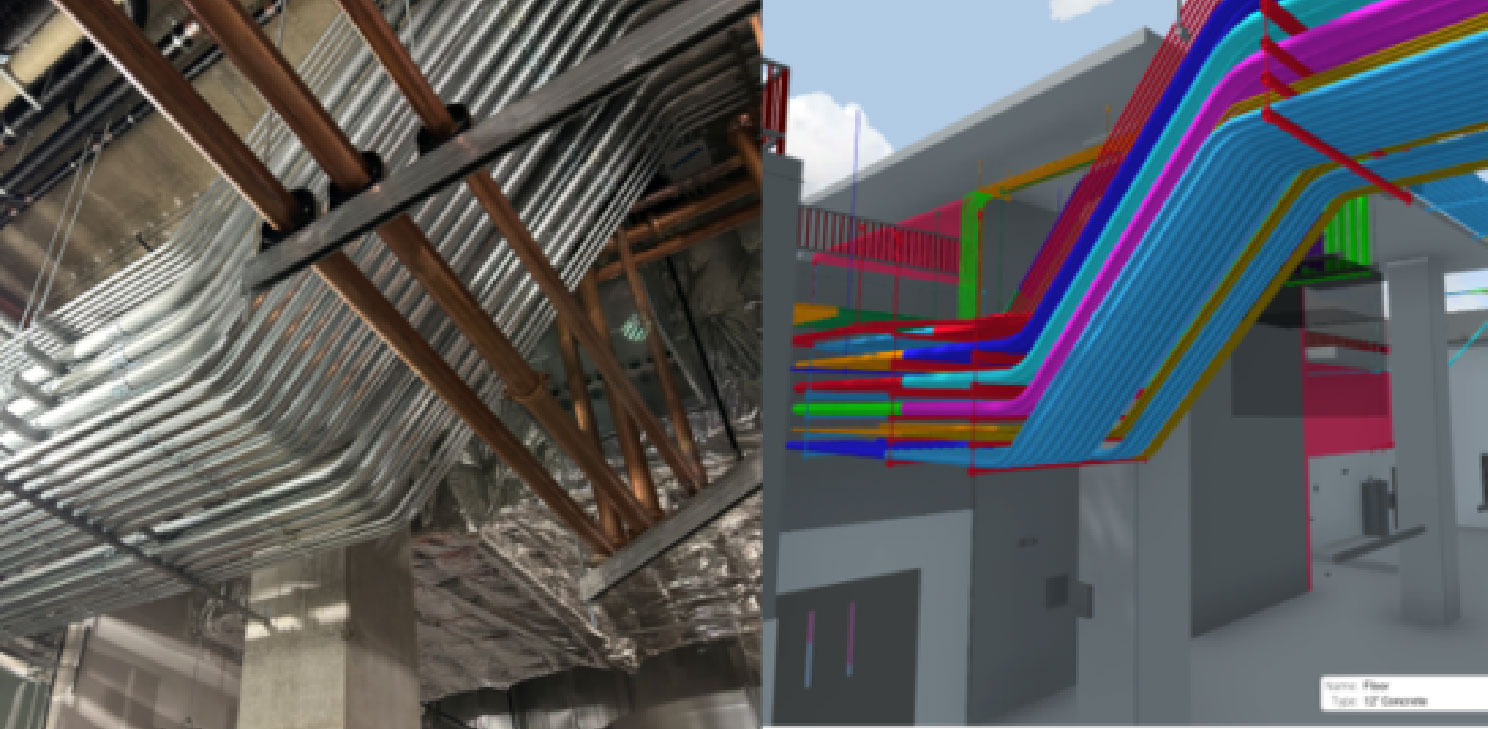
A striking recent example is the collaboration between MetAI and Micron, who have developed simulation-ready digital twins of semiconductor fabs on NVIDIA Omniverse. By transforming complex engineering data — including CAD drawings and facility metadata — into high-fidelity digital environments, Micron can now rapidly generate large-scale semiconductor facilities such as cleanroom production areas. These digital twins support layout planning, design validation, and material flow analysis, enabling faster iteration and earlier validation across the construction lifecycle. The pathway also integrates with NVIDIA’s Isaac Sim robotics framework, supporting autonomous system development and pre-deployment validation — a true real-to-sim-to-real workflow.
Smarter Fabs, Better Outcomes
Beyond construction, Industry 4.0 is making semiconductor fabs smarter in operation. Augmented and virtual reality tools give operators greater visibility across sprawling production environments, allowing them to visualise entire production floors in real time. Sensor-equipped machines deliver continuous performance data, enabling engineers to predict maintenance requirements and avert failures before they occur — dramatically reducing costly downtime.
Cloud connectivity is another critical enabler. When data and software are hosted in the cloud, multiple fabs can share learnings, accelerate process optimisation across sites, and protect the wider supply chain from interruption. The ultimate ambition for many manufacturers is the “lights out” fab — one that requires minimal human intervention to run around the clock, delivering maximum productivity, quality, and cost efficiency.
A New Era for Semiconductor Manufacturing
The global expansion of semiconductor manufacturing — driven by initiatives such as the EU Chips Act and the US CHIPS Act — is placing Industry 4.0 semiconductor capabilities at the centre of every major new fab project. Power, cooling, and sustainability are also becoming critical design considerations, as energy-intensive facilities face mounting regulatory pressure to reduce their environmental footprint.
For those building and operating the next generation of semiconductor fabs, the message is clear: embracing Industry 4.0 is not a future ambition — it is the foundation upon which competitive, resilient, and sustainable chip manufacturing must be built today.
To discuss semiconductor manufacturing, fab construction and key issues facing the industry, connect with solution providers and network with delegates, attend the 3rd Constructing Semiconductor FAB Summit USA: Advances in Planning, Design and Engineering, taking place June 24-25, 2026, in Austin, Texas, USA.
For more information, click here or email us at info@innovatrix.eu for the event agenda. Visit our LinkedIn to stay up to date on our latest speaker announcements and event news.