LG Uplus has formalised a five-company partnership to develop prefabricated modular data centres, aiming for faster deployment and scalable AI capacity across South Korea through standardised, factory-produced components and retrofit options.
LG Uplus has formalised a five-company push into prefabricated modular data centres as South Korea’s telecom and construction groups try to speed up delivery of AI capacity, with local reports saying the partners are working on both a 100-megawatt standard model and retrofit designs for existing buildings. Newsis reported that the work is aimed at a 100 MW-class AI data centre template, while Maeil Business Newspaper said the alliance is intended to produce a hyperscale model that can be commercialised for large projects.
The agreement was signed on Sept. 4 at LG Uplus’s Pyeongchon Mega Center in Anyang, Gyeonggi Province, according to eDaily and DigitalToday. Those reports said the signatories were LG Uplus, GS Engineering & Construction, Xi C&A, Gansam Architects & Partners and D&O CM, with chief executives and senior executives from each company attending, including LG Uplus CEO Hong Beom-sik and GS E&C CEO Huh Yoon-hong. eDaily described the alliance as a full-lifecycle collaboration spanning design, construction and operation rather than a narrow construction partnership.
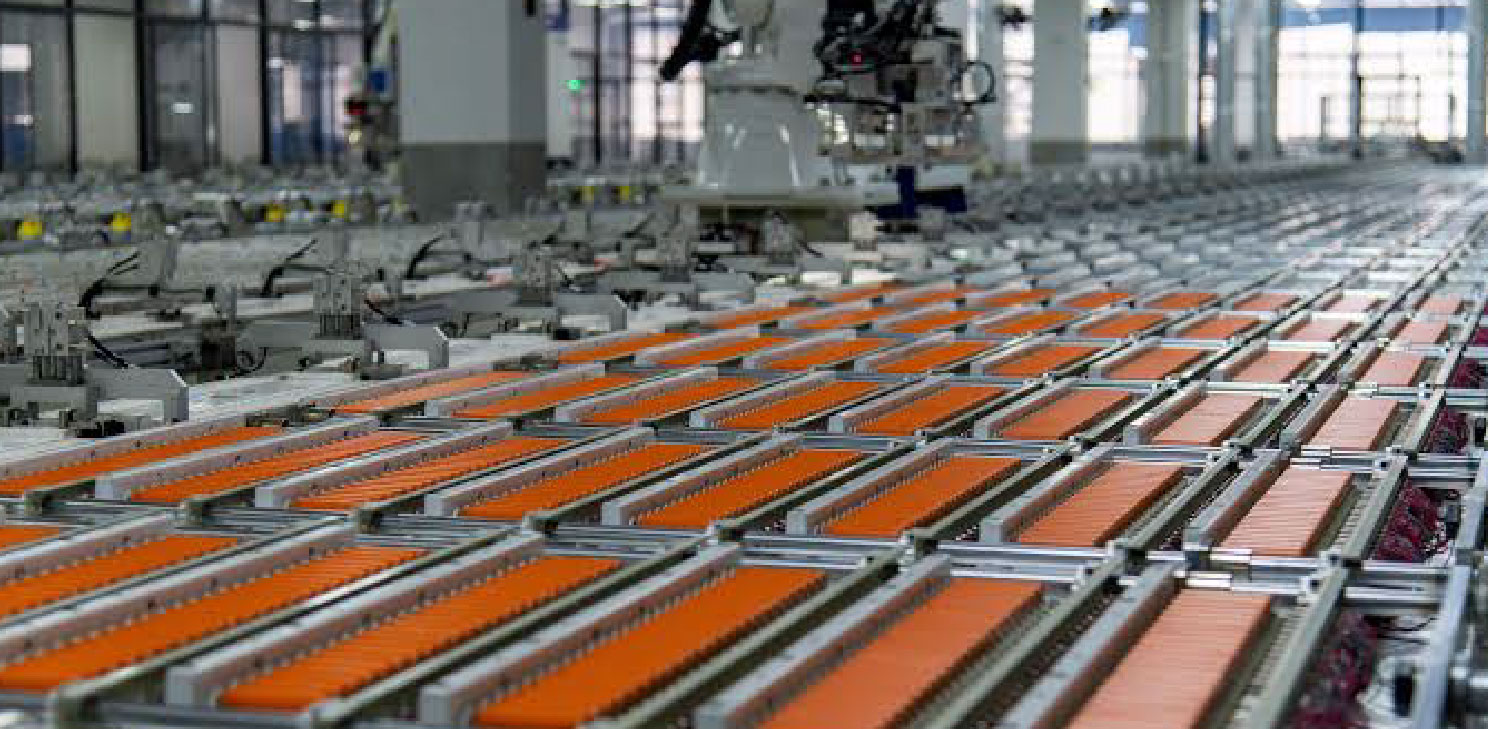
The modular model they are pursuing is designed to move more of the data centre build process into factories. eDaily, Newsis and Maeil Business Newspaper each said the approach standardises structural components as well as power and cooling systems, allowing them to be manufactured, and in Newsis’s account tested, before being transported for assembly on site. That, the reports said, can shorten construction schedules, improve consistency in quality and make later expansion easier when AI demand changes. Maeil also said the method is geared to faster time to market and lower site risk.
DigitalToday and Newsis reported that the five companies have been working together on the standard model since April. Their coverage said the scope includes a new-build version and a retrofit option that would convert existing buildings for AI infrastructure use. That dual track matters for a market where operators are trying to add capacity quickly but do not always have the luxury of waiting for entirely new campuses to be built.
The alliance also fits into a much larger AI infrastructure drive by LG Uplus. Asia Business Daily reported in June from the company’s construction site in Paju, Gyeonggi Province, where LG Uplus said it was building a major AI data centre and targeting cumulative orders of 5 trillion won by 2030, alongside average annual revenue growth of about 15% to 20%. The publication said the Paju facility would have about 150,000 square metres of total floor area, roughly the size of 21 football pitches, across four main buildings and annexes, and that the first building was scheduled for completion in June 2027.
At that June briefing, Jung Sookkyung, head of AIDC Business at LG Uplus, told Asia Business Daily that “Trust is the most important.” She said the company had run data centres for 27 years without interruption under the “Five-Nine Principle”, which the report defined as 99.999% availability, and added that LG Uplus was preparing next-generation operations under the motto “AI protecting AI.”
ChosunBiz added further commercial context, reporting in June that LG Uplus already operates 15 AI data centres nationwide and that revenue from the segment had reached 422 billion won, outpacing growth in its consumer telecom business. It also said the first Paju building was fully booked and that the company was targeting 600 MW of capacity by 2030. In that account, LG Uplus credited roughly 20% construction progress at Paju in about a year in part to the use of the same standardised modular method now being pursued through the new alliance.
Cooling technology is another part of the strategy. Asia Business Daily said the Paju site was being prepared with both air and liquid cooling, while ChosunBiz described it as a hybrid design and said LG Uplus had presented it as the first such structure in Korea. ChosunBiz said liquid cooling was intended to address the efficiency and noise limits of conventional air systems, underscoring why the alliance is focusing not just on faster building methods but on repeatable designs for power and thermal management as AI workloads become denser.
To find out more about the latest industry updates and innovations in prefabrication for mega facility construction, meet with solution providers and hear talks from expert speakers, attend the Prefabrication for Mega Facilities Summit USA, taking place November 17-18, 2026, in Houston, Texas, USA
For more information, click here or email us at info@innovatrix.eu for the event agenda. Visit our LinkedIn to stay up to date on our latest speaker announcements and event news.
Source: