The 6th Autonomous Off‑Highway Machinery Technology Summit took place from March 11th to 12th 2026, with attendees from all over the autonomous off-highway machinery industry coming together at the Holiday Inn Munich – Leuchtenbergring. The two day conference had high-level technical discussions, real-world case studies, and solution-focused presentations designed to help stakeholders adopt safe, scalable, and efficient autonomous systems.
The summit brought together technical forum brings together automation providers, robotics engineers, machinery manufacturers, system developers, and innovation experts from mining, construction, agriculture, and industrial mobility.

This article will provide a session recap for those who didn’t get the chance to attend and serve as a reminder for those who attended.
Challenges in the Development of Autonomous Off-Highway Machinery
Dr. Pu, Hongjun, Chief Expert Intelligent Control at XCMG European Research Center GmbH

Hongjun explored the key challenges involved in developing autonomous off-highway machinery, highlighting the complexity of operating in environments that are managed but poorly structured and continually changing as machines alter their surroundings. Reliable perception is particularly difficult because sensors must withstand harsh physical conditions while coping with shadows, dust and fog. Accurate time and spatial alignment of sensor signals, together with compensation for machine movement, is therefore essential.
He explained that cognition, decision-making and motion planning provide the machine with embodied intelligence, but require extremely high reliability because failures raise functional safety, liability and ethical concerns. Feedback control is equally critical, with significant non-linearity and time delays requiring validated plant models, sophisticated control laws and fast, precise sensor feedback.
Hongjun compared end-to-end AI with the established sense-plan-action approach, noting that AI can emulate human behaviour but demands extensive training and presents challenges in validation, explainability and repeatability. Regardless of architecture, an independent arbitrator is essential to verify trajectories, manoeuvres, machine limits and safe operation. This safety layer must meet the highest applicable integrity requirements, as occasional failures are largely unacceptable in Level 3 and above autonomous machinery.
Geofencing and AI solutions for Port Cargo handling machines
Waqas Hafeez, Senior Manager Customer Digital Solutions at Kalmar Finland Oy

Waqas highlighted how geofencing can improve safety and operational control for port cargo-handling machines. He outlined the challenges of applying speed controls to machines measuring around 10 by 5 metres, weighing more than 100 tonnes and travelling at up to 25 km/h. Effective geofencing must account for the GNSS antenna’s position relative to the machine, enable straightforward area management, clearly inform drivers and maintain fail-safe behaviour when GNSS signals are unavailable.
He then introduced digital tools that provide comprehensive visibility into machine and operational performance. These include KPI dashboards, data visualisations, equipment comparisons, custom and annual reporting, and map-based views of machine trails, shocks and stability events. Data can be analysed across machines, chargers, drivers and operations to identify opportunities for improved efficiency and safety.
Waqas also addressed the growing demand for more detailed, customised analytics. Instead of relying on support teams to manually answer questions, an AI agent can use the same APIs as the existing digital platform to respond directly to data queries, generate tailored graphs and tables, and produce heat maps or other location-based visualisations. This approach can make complex operational data more accessible while reducing the time required to obtain actionable insights.
Photonic Distributed Radar extends autonomous application use cases on-road and off-road
Stefan Rinkenauer, CCO – Commercials of Xavveo

Stefan examined how photonic distributed radar can extend autonomous vehicle applications across on-road and off-road environments by addressing limitations in conventional perception systems. He highlighted challenges including dust, mud, rough terrain, water, adverse weather, dense vegetation, hidden obstacles, dynamic objects and signal interference, all of which can reduce sensor reliability and create blind spots.
He compared the strengths and weaknesses of radar, cameras and LiDAR. Radar performs well in dust, fog and rain and can detect movement and speed, but provides less precise object shape information and can generate false positives. Cameras deliver detailed semantic information but depend heavily on lighting and are vulnerable to poor weather. LiDAR provides accurate three-dimensional geometry but can be affected by rain, fog, dust and vegetation. Combining these technologies can improve overall perception, but gaps remain in difficult operating conditions.
Stefan presented photonic distributed radar as an approach designed to provide high-resolution perception and improved performance in challenging weather. Its 360-degree coherent radar belt uses flexible antenna arrays and distributed sensor modules connected through optical fibre. The system generates and distributes high-frequency signals optically, performs coherent radar transmission and reception, and processes downconverted signals to support robust autonomous perception.
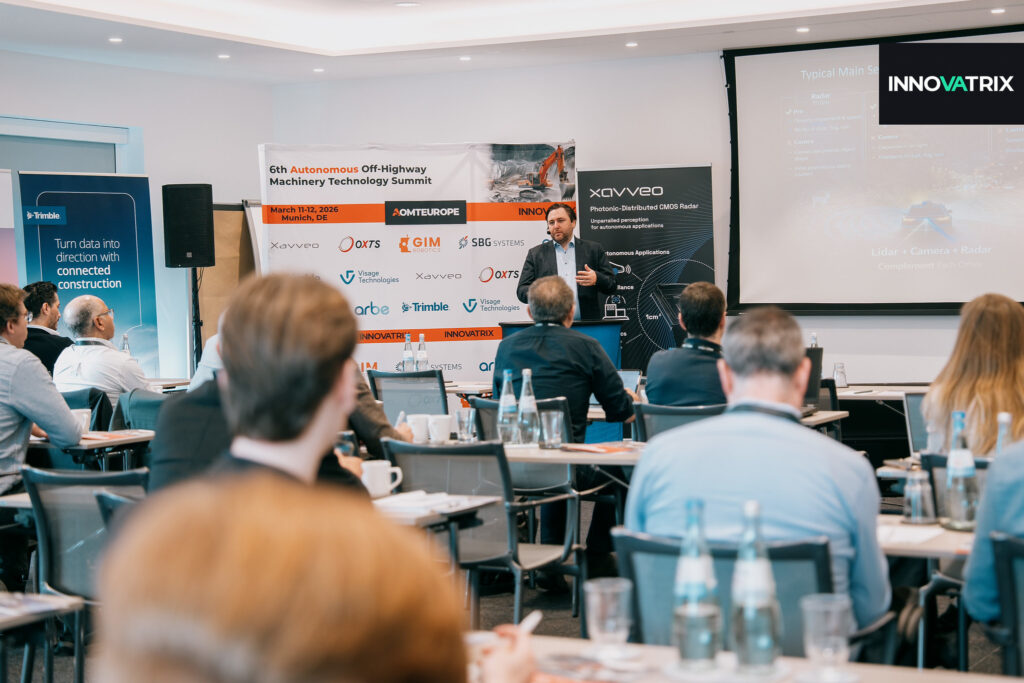
AI yield forecasting in the connected grassland harvesting process
Matthias Eichlseder, Produkt Management Smart Farming at PÖTTINGER Landtechnik GmbH

Matthias presented how AI and connected machinery can optimise the grassland harvesting chain by improving planning, coordination and predictability. The Smart Harvest Chain addresses challenges including uncertain harvest timing, inefficient use of large-scale machinery, driver workload and difficulty forecasting feed production. HARVEST ASSIST provides route planning, field navigation, real-time location sharing and dynamic logistics to improve material flow to the silo.
A central element is AI-based yield forecasting, which estimates fresh-matter and dry-matter yields for individual fields and wider areas, predicts yield development up to a week ahead, and supports decisions on drying, tedding, storage requirements and silage additive rates. These forecasts can also guide biomass-dependent mowing and tedding sequences, helping optimise drying, reduce unnecessary passes and improve cost efficiency.
Real-time swath tracking gives harvesting teams a shared view of field progress, while colour-coded information helps identify potential blockages and prevents swaths from being missed. At the silo, coordinated delivery intervals enable more consistent compaction and improved silage quality.
Matthias also highlighted telemetry analysis, which provides documented yields and machine data for fields, crops and equipment. Future development will combine forecasting with local harvest data and machine learning to improve prediction accuracy and enable more intelligent decision-making.
MiC 4.0 – One Digital Language
Dr. Darius Soßdorf, General Manager at VDMA

Darius explained how MiC 4.0 brings construction machine manufacturers and users together to establish a common digital language and shared understanding of machine data. Founded in 2019, the initiative has grown to 138 active members across eight European countries, with manufacturers and construction companies collaborating to develop practical, standardised solutions.
He emphasised that ISO 15143 provides the foundation for MiC 4.0, covering areas including fleet management, topographical data, construction site management systems and task-based machine data. The initiative also explores architecture approaches such as backend-to-backend communication, attachment interfaces and assistance interfaces. The objective is to ensure that construction machines communicate using consistent data meanings and formats, enabling successful digitalisation across the industry.
Darius highlighted the MiC 4.0 TestTool and database, which allow manufacturers to test their machine data before publishing validated information in a publicly accessible database. Customers can compare up to three machines based on the data they provide, supporting more informed equipment selection.
He stressed that MiC 4.0 focuses specifically on **data quality, standardised formats and consistent interpretation** under ISO 15143-3. It does not dictate how data is transmitted or managed, but ensures that the same data has the same meaning across manufacturers, creating the foundation for interoperable digital construction workflows.
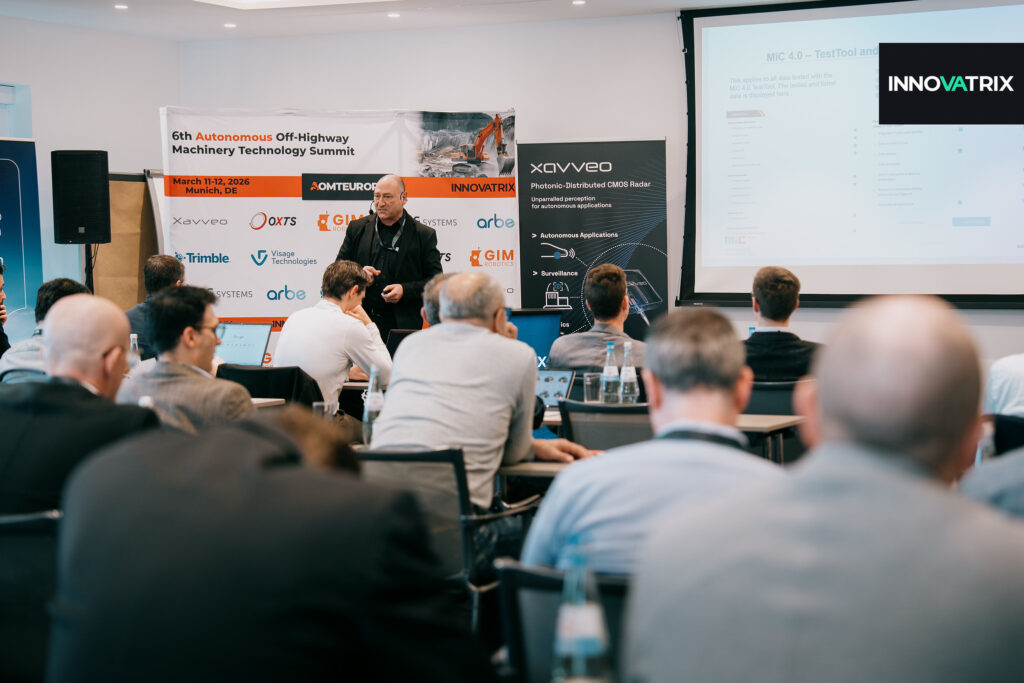
Mud, Machines, and Math: Delivering Safe, Centi- meter-Level Positioning in Rugged Environments
Stefan Junker, Senior Director, Engineering at Trimble

Stefan explored the challenges of maintaining centimetre-level GNSS positioning in rugged environments, focusing on ionospheric disturbances, jamming, spoofing and functional safety. He explained that high solar activity can create significant and unpredictable ionospheric differences, reducing RTK precision and causing operational interruptions. IonoGuard addresses these conditions through disturbance detection, adaptive noise modelling and mitigation techniques designed to reduce downtime.
He also highlighted the growing risks of GNSS jamming, which interferes with signals, and spoofing, which manipulates signals to produce incorrect positions. Jamming detection analyses signal-to-noise ratio, power spectrum, SNR variation and loss-of-lock indicators to estimate the probability of interference. A cloud-based monitoring portal provides real-time and historical analysis by station, frequency and KPI, supporting system-level diagnostics.
For functional safety, Stefan discussed precise correction services with short convergence times, global and regional reference networks, multi-constellation support and integrity information. Protection levels define the maximum statistically credible positioning error, while alert limits establish the largest error acceptable for safe operation.
He also outlined SOTIF processes, using feared-event analysis, safety gates, extensive simulation and specialised testing to demonstrate that positioning errors remain within acceptable integrity risks.
Robust Localization and Real-Time Mapping for Real-World Robotics
Dr. Helen Oleynikova, Senior Researcher at ETH Zurich

Helen examined how robots can achieve reliable localisation and navigation in increasingly unstructured environments, where interactions and uncertainty are greater. She explained how 2D and 3D LiDAR, RGB-D cameras and other sensors provide complementary information, allowing robots to determine their position and understand their surroundings. However, every sensing modality has limitations: GPS requires satellite visibility, vision is affected by weather and motion blur, and LiDAR can struggle in geometrically repetitive or featureless environments.
She presented methods for robust state estimation and real-time mapping, focusing on Euclidean Signed Distance Fields (ESDFs). These enable rapid collision checking for complex robot shapes, but conventional approaches can be computationally expensive, difficult to update and sensitive to noise. GPU acceleration allows sensor data to be fused in parallel, producing higher-resolution maps and faster motion planning suitable for real-time autonomy.
Helen also discussed the transition from purely geometric, static maps towards semantic understanding of environments and interaction with changing surroundings. While current robot-learning approaches can struggle to generalise, maintain spatial memory and operate without extensive data or off-board sensing, combining classical robotics methods with modern foundation models could improve environmental understanding. She highlighted applications including infrastructure maintenance and construction robotics.
Proven, Certified GNSS Positioning for Autonomous Off-Highway Machines
Clément Baron, CTO of Agreenculture

Clément addressed the challenges manufacturers face when adopting autonomy, particularly smaller tractor producers with limited R&D resources. Rising labour shortages and declining farm profitability are accelerating demand for autonomous solutions, but manufacturers must balance rapid market entry with the high costs, specialist skills and safety requirements involved.
He emphasised safety as the foundation of autonomy, focusing on two primary risks: machines leaving designated working areas and harming people. For geofencing, he outlined a staged approach covering accurate GNSS positioning, integration of the complete tractor and implement shape, and dynamic factors such as velocity, braking delays, ground conditions and changing implement configurations. Positioning must account for alert limits and integrity risks, while safety architecture must meet appropriate performance levels under ISO 13849.
Clément presented Safencing as a certified safety function designed to prevent autonomous machines from leaving defined working areas. The system combines safety-rated GNSS positioning, precise surveyed perimeters, redundant antennas and receivers, safety-oriented hardware and software, and independent safety outputs. He also highlighted obstacle detection and a ready-to-integrate autonomy kit designed to accelerate deployment.
He concluded that manufacturers do not need to develop every autonomy capability themselves. Partnerships can provide certified technology, integration support, training and machine certification while allowing manufacturers to focus on their core products and customer needs.
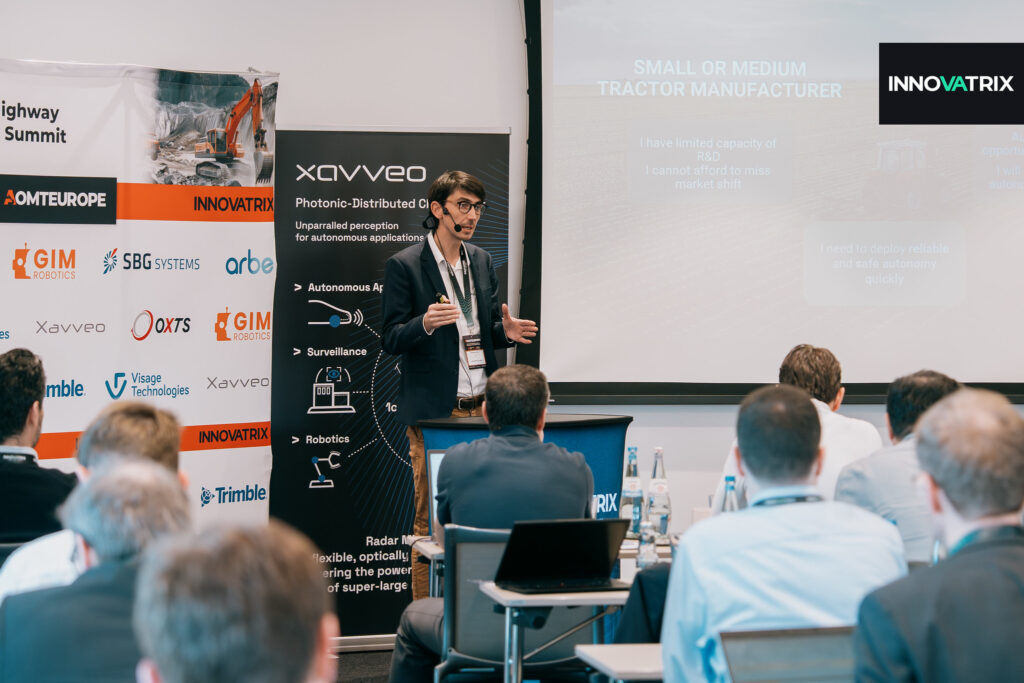
Safety for autonomous off-highway machinery in mixed traffic situations
Adam Pekarski, M.Sc., Research Assistant, and Dr.-Ing. Moritz Ziegler, Group Lead – “Localization, Autonomous Navigation & Robotics”, at RWTH Aachen University

Adam and Moritz examined how autonomous machinery can be safely integrated into mining environments where autonomous and manually operated equipment share the same operating space. They highlighted the limitations of fully segregated autonomous zones, including reduced flexibility, high upfront costs and significant operational disruption. Mixed autonomous traffic offers a more gradual path to automation while reducing these barriers.
They presented a safety concept intended to guide mine operators, manufacturers, technology providers and legislators through the steps required to demonstrate safe mixed operation. Key priorities include defining the operational context and scenarios, identifying interactions between machines and people, conducting risk and security assessments, and developing appropriate safety control systems.
The concept uses an Operational Design Domain to establish the boundaries of permissible autonomous operation and define the conditions under which machines must transition to a safe state. Risk assessment considers process hotspots and interaction scenarios, with risks evaluated according to severity, likelihood and detectability.
Adam and Moritz also highlighted significant industry barriers, including fragmented regulations, limited harmonisation of standards and unclear approval processes. They called for uniform standards, structured communication between stakeholders and clear planning, design and operating guidelines. Future work will focus on certifiable Object Detection System evaluation methods under real-world mining conditions, supporting safer and more economical mixed autonomous operations.
Implementing Smart Farming Applications using EO Data, Soil Sensors & Robotics
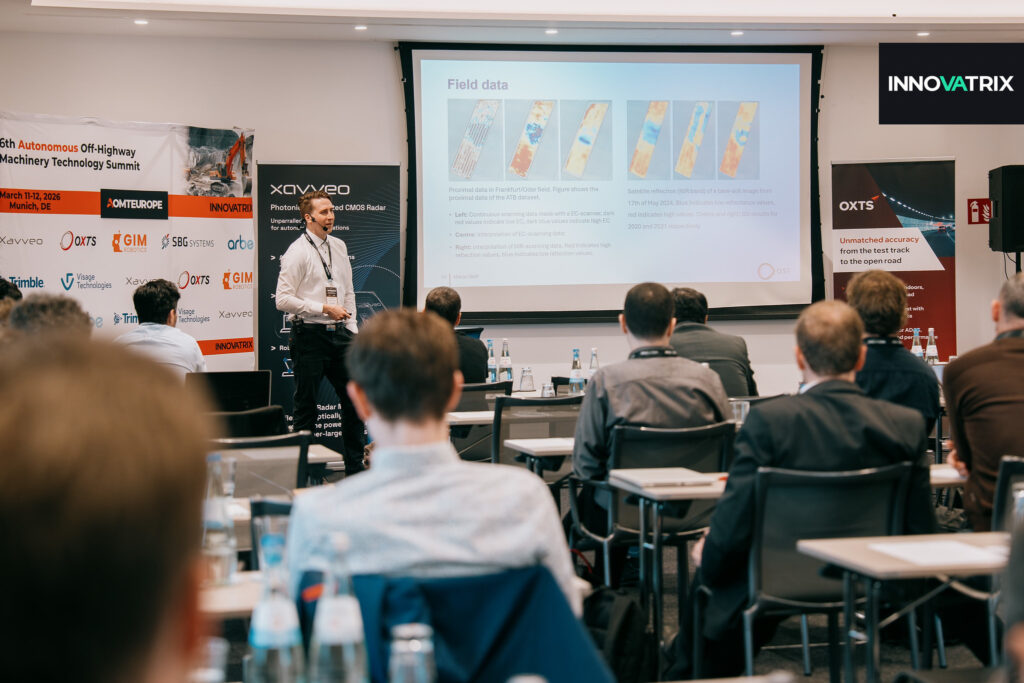
Marco Morf, Lead Data Scientist at OST – Eastern Switzerland University of Applied Sciences

Marco presented an integrated approach to precision agriculture that combines satellite Earth observation data, soil sensors and robotics to produce detailed, cost-effective soil maps. The system uses satellite imagery to identify variability within fields, then guides autonomous soil-mapping robots equipped with proximal sensors towards representative areas. Field measurements and laboratory analysis are combined with satellite data to generate high-resolution soil property maps.
He highlighted how improved soil intelligence can address soil degradation, limited site-specific data, costly traditional sampling and increasingly unpredictable climate conditions. The resulting information can support applications including precise lime requirements, optimised seeding density, soil compaction avoidance, automated field operations and carbon monitoring.
The approach uses data fusion to reduce the number of physical samples required while maintaining accurate mapping, providing near-real-time results and lowering analysis costs. Robotic platforms can also collect soil samples and perform nutrient analysis directly in the field, although challenges remain around sample storage, payload weight and operation across uneven or steep terrain.
Marco explained that the project is being developed through co-creation cycles involving end-users, allowing feedback to shape the technology and applications. Future priorities include improving geographical adaptability, developing farmer-friendly applications, expanding international partnerships and supporting wider soil-health and carbon-farming initiatives.
Navigation and Mapping Solutions for Off-Road Autonomy
Laurent Le Thuaut, Business Development Manager at SBG Systems

Laurent explored how resilient navigation systems can support safe autonomy in challenging off-road environments, where satellite visibility is reduced and multipath, terrain and interference create uncertainty. He emphasised the importance of carefully designed and calibrated inertial sensors, robust manufacturing processes and continuously improved navigation algorithms. Sensors are tested against vibration, shock, electromagnetic interference, temperature and humidity variations to ensure reliable performance throughout their lifetime.
He presented a multi-sensor approach combining GNSS, IMUs, odometers, vision and LiDAR. The SAF2Nav framework uses sensor fusion, integrity monitoring and dead reckoning to maintain navigation when GNSS signals are unavailable or compromised. Jamming and spoofing protection combines interference detection, receiver alerts, signal rejection and automatic transition to alternative sensors.
Laurent highlighted the benefits of tightly coupled GNSS/INS integration, which analyses raw satellite measurements and can maintain accurate navigation during signal obstruction. This is particularly important for off-road autonomy and safe geofencing, where navigation errors near hazards or boundaries can have serious consequences.
Protection Levels provide a statistical bound on positioning error and are continuously compared with Alert Limits to determine whether navigation remains safe. Finally, he discussed PPP-AR technology, which can deliver centimetre-level positioning without local base stations, reducing infrastructure requirements while improving the scalability and resilience of mapping, surveying and autonomous applications.
AI-Driven Robotics for Construction, Mining, and Agriculture
Prof. Dr. Julius Schöning, Professor at Hochschule Osnabrück

Julius explored how AI-driven robotics can transform agriculture, construction and mining, drawing parallels with robotic systems developed for extraterrestrial environments. He highlighted the need for robots to operate reliably in complex, changing conditions, using advanced sensing, localisation, mobility and control systems. In agriculture, AI and robotics can help address biodiversity, climate change and the interdependencies affecting modern cultivation, while enabling more targeted and automated farming techniques.
Julius also examined the relationship between SAE J3016 automated driving concepts and ISO 18497 autonomous machinery, emphasising the importance of clearly defining operational design domains, functions, operating modes and safety conditions. He stressed that regulation must be considered throughout AI development, as legal risks can emerge from conceptualisation through to implementation and market entry.
Comparing space and agricultural robotics, he identified shared requirements for robustness, sensor fusion, autonomous control and verification, while noting key differences in cost, scalability, operating environments and regulatory oversight. He concluded by highlighting human-centred AI, education, collaborative research and practical field innovation as important foundations for developing safe, explainable and effective robotic systems.
AI-Driven Robotics for Construction, Mining, and Agriculture
Alexandre PREVAULT OSMANI, CTO & Co-Founder at SABI AGRI

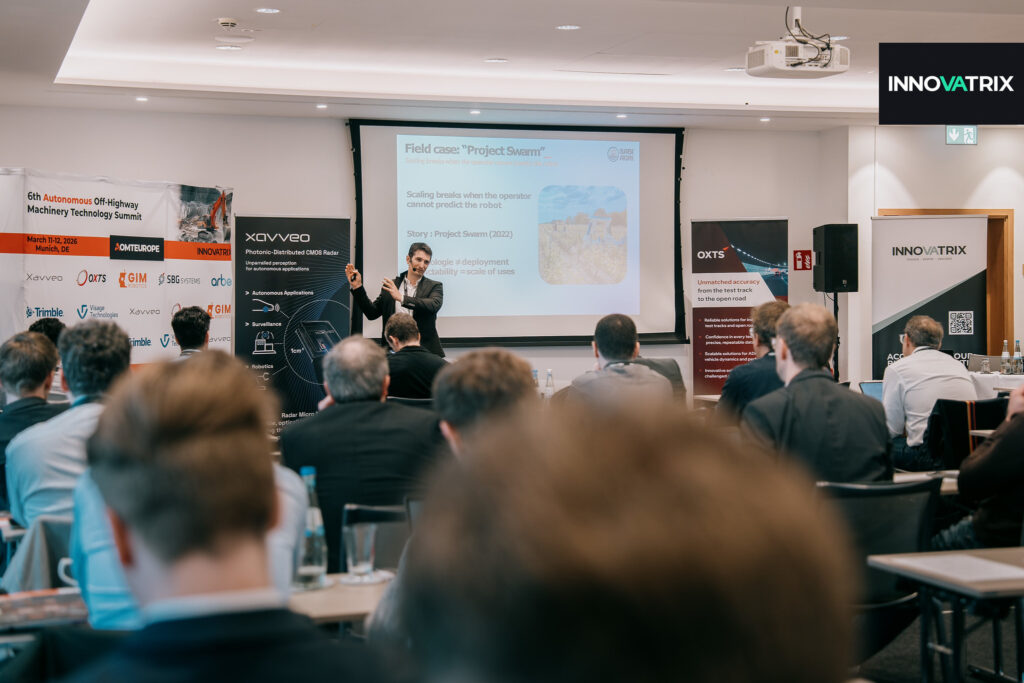
Alexandre examined the challenge of scaling autonomous robots from successful pilots to reliable real-world deployments. He argued that technological capability alone does not guarantee adoption: deployment breaks down when operators cannot predict how a robot will behave. A pilot demonstrates that a system can work in a particular situation, whereas deployment must demonstrate a repeatable process that can operate reliably at scale.
He identified recurring mistakes in scaling autonomy, including oversimplifying complex systems in ways that reduce transparency, confusing service provision with operator training, and continually pursuing new technology rather than industrialising proven solutions. A clearly defined Operational Design Domain (ODD) provides a practical framework by specifying the conditions in which autonomy has been designed and validated, including terrain, surroundings, weather and crop conditions.
Alexandre emphasised the importance of comparable KPIs and auditable logs to understand and predict system behaviour. Measures such as work rate, energy consumption, availability, human interventions, maintenance costs and safety events enable performance comparisons across sites and support better operational decisions.
He concluded with a deployment playbook built around defining the ODD early, recording it, using KPIs to guide decisions, designing for field usability, and involving and training operators. This approach can improve trust, safety, insurability and the scalability of autonomous machinery.
Big Data and Digital Twins
Ivan Branco, Head of Information Management, AI and Analytics at Volvo Group – GTO SML

Ivan explored how big data and digital twins can transform manufacturing by turning vast quantities of operational information into actionable insights. Modern production environments generate terabytes of data daily from thousands of sensors, creating challenges around volume, velocity, variety, value and veracity. Effective data strategies must therefore ensure information is accurate, accessible and usable for decision-making.
He explained how real-time sensor data can continuously update digital twins, combining live operational information with historical patterns and simulation capabilities. Process twins can optimise workflows, product twins can track individual products throughout their lifecycles, and system twins can model entire facilities and their interdependencies. Together, these capabilities support virtual scenario testing, faster root-cause analysis, improved resource allocation and enhanced quality control.
Ivan outlined a scalable data architecture spanning IoT sensors and industrial systems, data ingestion, edge and cloud processing, analytics and AI, and decision-support tools. Real-time dashboards can identify deviations immediately and enable faster responses.
He also addressed integration challenges caused by legacy systems, proprietary protocols, data silos and IT/OT barriers. Standardised communication protocols, middleware and data-fabric architectures can help connect fragmented systems. Finally, Ivan highlighted the growing sustainability value of digital twins, including improved energy efficiency, reduced physical prototyping and significant potential for reducing emissions while improving overall equipment effectiveness.
Electronic Architectures for Software Defined Machinery
Andreas Locatelli, Senior Product Manager ADAS at TTControl

Andreas explored how electronic architectures and software are reshaping off-highway machinery, moving from traditional distributed systems towards centralised architectures with fewer electronic control units. He explained that software-defined machines can continuously expand their functionality and value through software updates, shifting development from a fixed hardware-led model towards continuous development and deployment.
He highlighted the importance of cloud-based DevOps, continuous integration and simplified upgrade processes that minimise disruption while maintaining cybersecurity and fail-safe operation. Autonomous machinery increases these requirements further, demanding greater computing capacity, high-performance processors, sensor fusion, real-time data processing and advanced AI algorithms. Cameras, radar and other sensors generate substantial data while systems must meet increasingly demanding safety standards.
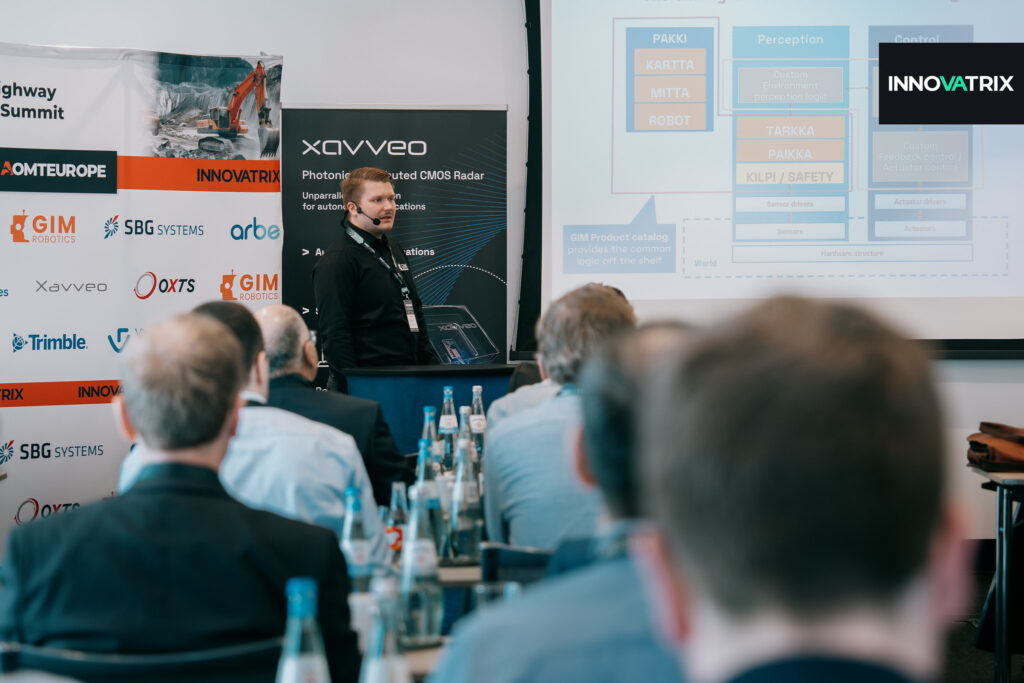
Andreas presented an electronic architecture combining safe vehicle control with high-performance computing, AI applications, displays, sensors, connectivity and cybersecurity. He also outlined cloud-based software development workflows spanning data collection and annotation through model training, testing, deployment and monitoring. Ultimately, successful software-defined machinery requires close integration between machine, edge and cloud systems, supported by collaboration between robotics, AI, application engineers and machine operators.
/
AI in agriculture for autonomous driving and automation of working
Axel Schröder, Head of Perception Sensors, and Jannik Redenius, Product Owner Perception for Automation and Autonomy, at CLAAS E-Systems GmbH

Axel and Jannik examined how AI and advanced perception systems can help agriculture address growing pressures including climate change, extreme weather, water scarcity, demographic change, labour shortages and increasing nutritional demands. They highlighted that farming often takes place in remote environments, creating additional challenges for autonomous machinery, while large-scale operations are increasingly adopting high-tech equipment.
They outlined the progression from driver assistance and high-level automation towards full autonomy, including an agricultural interpretation of SAE-J3016 levels covering both automated driving and automated working. The long-term goal is Level 4 autonomy, where perception systems effectively replace the driver’s eyes and brain. Modern agricultural machinery can already incorporate up to 100 sensors, demonstrating the scale of data required for increasingly autonomous operations.
A key challenge is developing perception systems capable of understanding complex agricultural environments and making appropriate decisions despite dust, changing weather and varied operating conditions. They highlighted simulation as an important tool for extending test coverage. Ultimately, they emphasised that autonomy should have a clear purpose: delivering practical value to farmers while addressing the real-world challenges facing modern agriculture.
Agile Productization Concept for Autonomous NRMMs
Jan Gustafsson, Lead Engineer, Project Manager at GIM Robotics

Jan highlighted the persistent challenge of moving autonomous machinery from proof-of-concept demonstrations into reliable, commercial products. He explained that while PoCs can prove individual features in controlled environments, they rarely address the full range of real-world edge cases. Commercialisation also introduces stringent safety, regulatory and legal requirements, while hardware lead times and expensive testing can slow software development and make budgets and timelines difficult to predict.
He presented an agile approach designed to bridge this gap by integrating product development, regulatory alignment, simulation, physical prototyping and pilot deployment. The approach uses simulation-native development to validate use cases early, followed by rapid physical prototyping and continuous evolution through real-world testing. Supporting tools include CI/CD pipelines, AI-enhanced quality and compliance checks, and digital-twin capabilities.
Jan demonstrated the approach through applications including autonomous rail collision avoidance, crane anti-collision systems and industrial sweeping. Across these examples, clearly defined user needs were translated into executable plans, validated in simulation, tested on physical prototypes and progressed through pilots into production. He emphasised that successful autonomy depends not simply on creating a PoC, but on having the experience and processes required to cross the final gap into scalable, market-ready products.
Sponsors
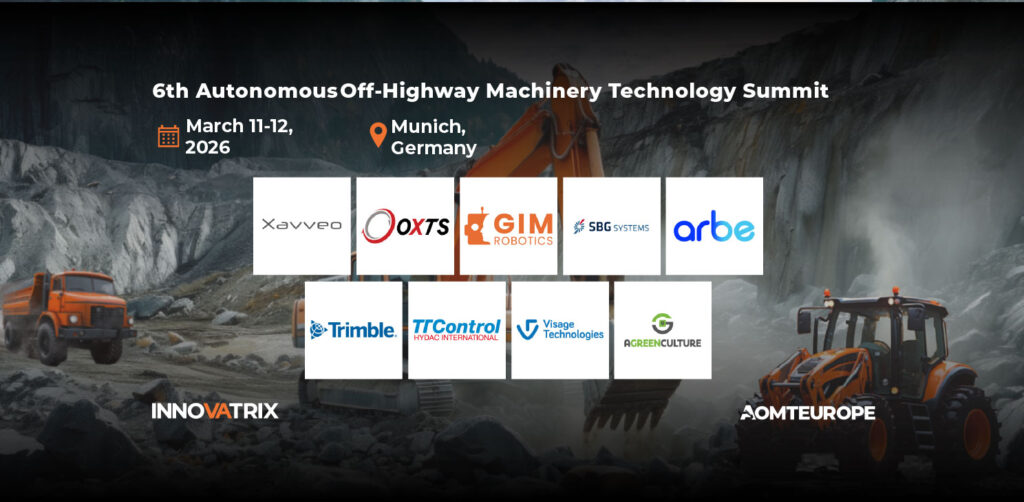
The 6th Autonomous Off-Highway Machinery Technology Summit was supported by a wide range of sponsors who brought their teams to our exhibition hall, and Innovatrix would like to thank them again for their support.
Xavveo, OXTS, GIM Robotics, SBG Systems, Arbe Robotics, Trimble, TT Control, Visage Technologies and Agreenculture.
If you want to attend our next autonomous off-highway summit and have the opportunity to hear presentations like these and many more, join us for our American edition next year, taking place Q1 in Chicago. To discover the latest innovations and trends in robotics and autonomous off-highway machines, meet with solution providers and hear talks from industry leaders, register for the 7th Autonomous Off-Highway Machinery Technology Summit!
For more information, visit our website or email us at info@innovatrix.eu for the event agenda. Visit our LinkedIn to stay up to date on our latest speaker announcements and event news.