This June, Innovatrix returned to Berlin for the 5th Constructing Next-Gen Data Centers Europe: Revolutionizing Planning, Design, and Engineering that took place June 9-10, 2026, at the Eurostars Berlin Hotel, Berlin, Germany. Our delegates had the opportunity to connect with data center owners, hyperscalers, colocation providers, contractors, engineers, designers, and technology suppliers to explore end-to-end delivery strategies for modern European data centers.
Our audience explored data center construction event strategies, advanced data center HVAC systems, and scalable infrastructure for data center mission critical environments. Experts will also explore innovations in data center cooling technologies and energy-efficient data center solutions, ensuring sustainable, resilient, and high-performance facilities across Europe.
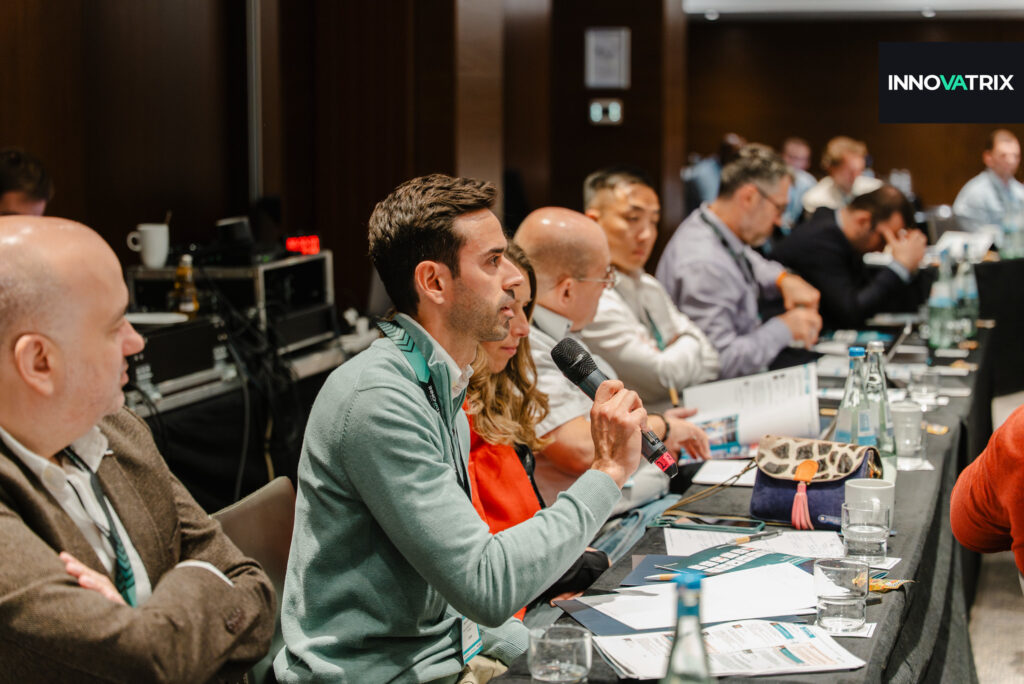
This article will provide a session recap for those who didn’t get the chance to attend and serve as a reminder for those who attended.
Europe’s Data Center Outlook: Expansion, Regulation & New Power Realities
Henrik Hansen, CEO of Danish Data Center Industry

Henrik examined the rapid expansion of Europe’s data center market and the growing pressure on the sector to balance AI-driven demand with energy, land, infrastructure, and regulatory constraints. He highlighted that European data center IT load could increase from 10 GW to 35 GW by 2030, with AI expected to account for 25–30% of capacity compared with less than 5% today. Vacancy rates are also trending toward historic lows as AI demand absorbs capacity before new facilities are delivered.
Henrik emphasized that power availability, rather than capital, is becoming the critical bottleneck for new projects, making speed-to-power a major factor in site selection. Grid connection constraints are driving interest in phased connections, flexibility, private-wire arrangements, behind-the-meter generation, and other alternative power solutions. Large 100–400 MW AI campuses and emerging neocloud providers are further reshaping demand.
He also addressed Europe’s evolving regulatory landscape, including energy efficiency reporting, data governance, cybersecurity, and digital sovereignty requirements. He stressed the importance of fact-based policymaking and clear regulations to ensure Europe can expand capacity, support innovation, and remain competitive while strengthening its digital sovereignty.
From Energy Consumer Data Centers to Energy Interactive Next-Gen Data Centers
Ilhan Keskin, Design Director – EMEA at Digital Realty

Ilhan explored how data centers can evolve from major energy consumers into active participants in energy systems. He noted that global data center electricity consumption reached around 415 TWh in 2024, representing approximately 1.5% of global electricity use, with demand growing rapidly alongside digital technologies and AI. As cooling remains a significant share of consumption, improving efficiency alone may not be enough to address future energy challenges.
He highlighted opportunities to reuse data center waste heat, noting that every 1 kWh of electricity consumed produces approximately 1 kWh of heat. Energy reuse can support buildings, hot water, and district heating networks, while renewable energy strategies can be strengthened through PPAs, on-site generation, and better alignment between data center demand and periods of renewable availability.
Ilhan also emphasized the growing importance of data centers interacting with the power grid through load management, ramp-rate control, reactive power support, fault ride-through, and other capabilities. On-site generation can improve resilience and availability, while integration with district heating can create additional value from waste heat. Ultimately, he argued that next-generation data centers should combine efficient energy use, on-site generation, energy exchange, and demand management to support cleaner, more flexible energy networks.
Air-Cooled Chillers Under Stress: CFD, Heatwaves, and Design Reality
Janis Strelits Strele, CEO of Smart Cooling

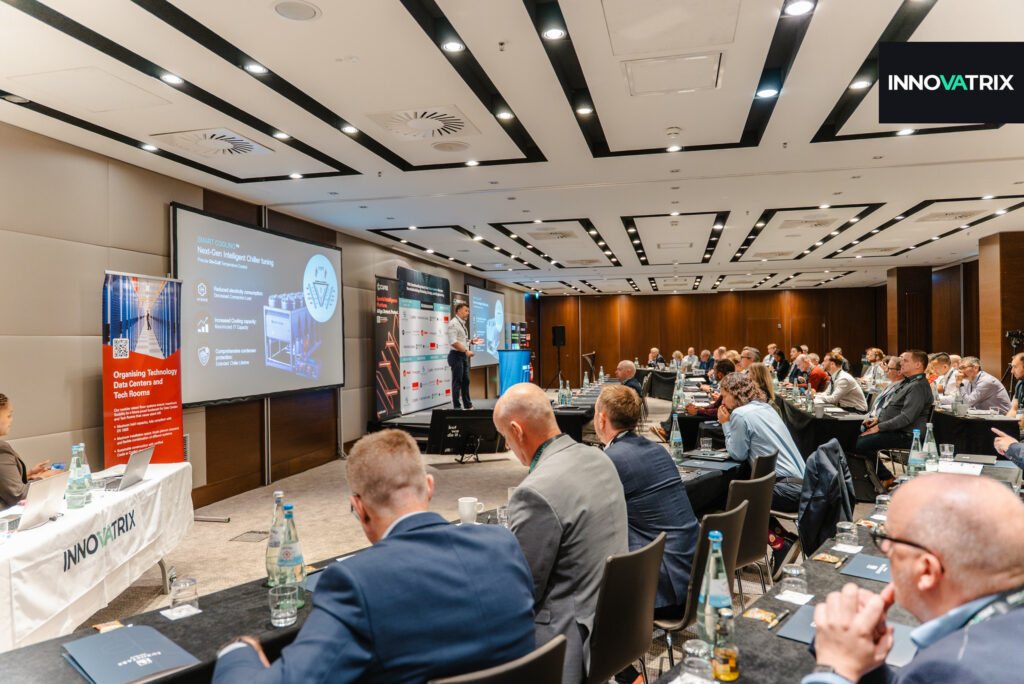
Janis explored how air-cooled chillers can be optimised to maintain reliable data center performance under extreme weather conditions. He highlighted intelligent chiller tuning and precise on-coil temperature control as ways to reduce electricity consumption and connection loads while increasing cooling capacity, maximising IT capacity and extending chiller life.
Using project examples, Janis demonstrated how CFD analysis can challenge conventional design assumptions and help avoid overbuilding. In Arizona, maintaining an on-coil temperature of 116°F (47°C) during 251 hot hours required just 14,000 gallons of water per chiller, or 1.8 million gallons across 130 chillers. In Abu Dhabi, the approach enabled a reduction in the air-cooled chiller design condition from 125.6°F to 100.4°F, while the highest annual on-coil temperature was 95.54°F.
For a London project, CFD analysis tested conditions of 48°C while the chiller and Smart Cooling approach were designed around 38°C, with a 378 kW chiller power cap. Janis also outlined temperature-control strategies that customise on-coil temperatures while minimising water consumption, particularly for sites where water availability is limited.
Managing Large-Scale Data Center Programs Across Multiple EU Markets
Maciej Kraj, Technical Design Lead – Data Centers at AECOM Deutschland GmbH
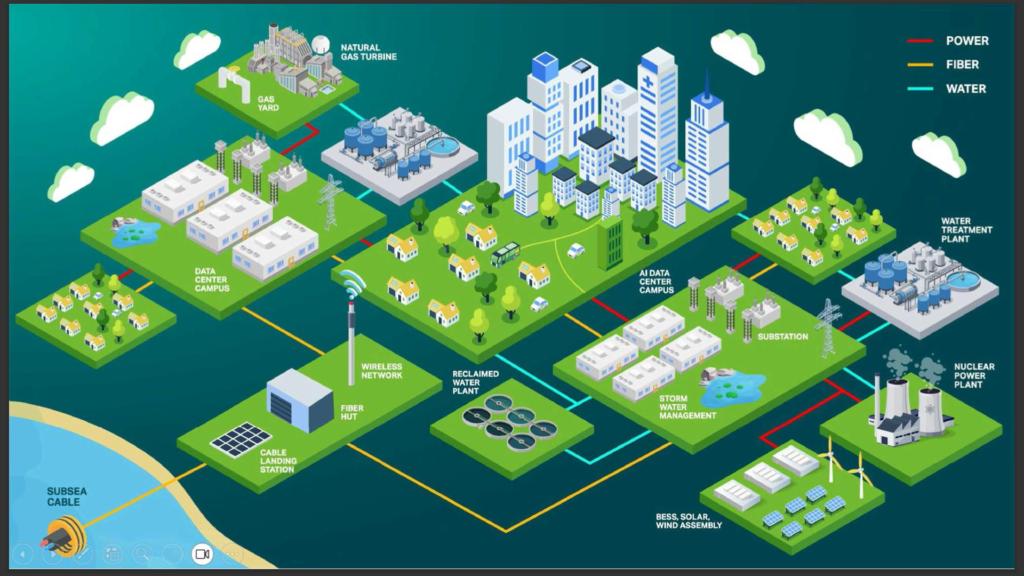
Maciej examined the challenges of delivering large-scale data center programmes across multiple European markets, arguing that the difficulty lies less in scale than in managing inconsistency between countries. He highlighted differences in permitting processes, design standards, infrastructure, energy availability and supplier capabilities, all of which can affect timelines, costs, design decisions and construction quality.
He explained that permitting authorities operate in parallel without a harmonised EU-wide process, while local codes can conflict with client standards and require continual design adaptation. Differences in grid capacity, energy mixes and backup requirements can also influence site selection and project phasing. Meanwhile, variations in local supply chains create challenges around procurement, contractor capability and maintaining consistent standards.
Maciej advocated a model of centralised governance with decentralised execution. Programme-level governance, standardised reporting and KPIs, clear decision hierarchies and defined escalation pathways can maintain consistency while allowing local teams to respond to market-specific requirements. He also stressed the importance of early supplier integration and continuous communication.
His key message was to standardise what drives scale, localise what drives approvals, and establish governance early to enable clarity, consistency and coordination across international programmes.
Accelerating Programmes on Mission-Critical Projects
Murray Gates, CEO of Westgate Global

Murray focused on the financial impact of delays on mission-critical projects, noting that only 8.5% of projects finish on time. Using a 60MW hyperscale data center project as a case study, he showed how bad weather delayed the production start by three months, while cladding delays added a further three months. Together, the six-month delay was estimated to cost £120 million in lost revenue/payback and £6 million in lost profit.
He demonstrated how temporary acceleration measures can protect project timelines and bring revenue-generating capacity online earlier. A three-month acceleration could enable an additional three months of operation in one area, representing £60 million in additional revenue/payback and £2.25 million in early-completion incentives.
Murray presented Flexiscreen as an engineered temporary protection system designed to allow interior fit-out and concrete works to continue despite external weather conditions. The system can also provide temporary internal separation, including ISO Grade 7 cleanroom environments and positive-pressure spaces, while being rapidly installed, removed and relocated between project phases.
For the case study, the approach eliminated six months of delays and enabled commissioning to begin earlier, demonstrating how engineered temporary environments can support faster programme delivery and earlier revenue generation.
Solid Ground in a Fragmented World: Infrastructure Sovereignty as the Next Competitive Edge
Alan Lucas, Chief Information Security Officer at Greenhouse Datacenters

Alan opened with a striking statistic: 90% of European data sits outside EU jurisdiction, framing the scale of Europe’s sovereignty challenge. He walked through the compressed regulatory timeline reshaping the sector — NIS2, DORA, the Data Act and the CRA — describing them as four overlapping, non-optional mandates now converging on operators.
The talk pivots to geopolitical risk, citing findings that the vast majority of large enterprises have revised their cybersecurity strategy in response to volatility, with two-thirds now factoring geopolitical attacks into risk planning. Alan highlighted the concentration risk in hyperscale cloud, noting that a handful of US-domiciled platforms dominate global market share, and traces the emerging split between Western-aligned and alternative technology blocs.
Rather than treating compliance as a defensive cost centre, Alan reframed sovereignty as a growth lever — a trust product and market differentiator, anchored to the EU’s Digital Decade 2030 ambitions and fast-growing sovereign cloud demand.
He closed with four practical recommendations: diversification away from single-vendor lock-in, zero-trust architecture, supply chain transparency, and pre-planned crisis playbooks — arguing that solid infrastructural ground is fast becoming the industry’s real competitive edge.
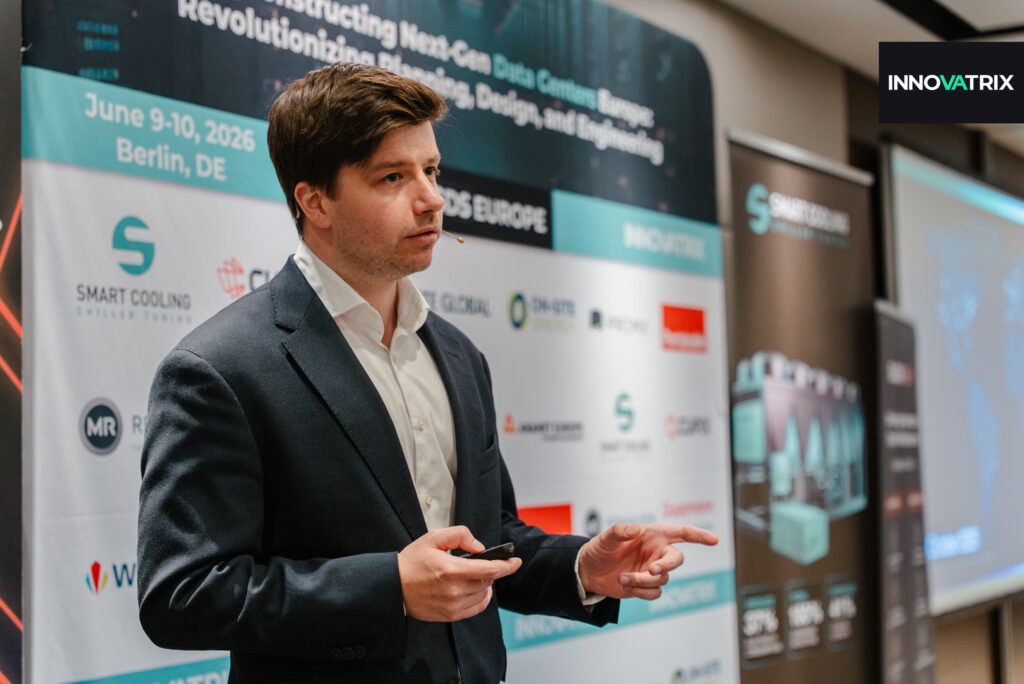
Modern Construction Delivery Models: Reducing Time-to-Market in High-Pressure Environments
Jake Shorrock, Project Leader at Laing O’Rourke

Jake examined modern construction delivery models for reducing time-to-market as data center demand accelerates. He identified speed of deployment, power availability and the growing requirements of AI workloads, including liquid cooling, as key market themes. He also highlighted AI and generative AI, data localization laws, cloud adoption, increasing data creation and 5G expansion as major drivers of data center growth.
He focused on Early Contractor Engagement as a means of creating greater certainty through collaboration, influencing design before construction and reducing programme and commercial risk. Technical reviews can align objectives while addressing safety, quality, programme and cost considerations early.
Jake also presented the concept of a transferable and scalable “kit of parts”, using reference designs to simplify complex infrastructure, engineer out risk and build safety into delivery. Digital build and rehearsal can further reduce risk by visualising spatial constraints, complex lifting, working at height and trade coordination in areas such as generator rooms, electrical rooms, roofs and cooling corridors.
Modern Methods of Construction were another key element, with 1,172 modules deployed across a campus, alongside 35 mechanical packaged plant rooms manufactured in-house. Jake concluded that combining early engagement, standardisation, rapid deployment, engineered safety and scalability can build greater certainty into data center delivery.
How Spatial Intelligence Is Reshaping Data Centre Delivery & Operations
Wayne Brown, Head of Sales – EMEA at CUPIX America Inc

Wayne explored how spatial intelligence can move data centre delivery beyond simply documenting construction towards creating actionable, measurable information. He highlighted the challenges of dense MEP systems, multi-trade coordination and unforgiving go-live dates, arguing that static photos, manual inspections, siloed systems and reactive reporting often leave critical issues undiscovered until commissioning.
He explained how reality capture using 360° cameras and laser scanning provides comprehensive, time-stamped site records and remote access, but emphasised that imagery is only the starting point. Spatial intelligence adds measurable context by converting captured imagery into point clouds with XYZ coordinates, enabling teams to search, measure and analyse the built environment.
Wayne outlined a workflow combining reality capture, AI analysis, digital twins, BIM alignment and searchable records. Assets such as UPS, PDU, CRAH and switchgear units can be linked to locations alongside manuals, serial numbers, warranties and commissioning information. AI tools can also support MEP progress tracking and locate objects within 3D space.
He concluded that spatial intelligence can provide a shared source of truth for owners, contractors, trades and operators, supporting progress validation, RFIs, commissioning, snagging and a more usable as-built record for operations.
The Role of Behind-The-Meter PPA in Delivering Sustainability and Business Competitiveness
David Kipling, CEO of On-Site Energy

David examined the growing pressure on data centres to secure affordable, resilient and sustainable energy as AI drives unprecedented demand. He highlighted significant differences in delivered electricity costs between industrialised nations, noting that policy-related charges and local conditions can strongly influence investment decisions. Against this backdrop, he presented an Energy as a Service model that provides behind-the-meter power without requiring customer capital expenditure, while reducing grid reliance, exposure to price volatility and increasing resilience.
He argued that traditional grid connections create major challenges, particularly with connection queues, equipment and infrastructure delays. David outlined a range of alternatives, including solar and wind, gas generation, solid oxide fuel cells, small modular reactors, batteries and PEM fuel cells, considering their respective scalability, reliability, emissions, permitting and deployment characteristics.
For AI data centres, he identified resilience, time to power, energy cost, government policy and efficiency as critical considerations. Cooling must also be integrated into energy planning, with requirements ranging from air to liquid cooling and potential use of free cooling, absorption chilling, evaporative systems and ATES.
David concluded that waiting for grid connections could constrain future development as computing requirements evolve. He advocated an integrated microgrid approach combining renewables with efficient, dispatchable and modular local generation, arguing that behind-the-meter energy can improve speed, capital efficiency, resilience and the pathway to decarbonisation.
Modular & Prefabricated Builds: Accelerating Delivery Through Industrialized Construction
Nqobile Ntombela, Operations Director and Europe Data Centre Lead at Mace

Nqobile examined how industrialised construction can help data centre programmes respond to rapidly increasing demand, driven in part by AI adoption. She highlighted the growing constraints created by skilled labour shortages, rising costs and sustainability requirements, arguing that traditional construction approaches need to evolve.
She contrasted the product-focused mindset of advanced manufacturing, where iteration and optimisation are expected, with construction’s project-centric approach, where late changes can create significant programme and cost risks. Nqobile argued that greater integration between these disciplines is essential, with speed increasingly dependent on the ability to manufacture rather than build components.
She presented productised, modular design supported by off-site, near-site and on-site manufacturing as a way to reduce bespoke engineering, enable parallel workflows, improve quality and shorten installation times. Standardisation through bills of design, materials, process, sequence and facility can create repeatable approaches across programmes, while “chip thinking” enables prefabricated components to be integrated into complex site conditions.
Nqobile outlined benefits including reduced reliance on local skilled labour, faster delivery, greater cost predictability, consistent quality, lower carbon, safer working environments and scalable expansion. She concluded that delivery certainty must be engineered early through standardisation, early supply-chain involvement, integrated teams and new approaches to contracting and collaboration.
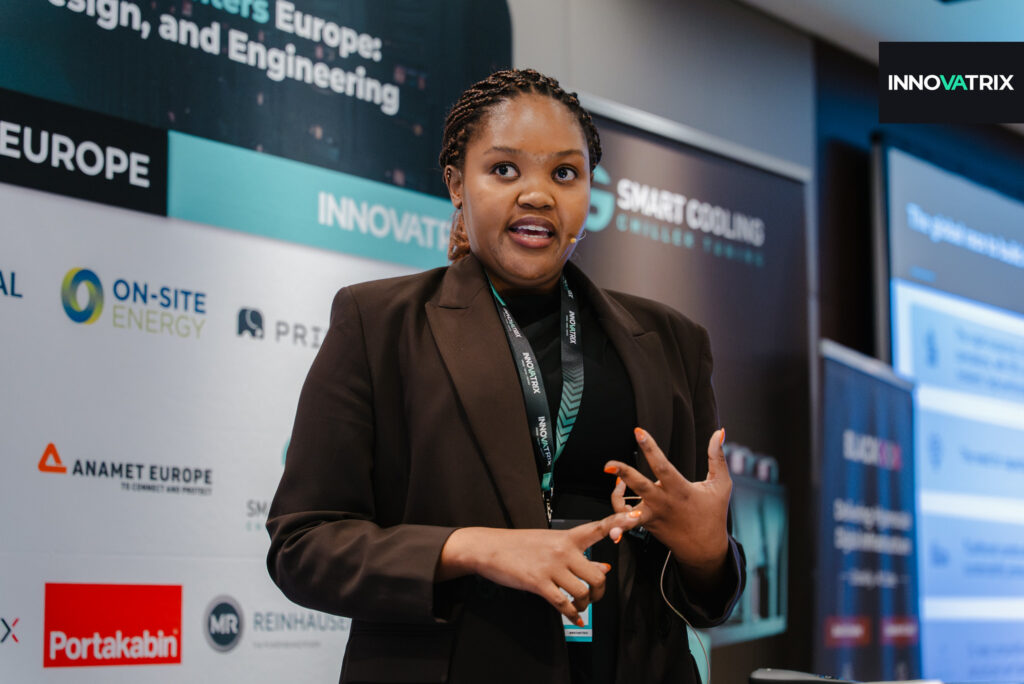
Next-Generation Flooring Systems for High-Load, Sustainable Data Centers
Andreas Schmitz, Technical Sales Manager Data Centers at Lindner Group

Andreas explored the evolving role of raised flooring in high-density data centres, where increasing rack loads, thermal management, flexible infrastructure and sustainability requirements are placing greater demands on floor systems. He highlighted benefits including rapid installation, separation of critical services, scalability, ESD control and support for heavy IT equipment, describing flooring as a relatively small construction cost with a potentially critical impact on availability.
He explained how load escalation can be addressed through engineering for point, rolling, uniform and ultimate loads. A 1,200 mm × 1,200 mm system can reduce the number of pedestals by 75%, increase available space by 300% and provide greater flexibility for cabling and cooling, while maintaining 60 minutes of fire resistance.
Sustainability was another key theme. Andreas presented raised floors as circular building elements using recycled steel and natural calcium sulphate, with a 50-plus-year service life and the potential for repeated reconfiguration, repair, refurbishment and recycling. Panels can be separately sorted during dismantling, while EPDs provide documented carbon data across the product lifecycle.
He concluded that future-ready flooring should be assessed against three criteria: whether it can support the heaviest planned IT equipment, whether sufficient plenum space exists for future requirements, and whether the system has credible carbon and reuse documentation.
Beyond FLAP-D: What Defines Growth-Ready Markets in Europe?
Devika Sha, Research Analyst, and Christian Tshishiku, Senior Analyst, at DC Byte

Devika and Christian examined how Europe’s data centre growth is extending beyond the traditional FLAP-D markets of Frankfurt, London, Amsterdam and Paris. They defined market capacity across live, under-construction, committed and early-stage IT, providing a framework for assessing both established and emerging locations.
They noted that FLAP-D accounts for around 45% of EMEA’s live capacity, while Madrid, Milan, Stockholm, Zurich and Berlin collectively represent around 12%. The remaining 43% is distributed across secondary and tertiary markets, highlighting the scale of opportunities beyond the traditional core.
They explained that FLAP-D remains central because of its mature ecosystems, established hyperscale presence and concentration of international operators. However, secondary markets are becoming increasingly important as demand spreads across Europe and constraints around power, land and regulation make expansion in core locations more difficult. Greater land availability, infrastructure capacity, government support and growing hyperscale investment are strengthening the attractiveness of emerging markets.
Using Frankfurt and Madrid as examples, they contrasted a mature market facing land, power and sustainability constraints with a rapidly expanding market benefiting from available capacity and strong hyperscale activity. They concluded that understanding infrastructure constraints, demand, scalability and market maturity is increasingly important when identifying Europe’s growth-ready data centre locations.
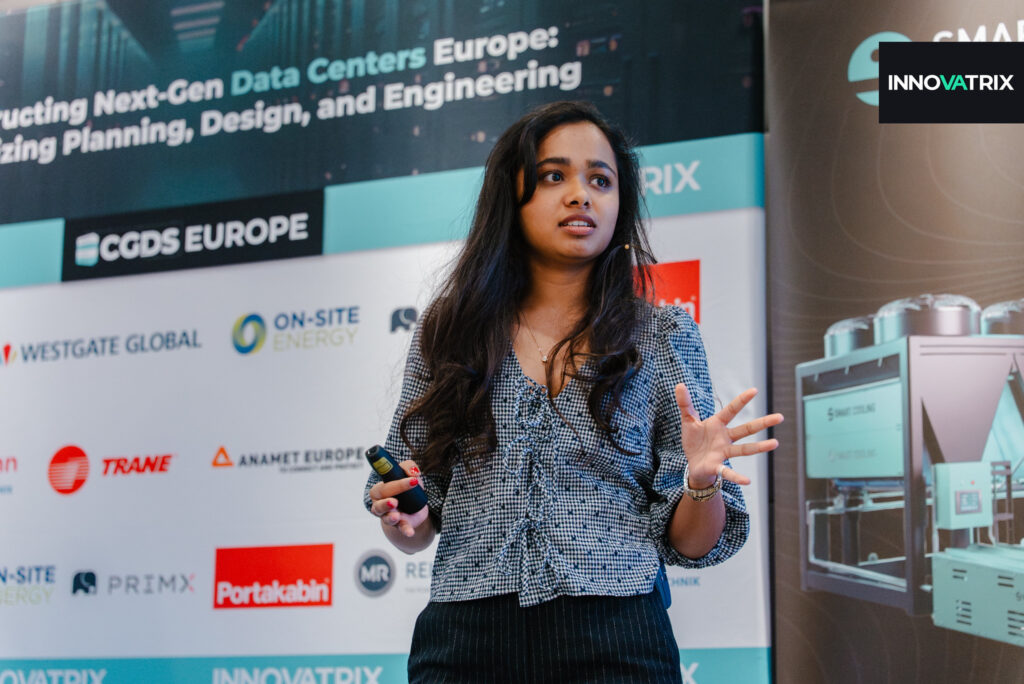
Sustainable Concrete for Sustainable Data Centers
Artjoms Smirnovs, Head of Marketing and Global Accounts at Primekss SIA

Artjoms examined how concrete flooring technology can support the speed, flexibility and sustainability requirements of modern data centres. He argued that conventional floors often rely on extra thickness, steel reinforcement, saw-cut joints and grinding to manage shrinkage and curling, increasing embodied carbon, construction time, cost and long-term maintenance.
He presented PrīmX® concrete as an alternative focused on addressing the root cause by using less material while increasing strength and reducing emissions. Unlike traditional slabs requiring saw cuts every 3–6 metres, the technology enables extended joint systems of 30–40 metres or jointless floors. Its Combideck fibre-concrete solution can also remove traditional mesh reinforcement in composite metal deck slabs.
A battery gigafactory application demonstrated the potential impact, with a 200 mm PrīmX® composite Combideck reportedly delivering a 70% reduction in man-hours and 66% lower CO₂ emissions, alongside reduced HSE risks, watertightness and fire resistance.
Artjoms also outlined an integrated delivery model covering engineering, materials, casting, performance monitoring and after-care through a single responsible partner. He highlighted certified ESD compliance, lifetime flatness without curling, unrestricted equipment placement, polished durability and up to 80% lower CO₂ emissions. Faster pours, potentially 30% quicker, can further accelerate data centre delivery.
Delivering Next-Gen Data Centers in the Nordics
Erdem Büyükaslan, Campus Delivery Manager at atNorth

Erdem examined the factors shaping the Nordic data centre market, highlighting the region’s combination of renewable power, cold climate and geopolitical stability. More than 90% of Nordic electricity is generated from renewable sources, while cool temperatures support PUE levels below 1.2. Across the region, Sweden currently holds the largest share of capacity, Finland is experiencing rapid growth, Norway is focusing on large developments powered predominantly by hydropower, and Denmark benefits from strong connectivity and proximity to wider European markets.
He highlighted Finland as a particularly strategic hub, with around 95% of electricity coming from CO₂-neutral sources and ambient temperatures below 15°C enabling extensive free-air cooling. Low electricity taxes and district-heating integration, where data centre waste heat can be reused, further strengthen its operating model.
Erdem outlined an end-to-end delivery framework covering site selection, design and procurement, construction and commissioning, and operational readiness. Early assessment of power, grid timelines, land scalability and ESG factors can reduce uncertainty, while modularisation, standardisation and early procurement help address compressed schedules and long-lead items.
He also stressed the importance of disciplined cost control and a dynamic risk framework covering power, permitting, supply chains and extreme weather. Integrating risk management into executive governance, he argued, supports timely intervention and more reliable project delivery.
Beautiful Problems. A Lot of Heat, Too Little Use
Jens Bertram, Data Centers Director at JLL

Jens explored the challenge of reusing the continuous surplus heat generated by data centres, arguing that large quantities of high-quality heat are still discharged because infrastructure, incentives and regulatory frameworks have not kept pace. He outlined practical barriers including temperature requirements, technical integration, costs and concerns around performance guarantees and liability.
Drawing on projects across Europe, Jens demonstrated how data centre heat can deliver tangible local benefits. Examples included Microsoft and Fortum’s district heating partnership near Helsinki, a Swiss facility supplying heat to a mountain cheese dairy, a UK data centre supporting a public swimming pool, and a Norwegian project providing waste heat for a land-based lobster farm. He also highlighted urban and hyperscale applications in Berlin, Frankfurt, Munich, Stockholm and Odense, as well as ice storage for separating heat production from fluctuating demand.
Jens emphasised that heat quality increases with temperature, while even inlet temperatures of around 32°C can support economically viable applications. He concluded that the challenge is not simply data centre energy consumption, but how effectively its energy can be reused, positioning waste heat as both a decarbonisation opportunity and a source of practical community value.
Delivering Hyperscale Campuses at Speed: How Design and Digital Integration Strengthens Project Delivery
Javier Ordóñez Alonso, Regional Digital Construction Manager, and Kirstie Elizabeth Jones, Regional Design Manager, at Collen

Javier and Kirstie explored how design, digital integration and standardised processes can strengthen the delivery of hyperscale data centre campuses at speed. They traced delivery growth in the Nordics, where Collen has completed 244MW across Sweden, Denmark and Finland and has a further 178MW under construction, illustrating the increasing scale and complexity of simultaneous campus projects.
They highlighted the evolution of 50MW building programmes, from 185-week deliveries split across two phases to 122 weeks for a single-phase full fit-out and 98 weeks for a best-in-kind project. Managing multiple buildings, contracts, subcontractors and design teams while rapidly expanding delivery teams has made coordination and information flow critical.
Their response centres on digital integration, with a Common Data Environment linked to TIDPs and MIDPs, robust drawing and RFI controls, automated reporting and predictive visibility of information delivery. BIM coordination across all packages, including underground works and MEP, aims to resolve issues and freeze models before site activity begins.
They also emphasised knowledge retention, regional roles, training, off-site manufacturing and structured collaboration workshops. Looking ahead, AI-enabled lessons learned, expanded OSM and data analytics are intended to improve consistency, while ongoing challenges include design changes, model approvals and CDP scope alignment.
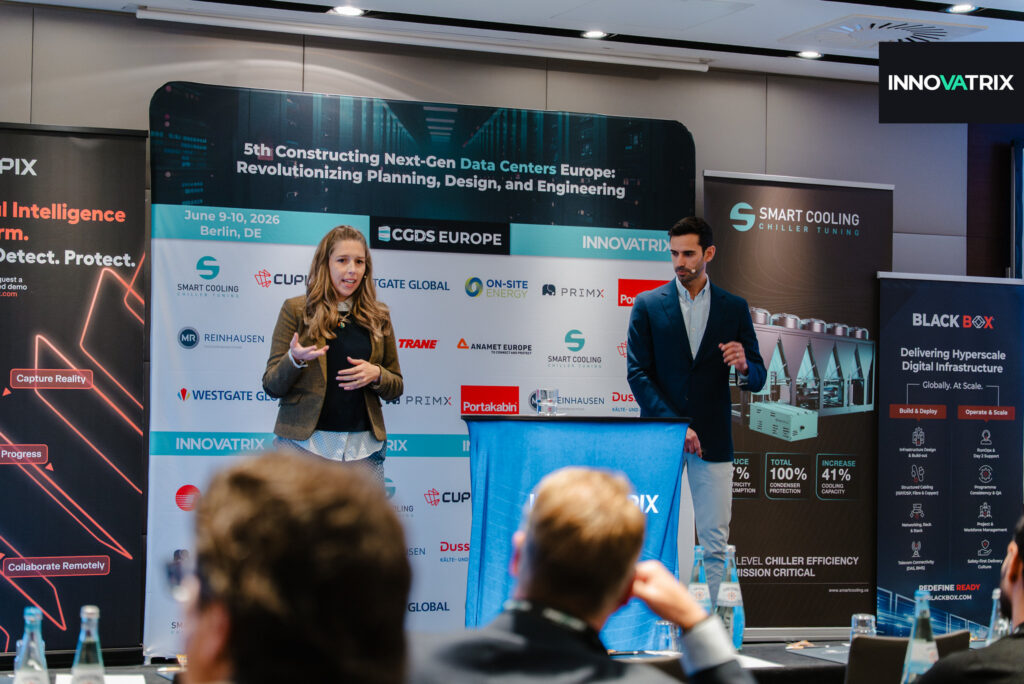
Using Options for Flexible Green Certification in Data Center Projects
B. Kağan Ceylan, Real Estate Director for Northern & Eastern Europe at Iron Mountain

Kağan examined how data centre developers can maintain sustainability ambitions without allowing early green certification decisions to constrain fast-track projects. He argued that selecting LEED or BREEAM too early can be problematic when project scope, technology, costs and design requirements remain uncertain, potentially creating unnecessary compliance costs and certification risks.
He presented a “Delay & Switch Options” framework based on financial Options Theory, giving developers the right, rather than the obligation, to select a certification standard later. The approach begins by identifying credits shared by LEED and BREEAM, then tracks both standards in parallel during schematic design before making a final selection using the latest project information.
Kağan highlighted common credit synergies covering commissioning, indoor air quality, thermal comfort, energy monitoring and other areas, while additional requirements can be incorporated to preserve the option of switching standards. He proposed using iterative cost and feasibility assessments, supported by binary integer programming, to identify the lowest-cost combination of credits capable of achieving the required rating.
He concluded that flexibility should be treated as a risk-management tool rather than indecision. Maintaining certification options can protect speed-to-market and budget objectives while supporting sustainability goals and, where viable, certification under multiple standards.
Sponsors
The 5th Constructing Sustainable Data Centers Europe: Revolutionizing Planning, Design, And Engineering was supported by a wide range of sponsors who brought their teams to our exhibition hall, and Innovatrix would like to thank them again for their support.
Smart Cooling, Cupix, Westgate Global, PrimX, On-Site Energy, Lindner, Portakabin, Reinhausen, Dussmann, Trane, Anamet Europe and Black Box.
If you want to attend our next summit serving the data center construction sector and have the opportunity to hear presentations like these and many more, join us for our next European data centers event, taking place in December, addressing these pressures and shaping the future of data center development across Europe.
Discover the latest innovations and trends in smart and green solutions for constructing and retrofitting data centers, meet with solution providers and hear talks from industry leaders, attend the 7th Constructing Sustainable Data Centers Europe: Revolutionizing Planning, Design, and Engineering, taking place December 10-11, 2026, in London, UK.
For more information, visit our website or email us at info@innovatrix.eu for the event agenda. Visit our LinkedIn to stay up to date on our latest speaker announcements and event news.