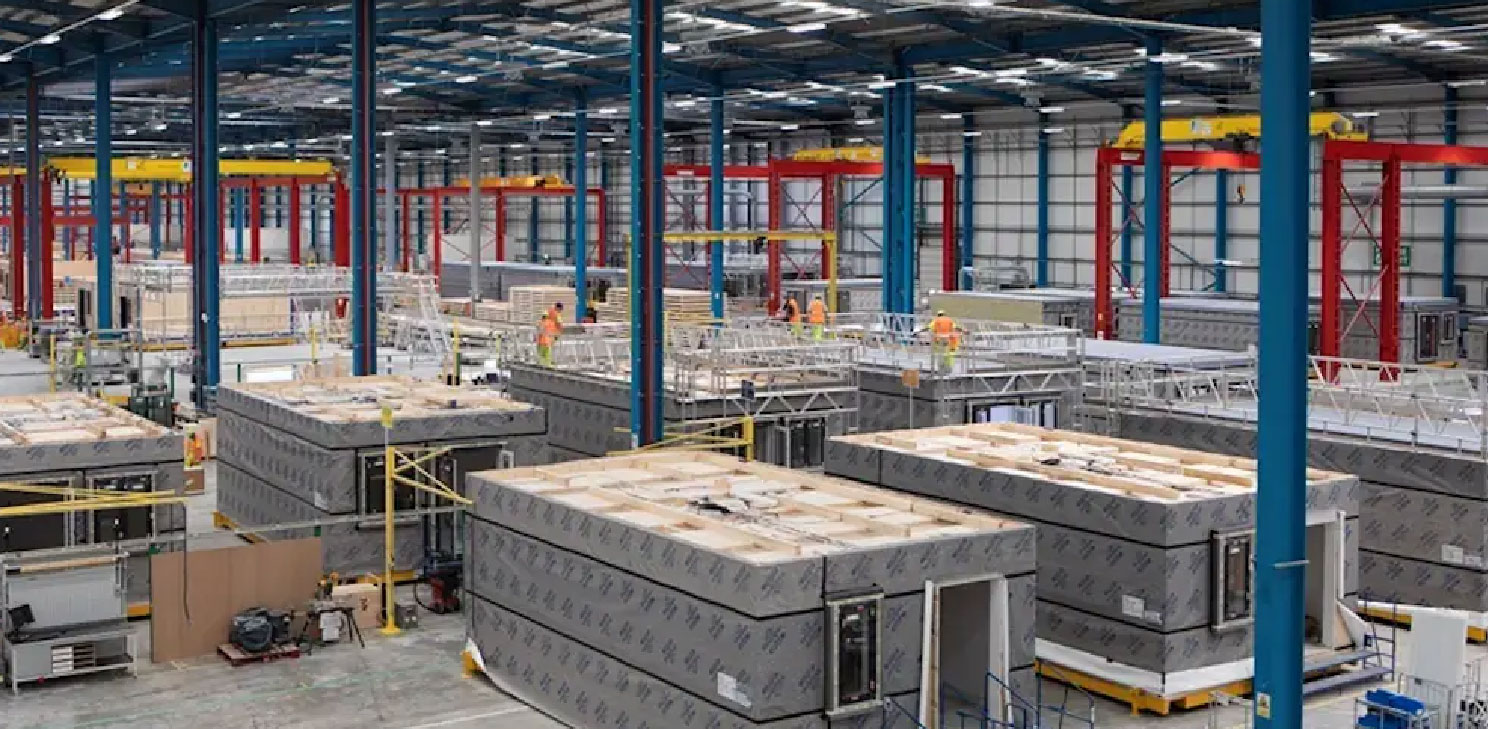
German chipmaker Infineon Technologies opened a new semiconductor facility in Thailand on Thursday, as Southeast Asia’s second-largest economy seeks to attract more investment into the industry and strengthen its position in the regional chip supply chain.
Infineon’s $1.4 Billion Thailand Expansion is About More Than Chips
Infineon said the backend manufacturing facility near Bangkok would process chips into finished and tested semiconductors, with an initial investment of more than 100 million euros ($113.57 million).
Thailand’s Board of Investment valued the project at $1.4 billion, reflecting the scale of the expansion planned for the site.
The facility will initially have up to 30,000 square metres of cleanroom space, which can be expanded to 150,000 square metres, Infineon’s Chief Operations Officer Alexander Gorski said at a briefing.
“It’s a strategic long-term investment,” Gorski said, pointing to Thailand’s proximity to key markets such as China. “We are well prepared for strong future growth.”
Infineon has 13 manufacturing sites across the United States, Europe, China and Southeast Asia and could potentially double its revenue using existing cleanroom capacity, Gorski said.
The Thailand plant will also help Infineon provide customers with alternative sources of supply, he said.
“If something is going wrong in the factory in Malaysia, we can support our customers through the factory in Thailand.”
Thailand is seeking to position itself as a larger semiconductor manufacturing hub as companies diversify supply chains across Asia and governments compete for investment in an industry increasingly viewed as strategically important.
The country aims to attract $18 billion in semiconductor investments by 2030, focusing on photonics, power electronics and sensors, according to Narit Therdsteerasukdi, secretary general of the Board of Investment.
Thailand is also pursuing a longer-term strategy that targets as much as $80 billion in semiconductor investment by 2050.
Between 2023 and July 2026, Thailand attracted 910 billion baht ($27.12 billion) in investment in the semiconductor and advanced electronics sector, according to a presentation by Narit.
Alongside financial incentives, the government plans to train nearly 85,000 skilled workers and more than 1,700 researchers for the sector by 2030, Narit said.
The investment push comes as demand for semiconductors rises on the back of artificial intelligence and the expansion of data centres.
Global semiconductor sales are forecast to reach $1 trillion this year and double to $2 trillion by 2035, according to an industry forecast, driven in part by growing demand from data centres used to power AI technologies.
Thailand’s semiconductor strategy is part of a broader effort by Asian economies to attract investment as companies seek to diversify manufacturing and reduce exposure to disruptions concentrated in individual markets.
To find out more about the latest industry updates and innovations in semiconductor fab construction, meet with solution providers and hear talks from expert speakers, attend the 4th Constructing Semiconductor FAB Summit Europe: Advances in Planning, Design and Engineering, taking place October 21-22, 2026, in Munich, Germany.
For more information, click here or email us at info@innovatrix.eu for the event agenda. Visit our LinkedIn to stay up to date on our latest speaker announcements and event news.
Source: