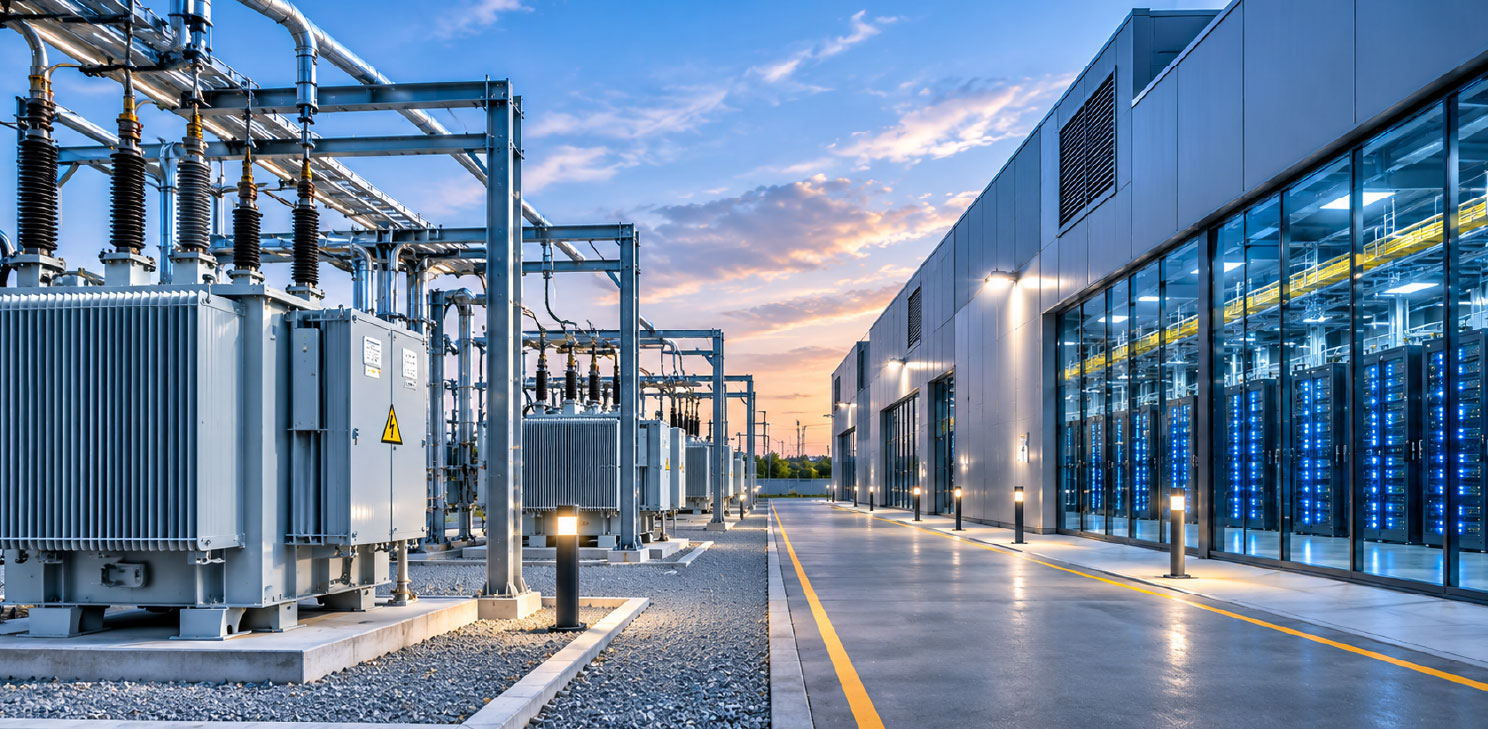
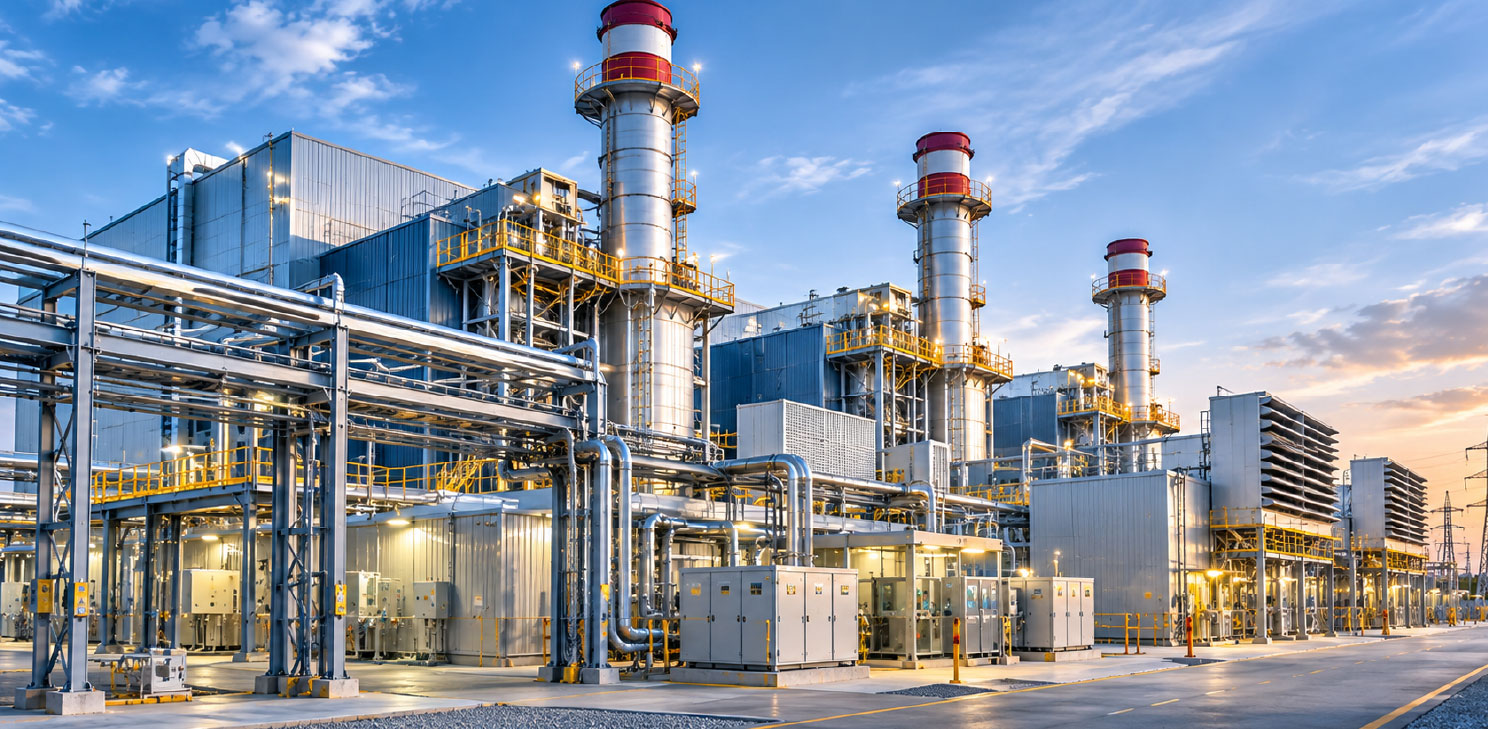
The AI boom is spawning a wave of data center construction demand in the UK, but insufficient grid connection capacity is forcing some developers to change their energy plans. National Gas, the operator of the UK’s gas transmission network, disclosed that large data center projects inquiring with the company about gas connection options have risen to 24 from 5 last year.
The direct driver of this shift is excessively long grid connection queues. A combination of factors—planning approvals, regulatory procedures, construction costs and skilled-labor shortages—means some projects must wait years from application to actual connection to the UK’s national electricity system. Under these circumstances, some developers are beginning to consider building their own gas-fired generation facilities to meet power needs during the initial phase of project operation.
The Quest Park data center campus in Bedfordshire is a typical case. The project has a planned power demand of 720 megawatts and is expected to become one of the UK’s largest data center campuses, but constrained by local grid capacity, it is not expected to formally connect to the power system until 2034 at the earliest. A high-pressure gas pipeline happens to pass near the campus, and connection could come significantly earlier, so the developer plans to build a gas-fired power plant first to supply power at least for the project’s relatively smaller initial phase.
Such considerations are not isolated. The £3 billion (approximately $4.0 billion) SDC M40 Campus in Buckinghamshire, as well as a proposed data center project by Curtis Hall in Cardiff, are both evaluating gas-fired generation as a transitional solution until formal grid connection permits are obtained, according to planning documents. Alan Fotheringham, director of low-carbon global market solutions at consultancy Jacobs, noted that the path to gas-fired generation is much shorter than the path to securing permanent grid connection capacity.
The potential incremental demand for gas should not be underestimated. Marten Ford, an analyst at energy research firm Aurora Energy Research, estimates that if data center construction accelerates and renewable energy growth fails to outpace existing plans, UK gas-fired generation could increase by 40 terawatt-hours by 2035, equivalent to 44% of the country’s gas-fired generation last year. He also emphasized that without broader countermeasures, large-scale deployment of data centers will drive up natural gas use and thereby increase carbon emissions.
The above estimates already assume that most proposed projects are speculative investments that will ultimately not materialize. If all these projects were built, the increase in gas demand would be even more significant. Tom Edwards, an analyst at market analysis firm Cornwall Insight, also noted that regardless of the scale of construction, existing gas-fired power plants will need to run more frequently; even if data centers successfully connect to the national grid, the electricity they use comes from a mix of renewables, nuclear and natural gas, which would likewise drive gas demand to some extent.
Faced with enormous demand, the UK government has begun adjusting policy. A proposal introduced last week suggests that data centers of strategic importance may be paired with gas-fired generation, provided investors commit that the long-term goal remains connection to the national grid. The proposal is accompanied by a new “commitment agreement” mechanism for data centers, under which paired power plants would not need to undergo separate carbon emissions assessments, with the relevant emissions impact handled by the government at the national level.
Within the UK energy industry, there is disagreement over what energy source data centers should use. Greg Jackson, CEO of Octopus Energy, the UK’s largest oil, gas and electricity retailer, disagrees with the view that only natural gas and nuclear power can meet data centers’ need for stable electricity supply. He proposes locating more data centers in Scotland to take advantage of the region’s abundant wind resources.
But real-world constraints are also evident. Many operators want to be close to customer-concentrated areas such as London, while the UK’s current electricity market mechanisms lack sufficient incentives for developers to relocate projects to regions richer in renewable energy resources. Wind and solar power face land-use requirements and intermittency issues, energy storage systems are relatively costly, and small modular nuclear reactors remain some distance from large-scale commercial deployment. By contrast, the UK’s existing gas pipeline network has broad coverage, and some projects can obtain gas supply more quickly. Real estate consultancy Savills said the market is currently studying multiple energy configuration options, but for some projects that need stable power supply quickly in the near term, natural gas still holds practical appeal.
On the environmental front, Natascha Hospedales, head of AI affairs at ClientEarth, criticized the UK government’s proposal as amounting to “tacitly allowing data centers to begin construction without simultaneously imposing equally strict environmental constraints.”
Katie Berriman-Davies, head of energy and infrastructure policy at tech industry group Tech UK, said that for most developers, the current priority remains advancing reform of the grid connection mechanism and improving related policies so projects can connect faster. In her view, gas-fired generation is more of a realistic transitional measure against the backdrop of long-term grid capacity constraints, rather than a direction of proactive industry transformation.
A key variable is the actual scale of projects that materialize. Consultancies estimate that of the data center projects currently queued for grid connection, totaling 73 gigawatts of installed capacity, only 10% to 20% will ultimately be built. UK authorities are trying to accelerate reform of the connection queue while weeding out speculative projects that have no substantive plans to materialize.
The practices of other European countries offer a reference. Ford mentioned that Ireland has introduced regulations requiring 80% of data centers’ electricity to come from renewable sources, which could serve as a reference model for promoting greater use of clean energy in data centers.
For the market, this trend means UK gas demand could gain a new source of growth beyond the power system, and utilization of gas-fired generation and pipeline assets may rise accordingly; but at the same time, the pace at which data center projects materialize, the progress of grid connection reform and the specific implementation standards of the government’s “commitment agreements” will all directly affect the actual scale of incremental gas demand. For data center developers, whether they can strike a balance between power supply and emissions-reduction commitments is becoming a key variable in whether projects can be commissioned on schedule.
To find out more about the latest industry updates and innovations in data center construction, meet with solution providers and hear talks from expert speakers, attend the 7th Constructing Sustainable Data Centres Europe: Revolutionizing Planning, Design, and Engineering, taking place December 10-11, 2026, in London, UK.
For more information, click here or email us at info@innovatrix.eu for the event agenda. Visit our LinkedIn to stay up to date on our latest speaker announcements and event news.
Source: